Jacobs Ira, Ewesuedo Reginald, Lula Sadiq, Zacharchuk Charles
Pfizer Inc, Pfizer Essential Health, 235 East 42nd Street, New York, NY, 10017-5755, USA.
Pfizer Inc, Biosimilars Development, Cambridge, MA, USA.
BioDrugs. 2017 Feb;31(1):1-36. doi: 10.1007/s40259-016-0207-0.
Biologic treatments for cancer continue to place a significant economic burden on healthcare stakeholders. Biosimilar therapies may help reduce this burden through cost savings, thereby increasing patient access.
The purpose of this study was to collate all published data to assess the weight of available evidence (quantity and quality) for proposed monoclonal antibody biosimilars and intended copies, for the treatment of cancer.
MEDLINE, Embase, and ISI Web of Science databases were searched to September 2015. Conference proceedings (17) were searched (2012 to July 2015). Searches of the United States National Library of Medicine ClinicalTrials.gov registry were also conducted. Risk of bias assessments were undertaken to assess data strength and validity.
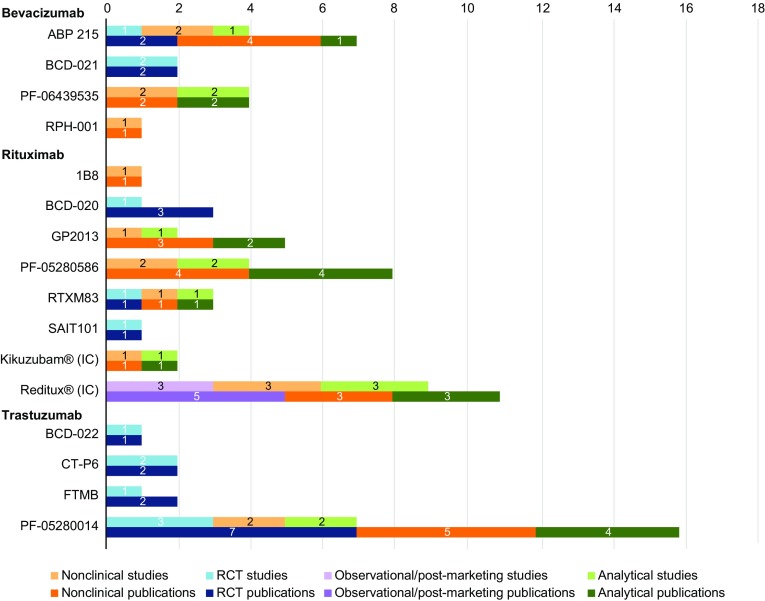
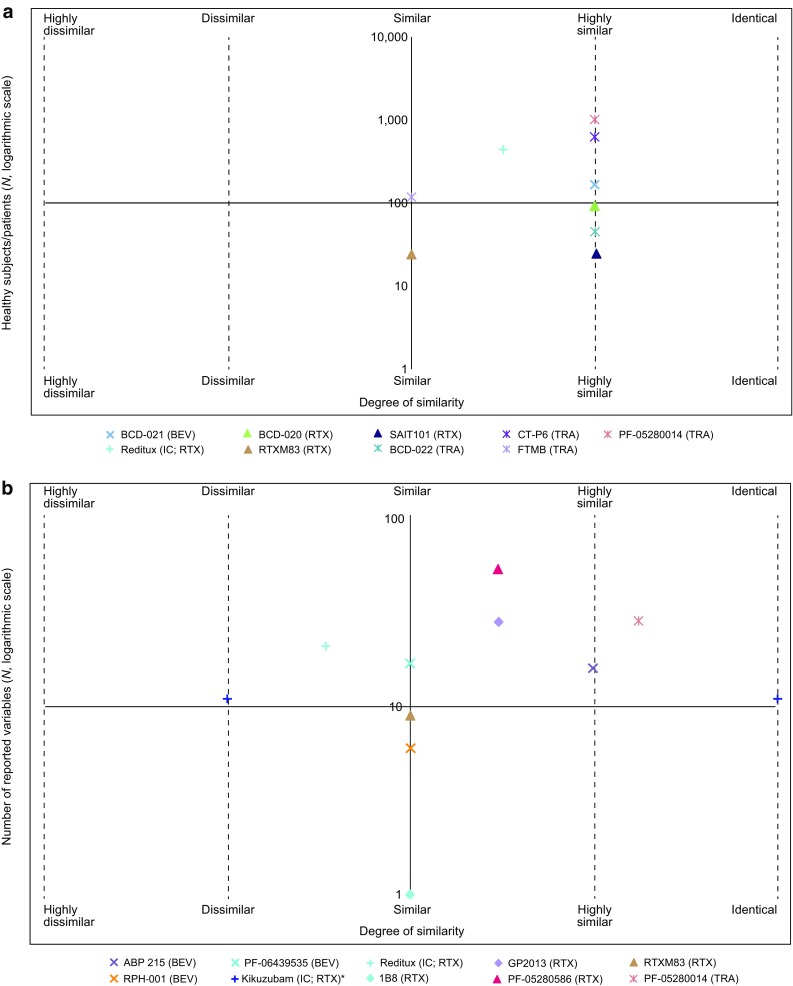
Proposed biosimilars were identified in 23 studies (36 publications) in oncology and ten studies in 14 publications in oncology and chronic inflammatory diseases for bevacizumab, rituximab, and trastuzumab originators. Based on our review of the included published studies, and as inferred from the conclusions of study authors, the identified proposed biosimilars exhibit close similarity to their originators. Published data were also retrieved on intended copies of rituximab. It remains unclear what role these agents may have, as publications on rigorous clinical studies are lacking for these molecules.
While biosimilar products have the potential to improve patient access to important biologic therapies, robust evidence of outcomes for monoclonal antibody biosimilars in treating cancer patients, including data from comparative efficacy and safety trials, is not yet available in the published literature. Significant data gaps exist, particularly for intended copies, which reinforces the need to maintain a clear differentiation between these molecules and true biosimilars. As more biosimilars become available for use, it will be important for stakeholders to understand fully the robustness of overall evidence used to demonstrate biosimilarity and gain regulatory approval.
癌症生物治疗持续给医疗保健利益相关者带来巨大经济负担。生物类似药疗法可能通过节省成本来帮助减轻这一负担,从而增加患者获得治疗的机会。
本研究的目的是整理所有已发表的数据,以评估拟用单克隆抗体生物类似药及其预期仿制品用于癌症治疗的现有证据的权重(数量和质量)。
检索了截至2015年9月的MEDLINE、Embase和ISI科学网数据库。检索了会议论文集(17篇)(2012年至2015年7月)。还检索了美国国立医学图书馆ClinicalTrials.gov注册库。进行了偏倚风险评估以评估数据的强度和有效性。
在23项肿瘤学研究(36篇出版物)以及10项肿瘤学和慢性炎症性疾病研究(14篇出版物)中确定了针对贝伐单抗、利妥昔单抗和曲妥珠单抗原研药的拟用生物类似药。基于我们对纳入的已发表研究的综述,并根据研究作者的结论推断,所确定的拟用生物类似药与其原研药表现出高度相似性。还检索到了关于利妥昔单抗预期仿制品的已发表数据。由于缺乏关于这些分子的严格临床研究的出版物,这些药物可能发挥的作用仍不清楚。
虽然生物类似药产品有可能改善患者获得重要生物治疗的机会,但已发表文献中尚无关于单克隆抗体生物类似药治疗癌症患者疗效的有力证据,包括来自比较疗效和安全性试验的数据。存在重大数据缺口,尤其是对于预期仿制品,这强化了在这些分子与真正生物类似药之间保持明确区分的必要性。随着越来越多的生物类似药可供使用,利益相关者充分了解用于证明生物相似性并获得监管批准的总体证据的可靠性将非常重要。