Drugowitsch Jan, DeAngelis Gregory C, Klier Eliana M, Angelaki Dora E, Pouget Alexandre
Department of Brain and Cognitive Sciences, University of Rochester, New York, United States.
Department of Neuroscience, Baylor College of Medicine, Houston, United States.
Elife. 2014 Jun 14;3:e03005. doi: 10.7554/eLife.03005.
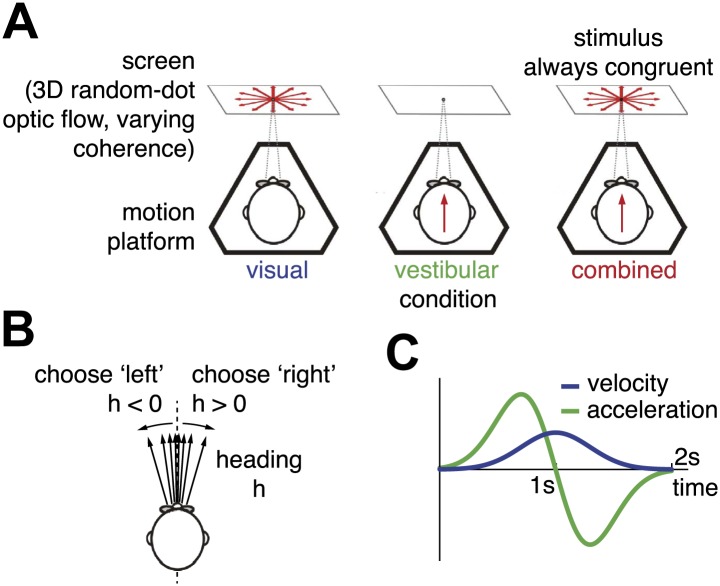
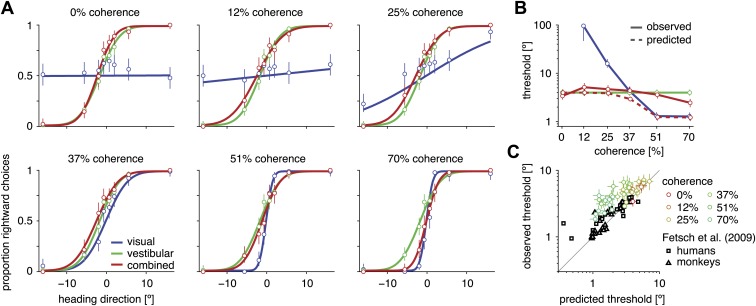
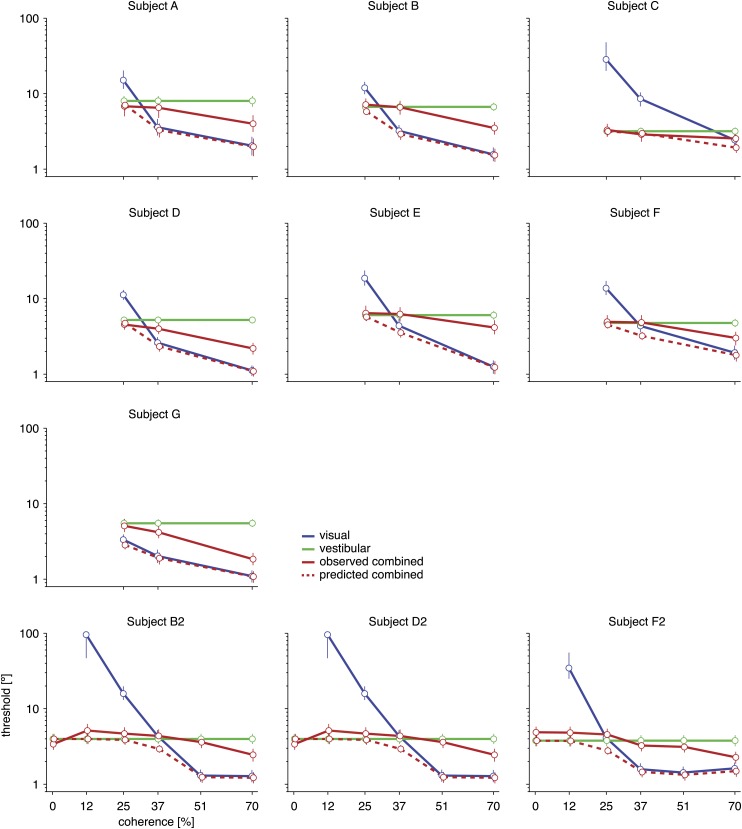
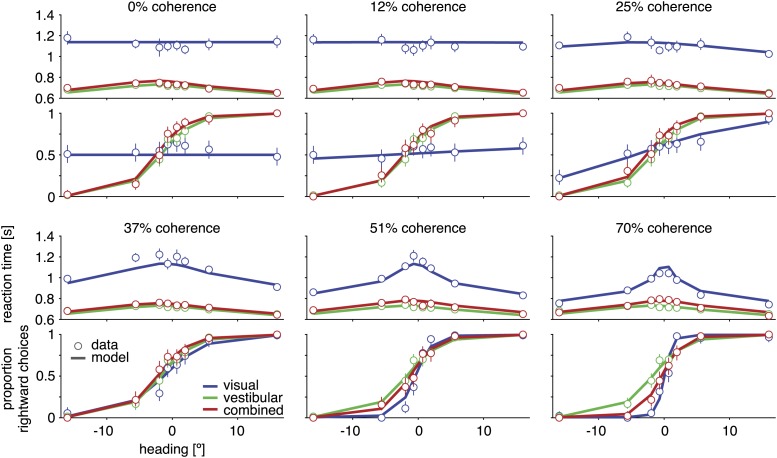
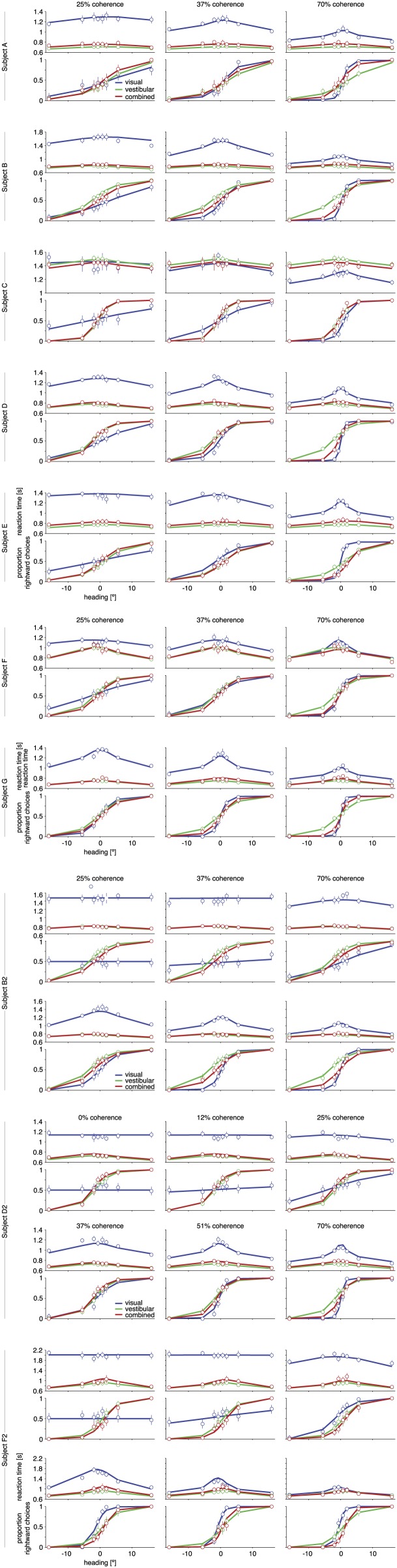
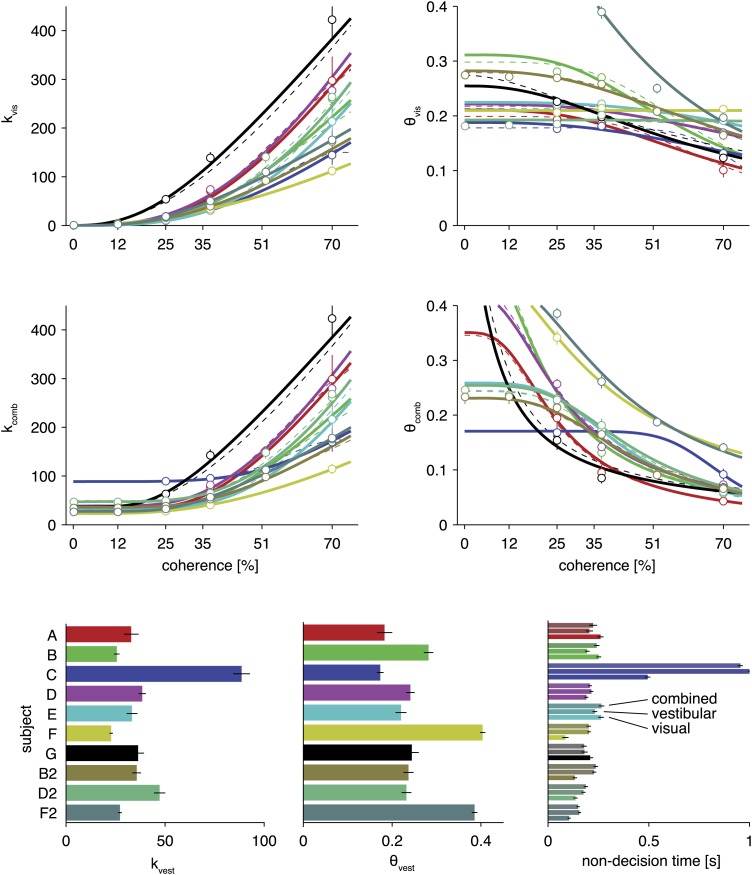
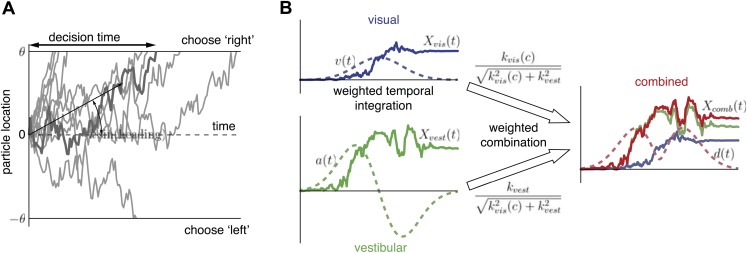
Humans and animals can integrate sensory evidence from various sources to make decisions in a statistically near-optimal manner, provided that the stimulus presentation time is fixed across trials. Little is known about whether optimality is preserved when subjects can choose when to make a decision (reaction-time task), nor when sensory inputs have time-varying reliability. Using a reaction-time version of a visual/vestibular heading discrimination task, we show that behavior is clearly sub-optimal when quantified with traditional optimality metrics that ignore reaction times. We created a computational model that accumulates evidence optimally across both cues and time, and trades off accuracy with decision speed. This model quantitatively explains subjects's choices and reaction times, supporting the hypothesis that subjects do, in fact, accumulate evidence optimally over time and across sensory modalities, even when the reaction time is under the subject's control.
人类和动物能够整合来自各种来源的感官证据,以便在刺激呈现时间在各次试验中固定的情况下,以统计学上接近最优的方式做出决策。对于当受试者可以选择何时做出决策(反应时间任务)时最优性是否得以保持,以及当感官输入具有随时间变化的可靠性时最优性是否得以保持,我们知之甚少。使用视觉/前庭航向辨别任务的反应时间版本,我们表明,当用忽略反应时间的传统最优性指标进行量化时,行为明显次优。我们创建了一个计算模型,该模型在线索和时间上都能最优地积累证据,并在准确性和决策速度之间进行权衡。该模型定量地解释了受试者的选择和反应时间,支持了这样一种假设,即实际上,即使反应时间由受试者控制,受试者也会随着时间的推移并跨感官模态最优地积累证据。