Le Grand Marion, Rovini Amandine, Bourgarel-Rey Veronique, Honore Stephane, Bastonero Sonia, Braguer Diane, Carre Manon
Aix Marseille Université, Inserm, CRO2 UMR_S 911, Marseille, France.
Oncotarget. 2014 May 30;5(10):3408-23. doi: 10.18632/oncotarget.1982.
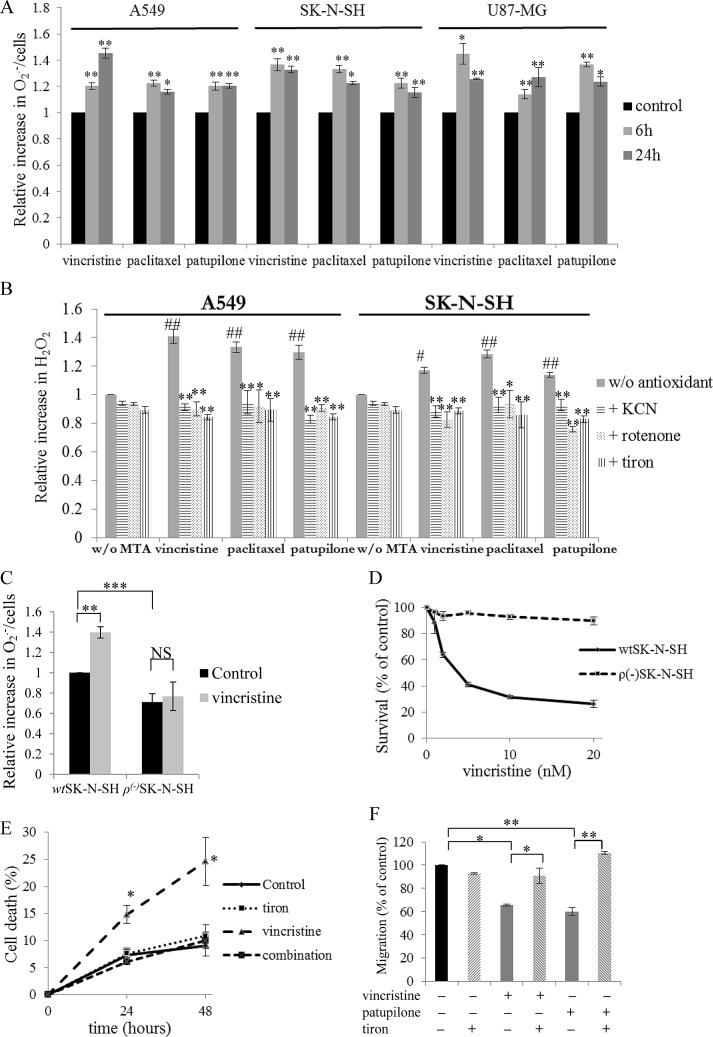
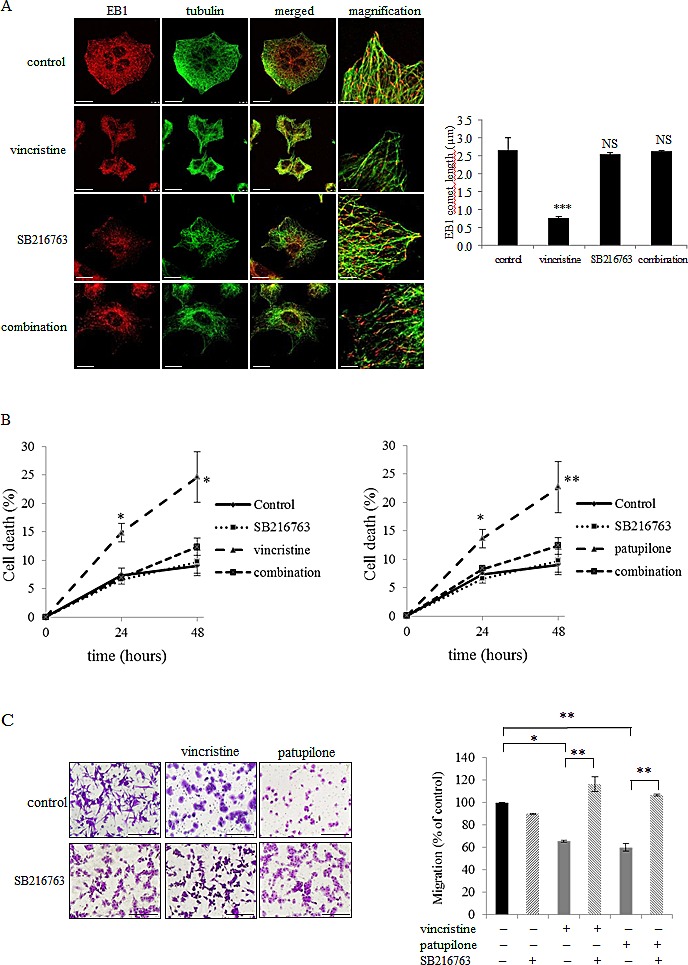
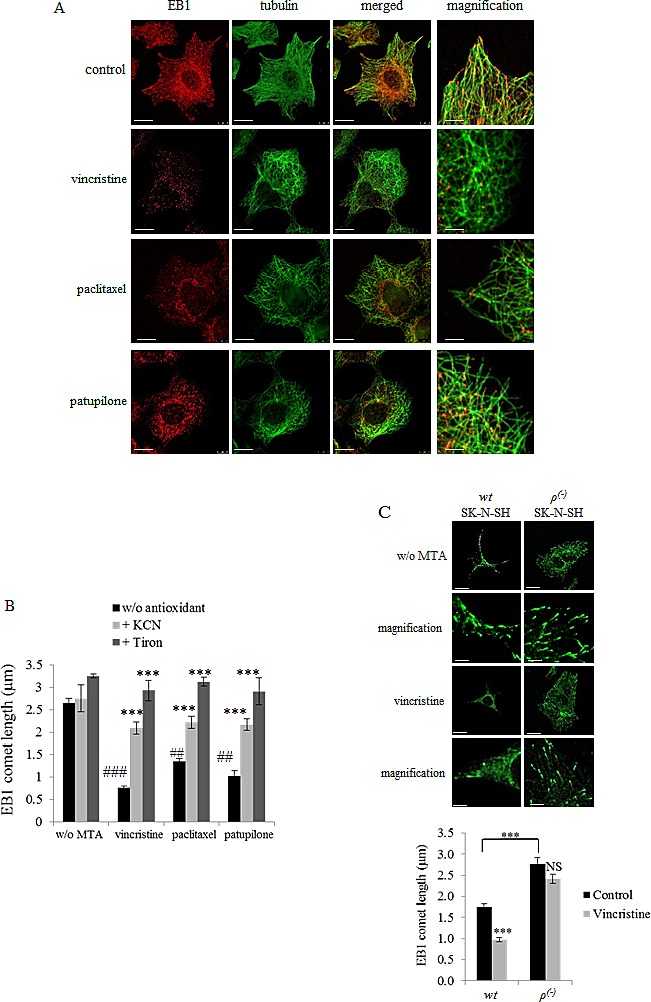
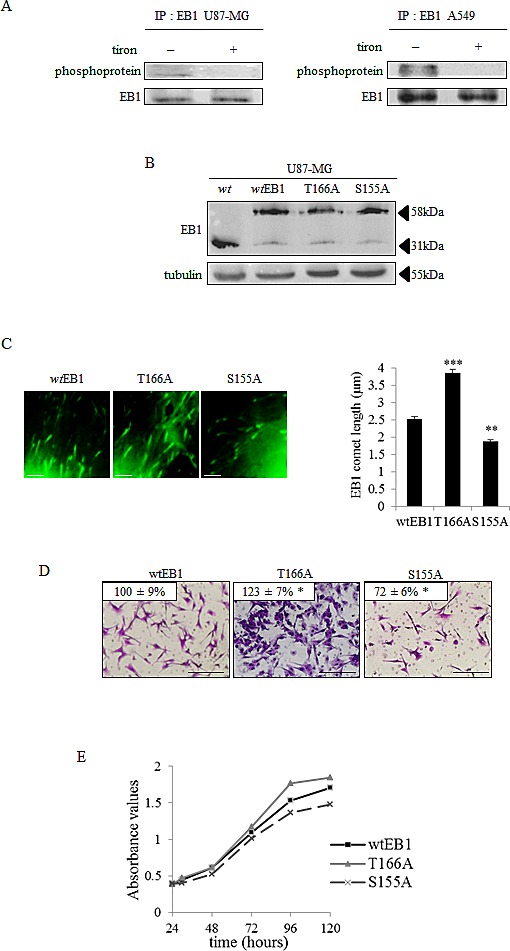
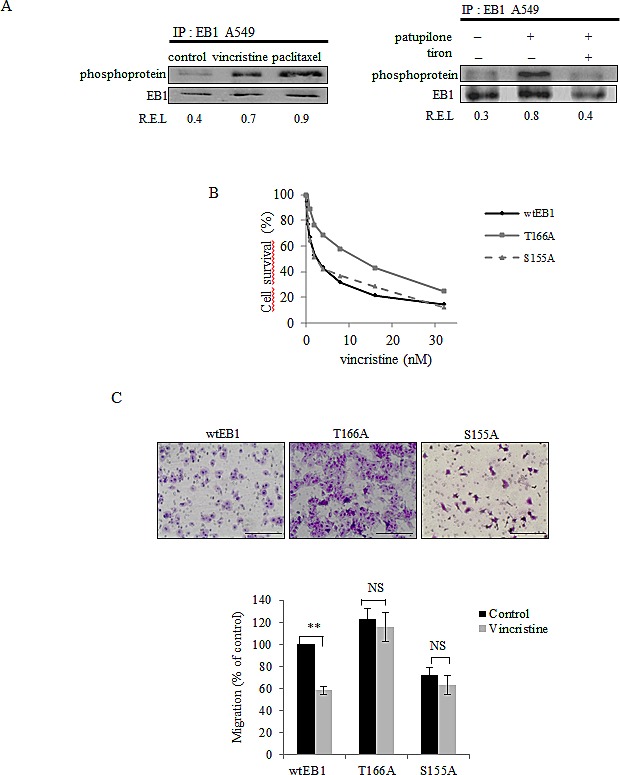
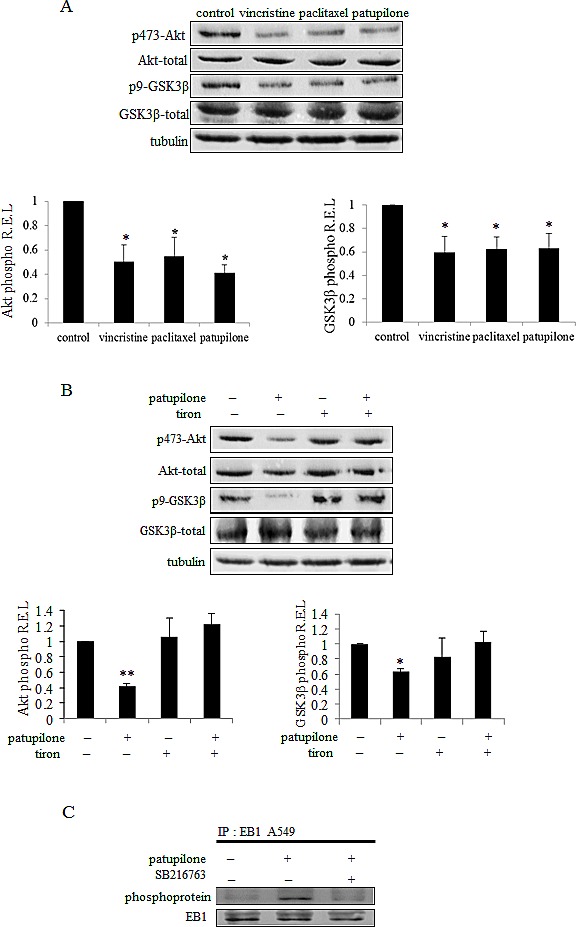
Microtubule-targeting agents (MTAs) are largely administered in adults and children cancers. Better deciphering their mechanism of action is of prime importance to develop more convenient therapy strategies. Here, we addressed the question of how reactive oxygen species (ROS) generation by mitochondria can be necessary for MTA efficacy. We showed for the first time that EB1 associates with microtubules in a phosphorylation-dependent manner, under control of ROS. By using phospho-defective mutants, we further characterized the Serine 155 residue as critical for EB1 accumulation at microtubule plus-ends, and both cancer cell migration and proliferation. Phosphorylation of EB1 on the Threonine 166 residue triggered opposite effects, and was identified as a requisite molecular switch in MTA activities. We then showed that GSK3β activation was responsible for MTA-triggered EB1 phosphorylation, resulting from ROS-mediated inhibition of upstream Akt. We thus disclosed here a novel pathway by which generation of mitochondrial ROS modulates microtubule dynamics through phosphorylation of EB1, improving our fundamental knowledge about this oncogenic protein, and pointing out the need to re-examine the current dogma of microtubule targeting by MTAs. The present work also provides a strong mechanistic rational to the promising therapeutic strategies that currently combine MTAs with anti-Akt targeted therapies.
微管靶向剂(MTAs)主要用于成人和儿童癌症的治疗。更好地解读其作用机制对于开发更便捷的治疗策略至关重要。在此,我们探讨了线粒体产生的活性氧(ROS)对于MTA疗效的必要性这一问题。我们首次表明,在ROS的调控下,EB1以磷酸化依赖的方式与微管结合。通过使用磷酸化缺陷突变体,我们进一步将丝氨酸155残基鉴定为EB1在微管正端积累、癌细胞迁移和增殖的关键因素。苏氨酸166残基上的EB1磷酸化引发相反的效应,并被确定为MTA活性中必需的分子开关。然后我们表明,GSK3β激活导致了MTA触发的EB1磷酸化,这是由ROS介导的上游Akt抑制所引起的。因此,我们在此揭示了一条新的途径,通过该途径线粒体ROS的产生通过EB1的磷酸化调节微管动力学,增进了我们对这种致癌蛋白的基础知识,并指出需要重新审视当前MTAs靶向微管的教条。本研究还为目前将MTAs与抗Akt靶向治疗相结合的有前景的治疗策略提供了强有力的机制依据。