Shan Bing, Xu Chunping, Zhang Yaoyang, Xu Tao, Gottesfeld Joel M, Yates John R
Department of Chemical Physiology, ‡Department of Cell and Molecular biology, The Scripps Research Institute , La Jolla, California 92037, United States.
J Proteome Res. 2014 Nov 7;13(11):4558-66. doi: 10.1021/pr500514r. Epub 2014 Jun 26.
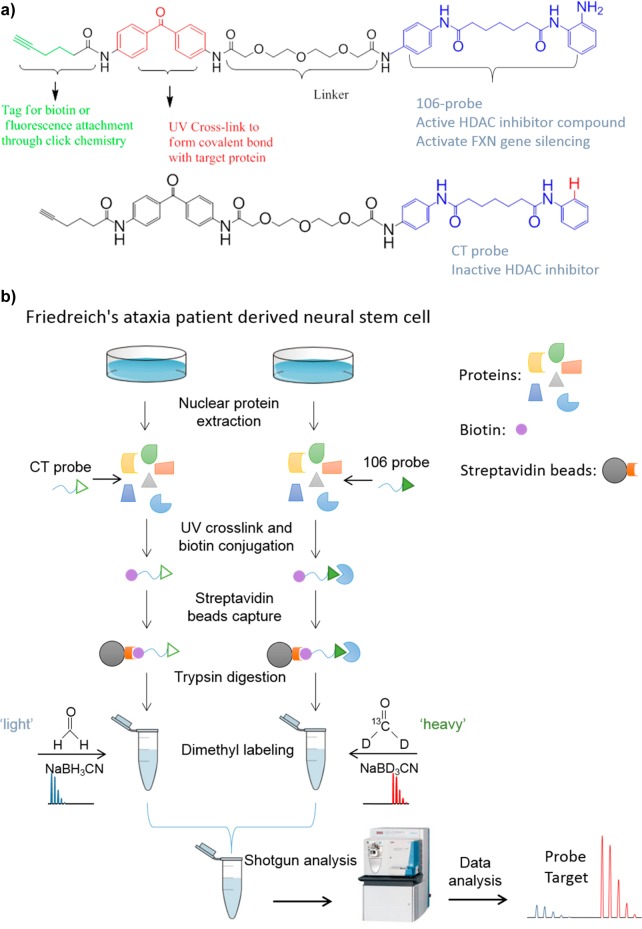
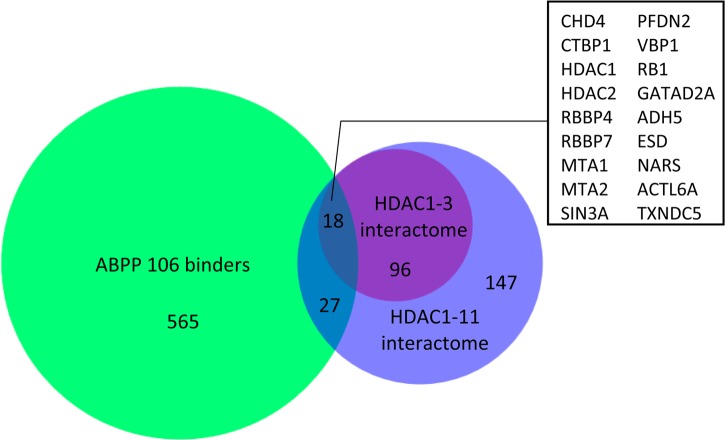
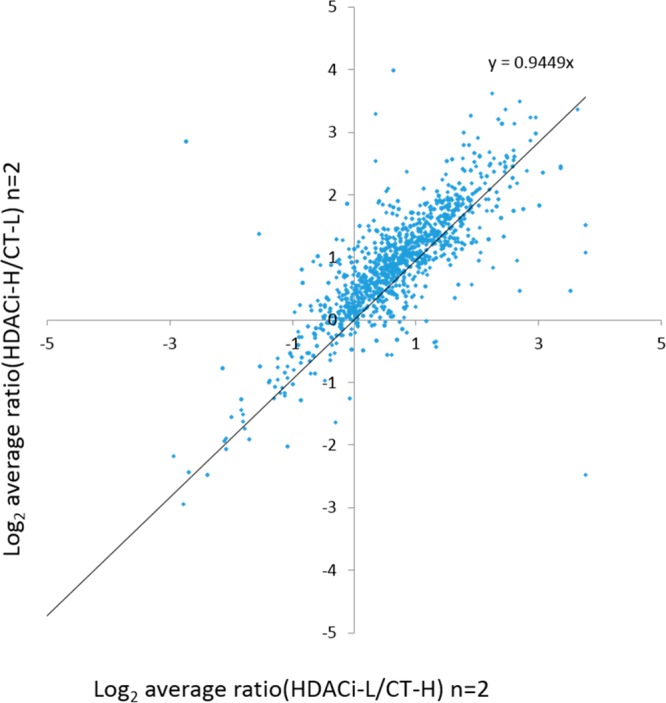
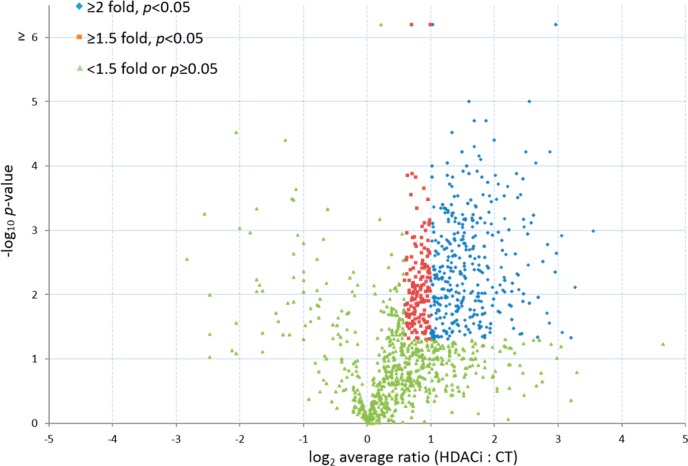
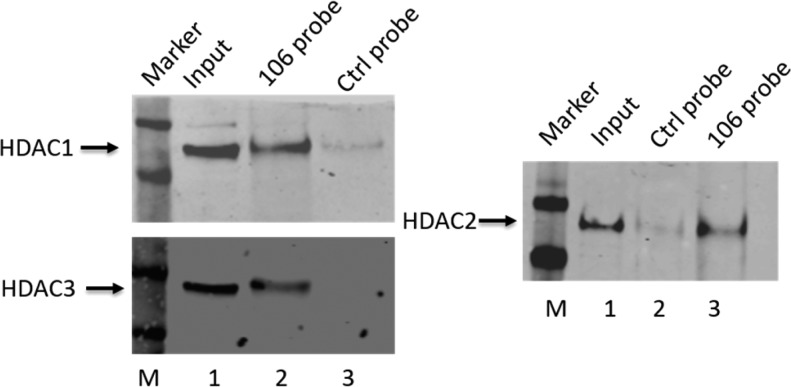
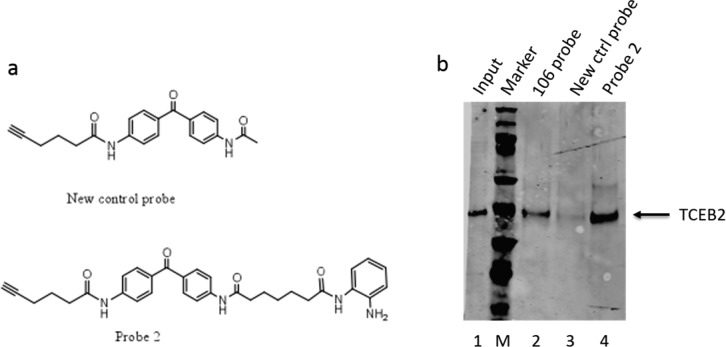
Members of the 2-aminobenzamide class of histone deacetylase (HDAC) inhibitors show promise as therapeutics for the neurodegenerative diseases Friedreich's ataxia (FRDA) and Huntington's disease (HD). While it is clear that HDAC3 is one of the important targets of the 2-aminobenzamide HDAC inhibitors, inhibition of other class I HDACs (HDACs 1 and 2) may also be involved in the beneficial effects of these compounds in FRDA and HD, and other HDAC interacting proteins may be impacted by the compound. To this end, we synthesized activity-based profiling probe (ABPP) versions of one of our HDAC inhibitors (compound 106), and in the present study we used a quantitative proteomic method coupled with multidimensional protein identification technology (MudPIT) to identify the proteins captured by the ABPP 106 probe. Nuclear proteins were extracted from FRDA patient iPSC-derived neural stem cells, and then were reacted with control and ABPP 106 probe. After reaction, the bound proteins were digested on the beads, and the peptides were modified using stable isotope-labeled formaldehyde to form dimethyl amine. The selectively bound proteins determined by mass spectrometry were subjected to functional and pathway analysis. Our findings suggest that the targets of compound 106 are involved not only in transcriptional regulation but also in posttranscriptional processing of mRNA.
2-氨基苯甲酰胺类组蛋白去乙酰化酶(HDAC)抑制剂有望成为治疗神经退行性疾病弗里德赖希共济失调(FRDA)和亨廷顿舞蹈病(HD)的药物。虽然很明显HDAC3是2-氨基苯甲酰胺HDAC抑制剂的重要靶点之一,但抑制其他I类HDAC(HDAC1和HDAC2)可能也参与了这些化合物对FRDA和HD的有益作用,并且其他HDAC相互作用蛋白可能会受到该化合物的影响。为此,我们合成了我们其中一种HDAC抑制剂(化合物106)的基于活性的分析探针(ABPP)版本,在本研究中,我们使用定量蛋白质组学方法结合多维蛋白质鉴定技术(MudPIT)来鉴定被ABPP 106探针捕获的蛋白质。从FRDA患者诱导多能干细胞衍生的神经干细胞中提取核蛋白,然后使其与对照和ABPP 106探针反应。反应后,将结合的蛋白质在磁珠上进行消化,并用稳定同位素标记的甲醛对肽进行修饰以形成二甲胺。通过质谱法确定的选择性结合蛋白进行功能和通路分析。我们的研究结果表明,化合物106的靶点不仅参与转录调控,还参与mRNA的转录后加工。