Computational Biology Center and Center for Molecular Oncology, Memorial Sloan-Kettering Cancer Center, New York, NY 10065, USA.
Department of Computer Science and CS Bond Life Sciences Center, University of Missouri, Columbia, MO 65211, USA.
Clin Proteomics. 2014 May 6;11(1):19. doi: 10.1186/1559-0275-11-19. eCollection 2014.
Estrogen has been shown to mediate protection in female hearts against ischemia-reperfusion (I-R) stress. Composed by a Kir6.2 pore and an SUR2 regulatory subunit, cardiac ATP-sensitive potassium channels (KATP) remain quiescent under normal physiological conditions but they are activated by stress stimuli to confer protection to the heart. It remains unclear whether KATP is a regulatory target of estrogen in the female-specific I-R signaling pathway. In this study, we aimed at delineating the molecular mechanism underlying estrogen modulation on KATP channel activity during I-R.
We employed KATP knockout mice in which SUR2 is disrupted (SUR2KO) to characterize their I-R response using an in vivo occlusion model. To test the protective effects of estrogen, female mice were ovariectomized and implanted with 17β-estradiol (E2) or placebo pellets (0.1 μg/g/day, 21-day release) before receiving an I-R treatment. Comparative proteomic analyses were performed to assess pathway-level alterations between KO-IR and WT-IR hearts.
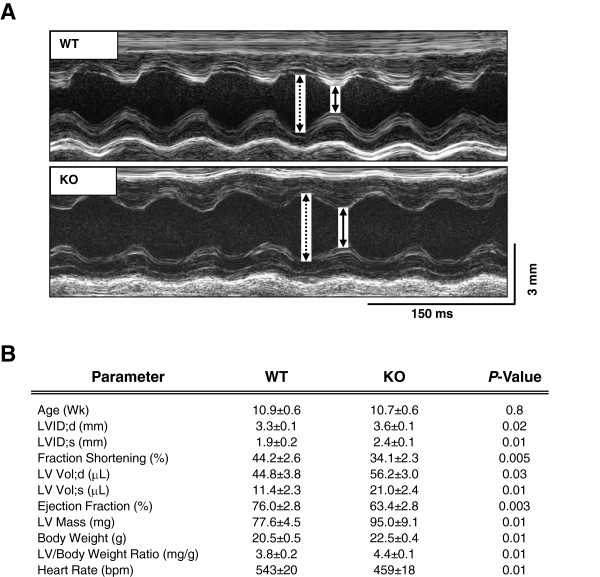
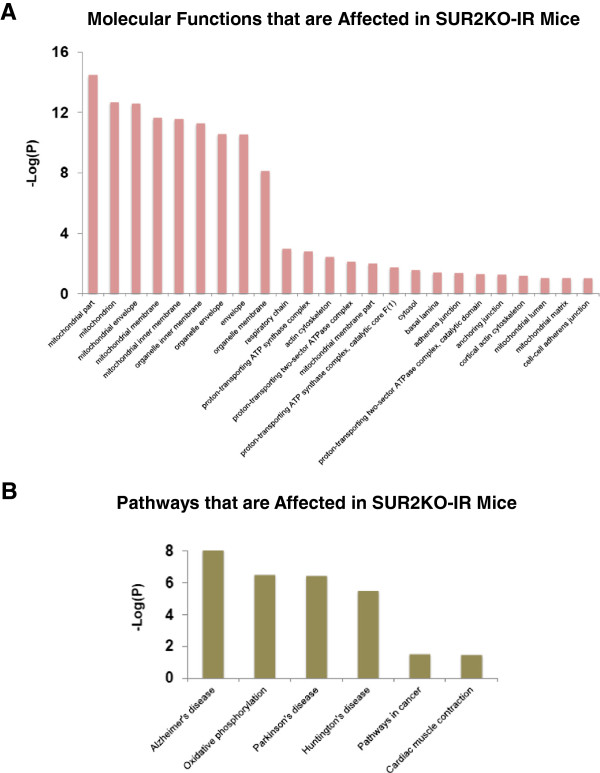
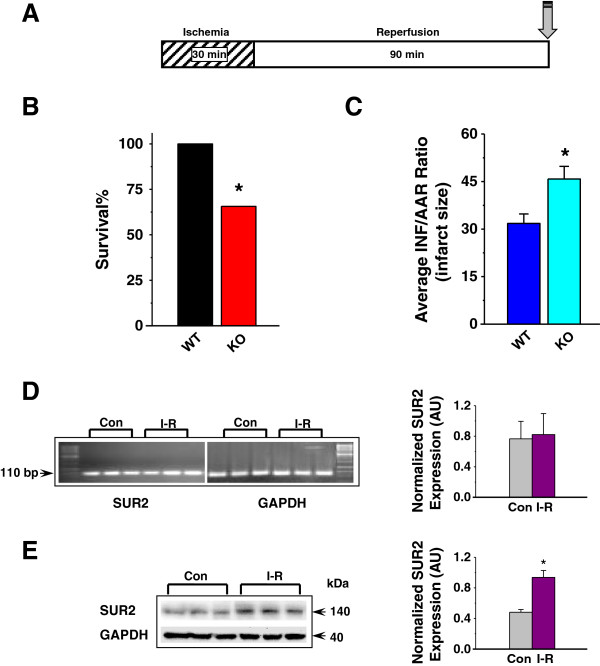
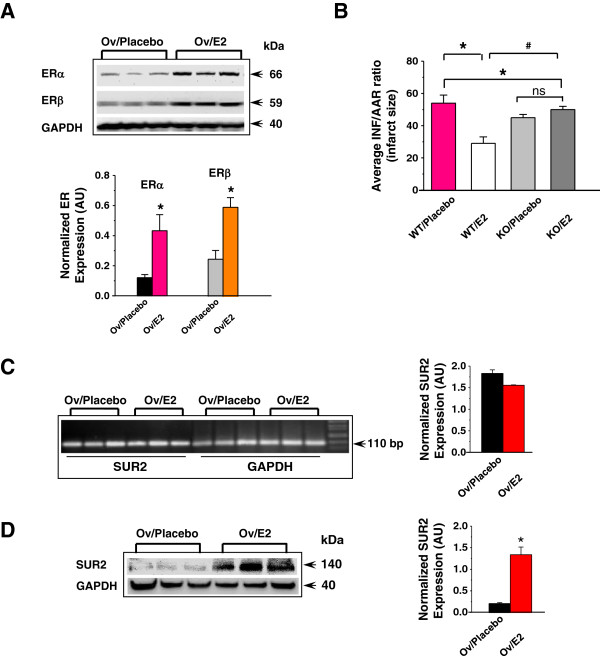
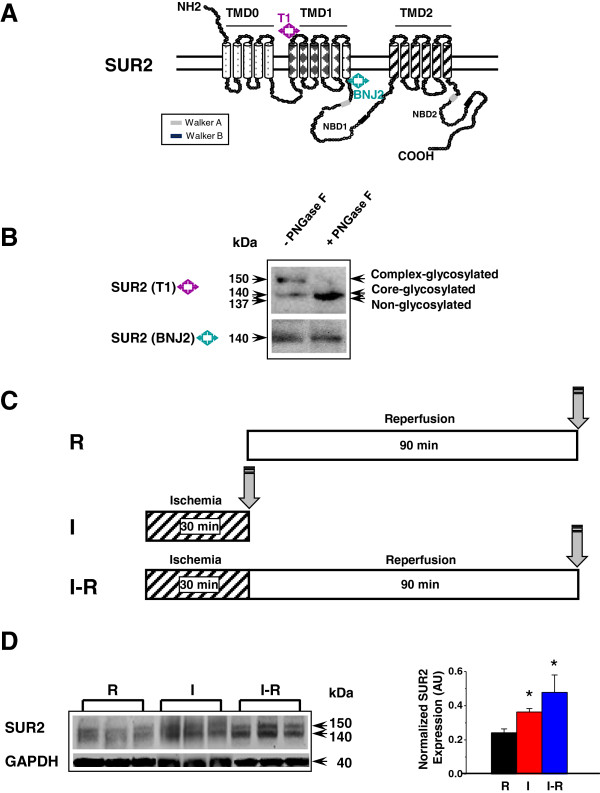
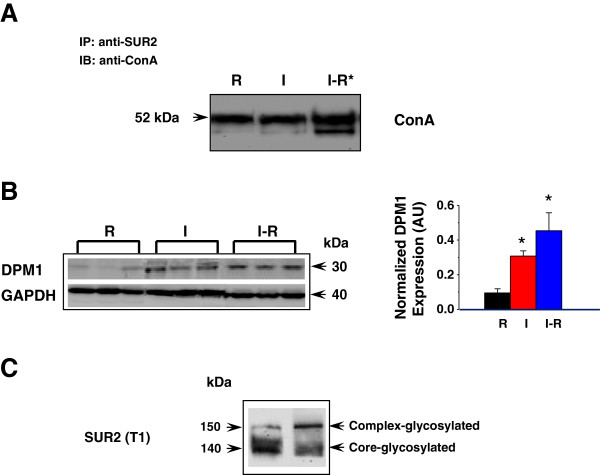
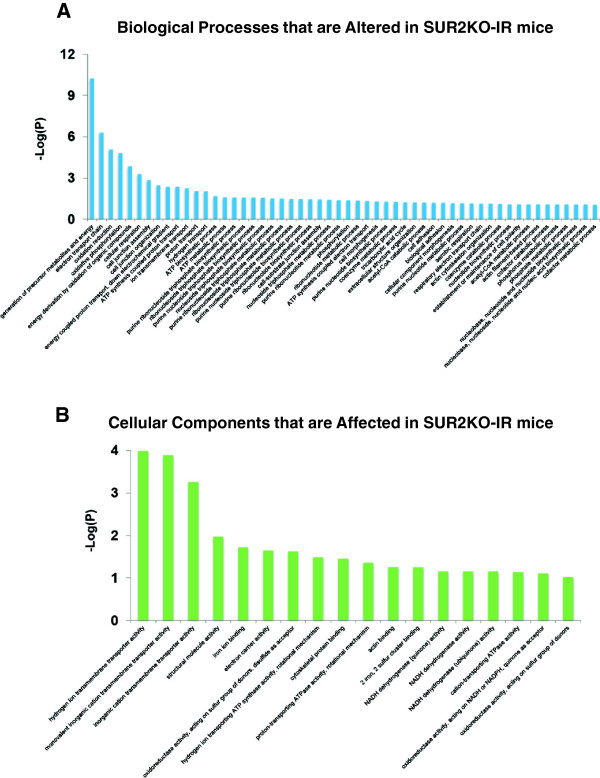
Echocardiographic results indicated that KO females were pre-disposed to cardiac dysfunction at baseline. The mutant mice were more susceptible to I-R stress by having bigger infarcts (46%) than WT controls (31%). The observation was confirmed using ovariectomized mice implanted with E2 or placebo. However, the estrogen-mediated protection was diminished in KO hearts. Expression studies showed that the SUR2 protein level, but not RNA level, was up-regulated in WT-IR mice relative to untreated controls possibly via PTMs. Our antibodies detected different glycosylated SUR2 receptor species after the PNGase F treatment, suggesting that SUR2 could be modified by N-glycosylation. We subsequently showed that E2 could further induce the formation of complex-glycosylated SUR2. Additional time-point experiments revealed that I-R hearts had increased levels of N-glycosylated SUR2; and DPM1, the first committed step enzyme in the N-glycosylation pathway. Comparative proteomic profiling identified 41 differentially altered protein hits between KO-IR and WT-IR mice encompassing those related to estrogen biosynthesis.
Our findings suggest that KATP is likely a downstream regulatory target of estrogen and it is indispensable in female I-R signaling. Increasing SUR2 expression by N-glycosylation mediated by estrogen may be effective to enhance KATP channel subunit expression in I-R.
雌激素已被证明可介导女性心脏对缺血再灌注(I-R)应激的保护作用。由 Kir6.2 孔和 SUR2 调节亚基组成的心脏 ATP 敏感性钾通道(KATP)在正常生理条件下保持静止,但在应激刺激下被激活,从而为心脏提供保护。目前尚不清楚 KATP 是否是女性特异性 I-R 信号通路中雌激素的调节靶点。在这项研究中,我们旨在阐明雌激素对 I-R 期间 KATP 通道活性调节的分子机制。
我们使用 SUR2 被破坏(SUR2KO)的 KATP 敲除小鼠,通过体内阻塞模型来描述它们的 I-R 反应。为了测试雌激素的保护作用,雌性小鼠接受 I-R 治疗前进行卵巢切除术并植入 17β-雌二醇(E2)或安慰剂丸(0.1μg/g/天,21 天释放)。进行比较蛋白质组学分析以评估 KO-IR 和 WT-IR 心脏之间的通路水平变化。
超声心动图结果表明,KO 雌性在基线时易患心脏功能障碍。突变小鼠对 I-R 应激更敏感,梗死面积更大(46%),而 WT 对照(31%)。该观察结果在接受 E2 或安慰剂植入的卵巢切除小鼠中得到证实。然而,在 KO 心脏中,雌激素介导的保护作用减弱。表达研究表明,与未处理的对照相比,WT-IR 小鼠中的 SUR2 蛋白水平(而非 RNA 水平)上调,可能是通过 PTMs 上调的。我们的抗体在用 PNGase F 处理后检测到不同糖基化的 SUR2 受体物种,表明 SUR2 可能通过 N-糖基化修饰。随后我们表明,E2 可以进一步诱导复杂糖基化 SUR2 的形成。额外的时间点实验表明,I-R 心脏中 N-糖基化 SUR2 的水平增加;并且 DPM1,N-糖基化途径中的第一个关键酶。比较蛋白质组学分析鉴定了 KO-IR 和 WT-IR 小鼠之间 41 个差异表达的蛋白靶点,其中包括与雌激素生物合成相关的蛋白靶点。
我们的研究结果表明,KATP 可能是雌激素的下游调节靶点,在女性 I-R 信号中是不可或缺的。通过雌激素介导的 N-糖基化增加 SUR2 表达可能有助于增强 I-R 中的 KATP 通道亚基表达。