Cheng XueLi, Wang Kai, Zhao Yan, Wang Kun
Key Laboratory of Birth Regulation and Control Technology of National Health Commission of China, Shandong Provincial Maternal and Child Health Care Hospital affiliated to Qingdao University, Jinan, 250014, Shandong, China.
Institute for Translational Medicine, The Affiliated Hospital of Qingdao University, College of Medicine, Qingdao University, Qingdao, 266073, Shandong, China.
Cell Death Discov. 2023 Jul 28;9(1):275. doi: 10.1038/s41420-023-01560-5.
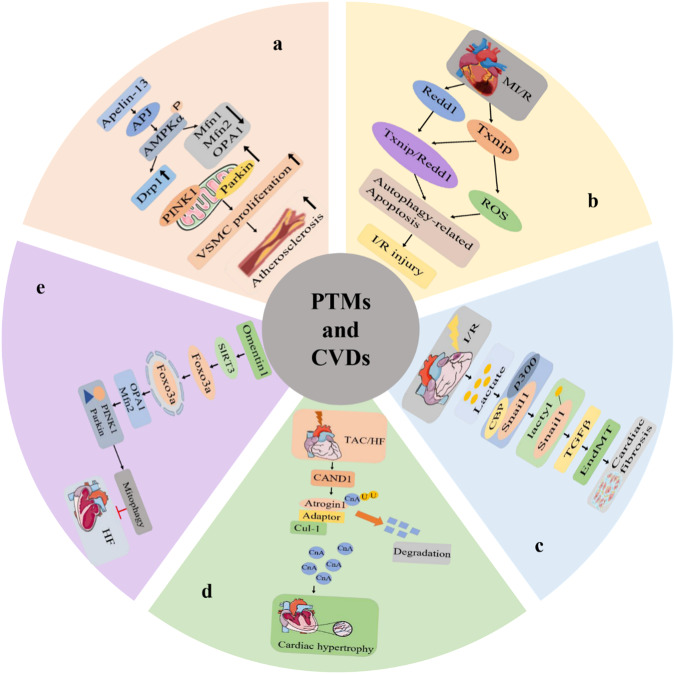
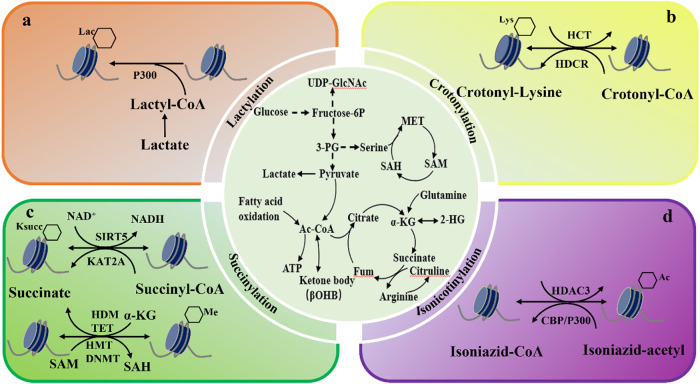
Cardiovascular diseases (CVDs) such as atherosclerosis, myocardial remodeling, myocardial ischemia-reperfusion (I/R) injury, heart failure, and oxidative stress are among the greatest threats to human health worldwide. Cardiovascular pathogenesis has been studied for decades, and the influence of epigenetic changes on CVDs has been extensively studied. Post-translational modifications (PTMs), including phosphorylation, glycosylation, methylation, acetylation, ubiquitination, ubiquitin-like and nitrification, play important roles in the normal functioning of the cardiovascular system. Over the past decade, with the application of high-performance liquid chromatography-tandem mass spectrometry (HPLC-MS/MS), an increasing number novel acylation modifications have been discovered, including propionylation, crotonylation, butyrylation, succinylation, lactylation, and isonicotinylation. Each change in protein conformation has the potential to alter protein function and lead to CVDs, and this process is usually reversible. This article summarizes the mechanisms underlying several common PTMs involved in the occurrence and development of CVDs.
心血管疾病(CVDs),如动脉粥样硬化、心肌重塑、心肌缺血再灌注(I/R)损伤、心力衰竭和氧化应激,是全球人类健康面临的最大威胁之一。心血管发病机制已研究数十年,表观遗传变化对心血管疾病的影响也已得到广泛研究。翻译后修饰(PTMs),包括磷酸化、糖基化、甲基化、乙酰化、泛素化、类泛素化和硝化作用,在心血管系统的正常功能中发挥重要作用。在过去十年中,随着高效液相色谱-串联质谱(HPLC-MS/MS)的应用,越来越多新的酰化修饰被发现,包括丙酰化、巴豆酰化、丁酰化、琥珀酰化、乳酰化和异烟酰化。蛋白质构象的每一种变化都有可能改变蛋白质功能并导致心血管疾病,而这个过程通常是可逆的。本文总结了几种参与心血管疾病发生发展的常见翻译后修饰的潜在机制。