Hu Fanlei, Li Yingni, Zheng Li, Shi Lianjie, Liu Hongjiang, Zhang Xuewu, Zhu Huaqun, Tang Sumei, Zhu Lei, Xu Liling, Yang Yuqin, Li Zhanguo
Department of Rheumatology and Immunology, Peking University People's Hospital, Beijing, China.
PLoS One. 2014 Jun 17;9(6):e100266. doi: 10.1371/journal.pone.0100266. eCollection 2014.
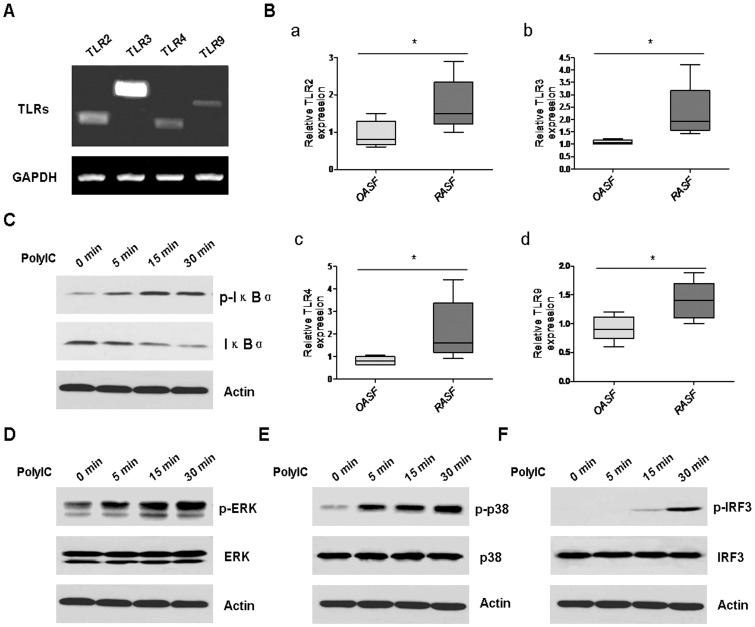
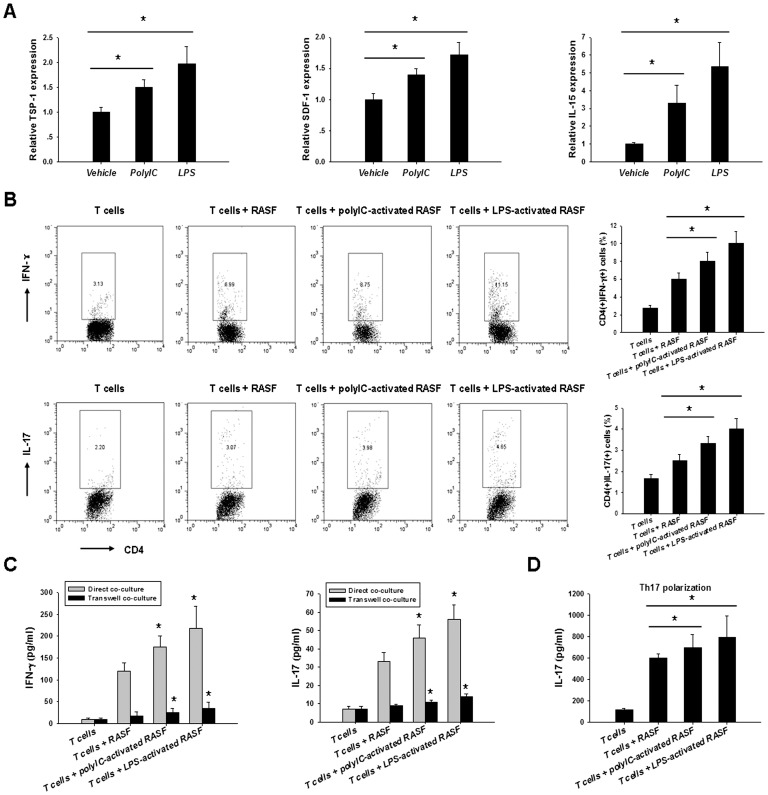
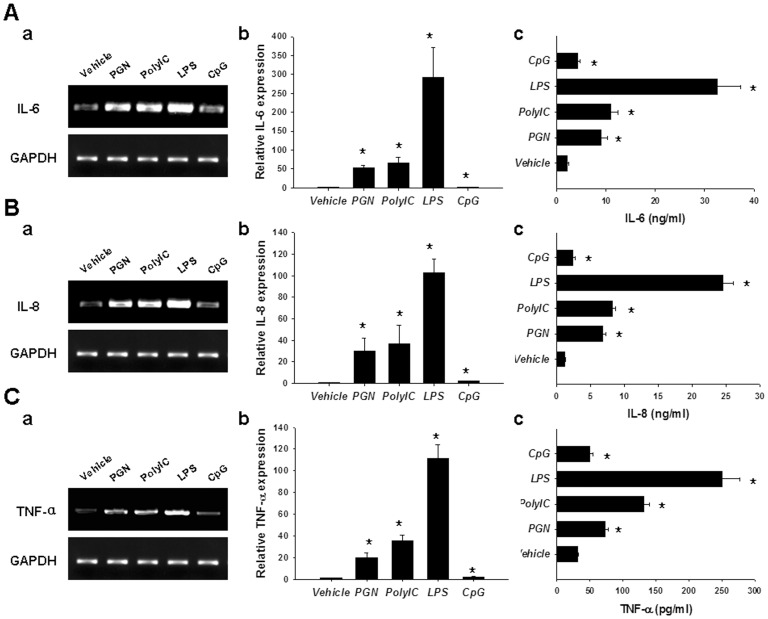
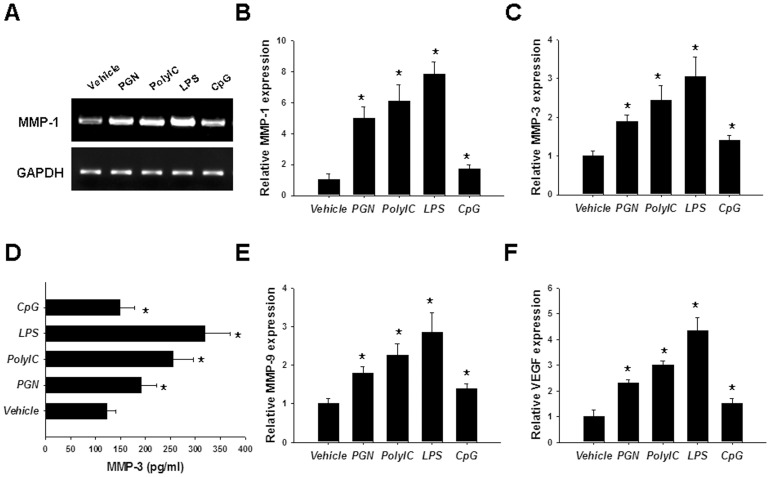
Rheumatoid arthritis (RA) is a chronic inflammatory disease characterized by synovial fibroblast hyperplasia and bone and cartilage erosion. Synovial fibroblast- and T cell-mediated inflammation plays crucial roles in the pathogenesis of RA. However how this inflammation is initiated, propagated, and maintained remains controversial. Here, we systemically examined the contribution of toll-like receptors (TLRs) to the inflammatory mediator production as well as Th1 and Th17 cell hyperactivity in RA. Our results show that rheumatoid arthritis synovial fibroblasts (RASF) express a series of TLRs, including TLR2, TLR3, TLR4, and TLR9, with the predominant expression of TLR3. Moreover, the expression levels of these TLRs were higher than those in osteoarthritis synovial fibroblasts (OASF). Ligation of TLR3, as well as TLR2 and TLR4, resulted in vigorous production of inflammatory cytokines, matrix metalloproteinases (MMPs), and vascular endothelial growth factor (VEGF) in RASF, with activation of the NF-κB, MAPK, and IRF3 pathways. More important, activation of these TLRs expressed by RASF exacerbated inflammatory Th1 and Th17 cell expansion both in cell-cell contact-dependent and inflammatory cytokine-dependent manners, which induced more IFN-γ and IL-17 accumulation. Targeting TLRs may modulate the inflammation in RA and provide new therapeutic strategies for overcoming this persistent disease.
类风湿关节炎(RA)是一种慢性炎症性疾病,其特征为滑膜成纤维细胞增生以及骨和软骨侵蚀。滑膜成纤维细胞和T细胞介导的炎症在RA发病机制中起关键作用。然而,这种炎症如何启动、传播和维持仍存在争议。在此,我们系统地研究了Toll样受体(TLRs)在RA中对炎症介质产生以及Th1和Th17细胞过度活化的作用。我们的结果表明,类风湿关节炎滑膜成纤维细胞(RASF)表达一系列TLRs,包括TLR2、TLR3、TLR4和TLR9,其中TLR3表达占主导。此外,这些TLRs的表达水平高于骨关节炎滑膜成纤维细胞(OASF)。TLR3以及TLR2和TLR4的激活导致RASF中炎症细胞因子、基质金属蛋白酶(MMPs)和血管内皮生长因子(VEGF)的大量产生,并激活NF-κB、MAPK和IRF3通路。更重要的是,RASF表达的这些TLRs的激活以细胞间接触依赖和炎症细胞因子依赖的方式加剧了炎症性Th1和Th17细胞的扩增,从而诱导更多的IFN-γ和IL-17积累。靶向TLRs可能调节RA中的炎症,并为攻克这种持续性疾病提供新的治疗策略。