Chung Jin-Sung, Tamura Kyoichi, Cruz Ponciano D, Ariizumi Kiyoshi
Department of Dermatology, The University of Texas Southwestern Medical Center and Dermatology Section (Medical Service), Dallas Veterans Affairs Medical Center, Dallas, Texas, USA.
Department of Dermatology, The University of Texas Southwestern Medical Center and Dermatology Section (Medical Service), Dallas Veterans Affairs Medical Center, Dallas, Texas, USA.
J Invest Dermatol. 2014 Nov;134(11):2784-2794. doi: 10.1038/jid.2014.254. Epub 2014 Jun 17.
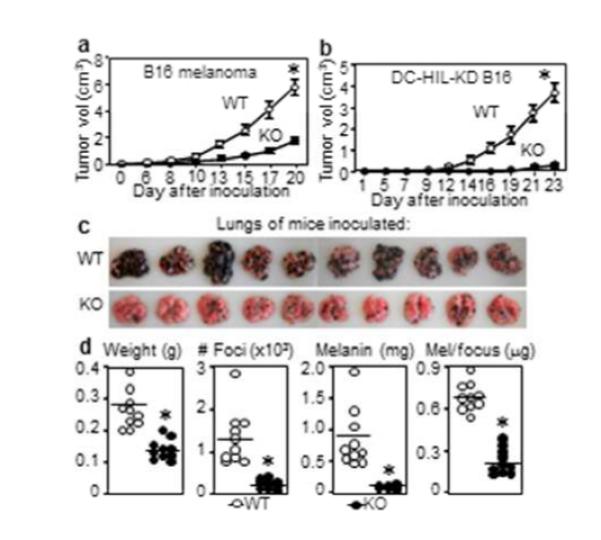
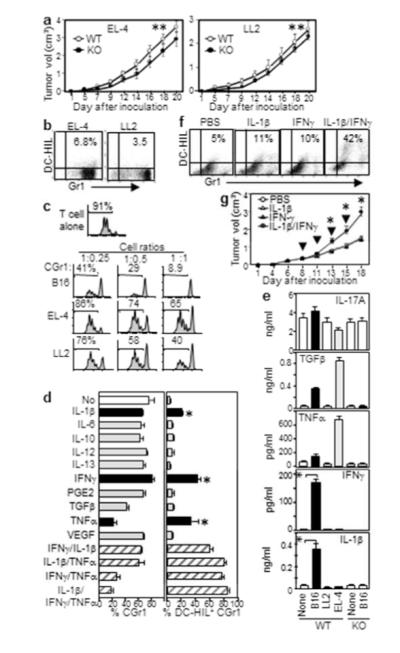
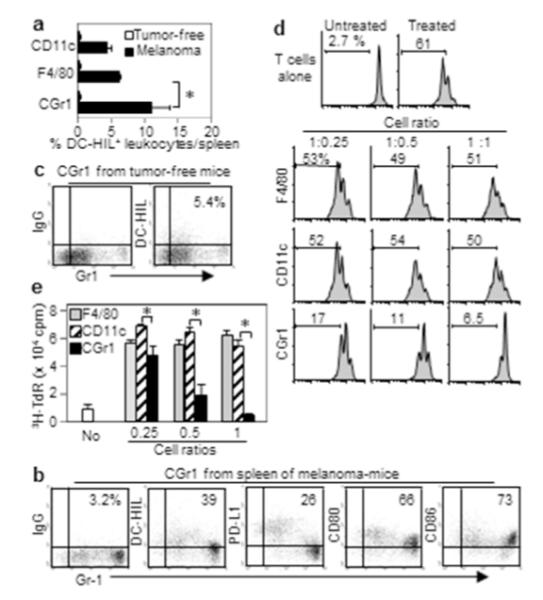
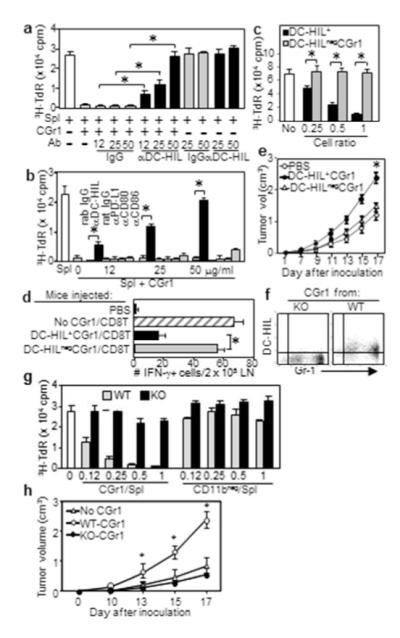
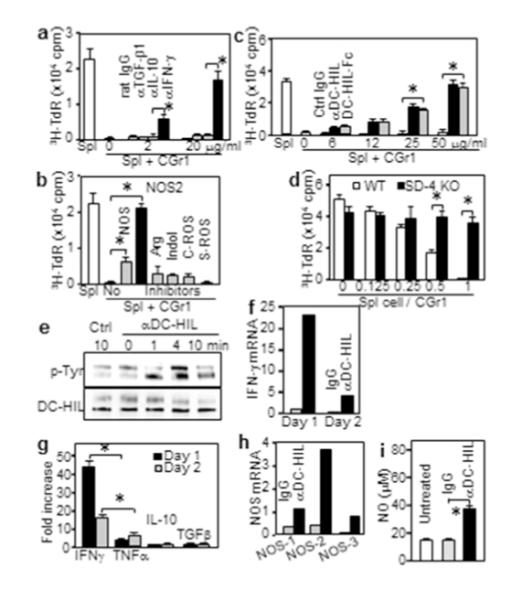
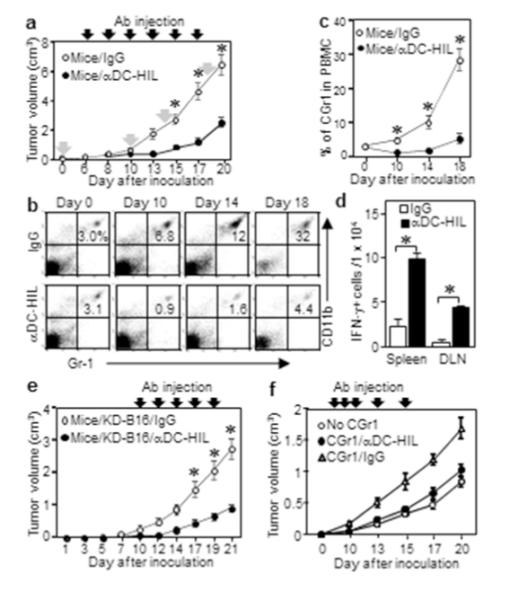
A major barrier to successful cancer immunotherapy is the tumor's ability to induce T-cell tolerance by exploiting host regulatory mechanisms. Having discovered the DC-HIL receptor, which inhibits T-cell responses by binding to syndecan-4 on effector T cells, we posited the DC-HIL/syndecan-4 pathway to have an important role in cancer promotion. Among DC-HIL(+) myelomonocytic cells, during growth of implanted mouse melanoma, CD11b(+)Gr1(+) cells were the most expanded population and the most potent at suppressing T-cell activation. Deletion of the DC-HIL gene or infusion of anti-DC-HIL mAb abrogated these cells' suppressor function and expansion, and markedly diminished melanoma growth and metastasis. IL-1β and IFN-γ were elevated in mice bearing melanoma, and concurrent exposure to both cytokines optimally induced DC-HIL expression by tumor-infiltrating CD11b(+)Gr1(+) cells. Ligation of DC-HIL transduced phosphorylation of its intracellular immunoreceptor tyrosine-based activation motif, which in turn induced intracellular expression of IFN-γ and inducible nitric oxide synthase (iNOS), known to mediate T-cell suppression by CD11b(+)Gr1(+) cells. Thus, DC-HIL is the critical mediator of these cells' suppressor function in melanoma-bearing mice and a potential target for improving melanoma immunotherapy.
成功进行癌症免疫治疗的一个主要障碍是肿瘤通过利用宿主调节机制诱导T细胞耐受的能力。在发现了DC-HIL受体(其通过与效应T细胞上的syndecan-4结合来抑制T细胞反应)之后,我们推测DC-HIL/syndecan-4途径在癌症进展中起重要作用。在植入小鼠黑色素瘤生长过程中,在DC-HIL(+)骨髓单核细胞中,CD11b(+)Gr1(+)细胞是扩增最多的群体,也是抑制T细胞活化能力最强的群体。删除DC-HIL基因或注入抗DC-HIL单克隆抗体可消除这些细胞的抑制功能和扩增,并显著减少黑色素瘤的生长和转移。携带黑色素瘤的小鼠体内IL-1β和IFN-γ水平升高,同时暴露于这两种细胞因子可最佳地诱导肿瘤浸润性CD11b(+)Gr1(+)细胞表达DC-HIL。DC-HIL的连接转导了其细胞内基于免疫受体酪氨酸的激活基序的磷酸化,这反过来又诱导了IFN-γ和诱导型一氧化氮合酶(iNOS)的细胞内表达,已知它们可介导CD11b(+)Gr1(+)细胞对T细胞的抑制。因此,DC-HIL是荷黑色素瘤小鼠中这些细胞抑制功能的关键介质,也是改善黑色素瘤免疫治疗的潜在靶点。