Paziewska A, Dabrowska M, Goryca K, Antoniewicz A, Dobruch J, Mikula M, Jarosz D, Zapala L, Borowka A, Ostrowski J
Department of Gastroenterology and Hepatology, Medical Center for Postgraduate Education, 01-813 Warsaw, Poland.
Department of Genetics, Maria Sklodowska-Curie Memorial Cancer Center and Institute of Oncology, 02-781 Warsaw, Poland.
Br J Cancer. 2014 Aug 12;111(4):781-9. doi: 10.1038/bjc.2014.337. Epub 2014 Jun 17.
We analysed critically the potential usefulness of RNA- and DNA-based biomarkers in supporting conventional histological diagnostic tests for prostate carcinoma (PCa) detection.
Microarray profiling of gene expression and DNA methylation was performed on 16 benign prostatic hyperplasia (BPH) and 32 cancerous and non-cancerous prostate samples extracted by radical prostatectomy. The predictive value of the selected biomarkers was validated by qPCR-based methods using tissue samples extracted from the 58 prostates and, separately, using 227 prostate core biopsies.
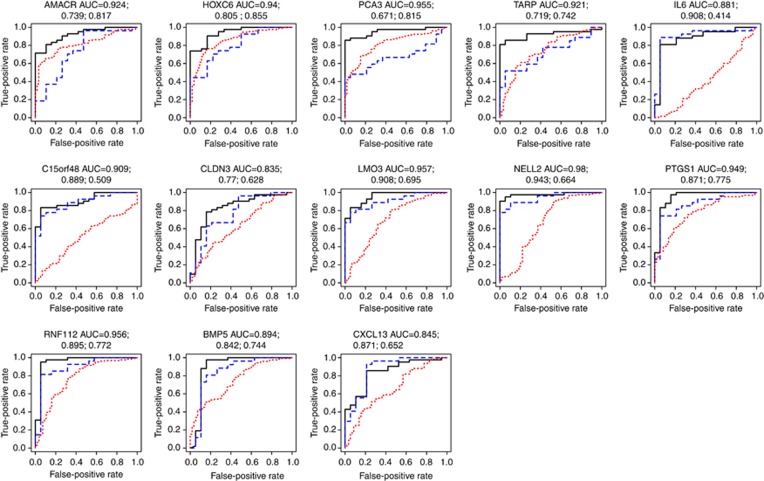
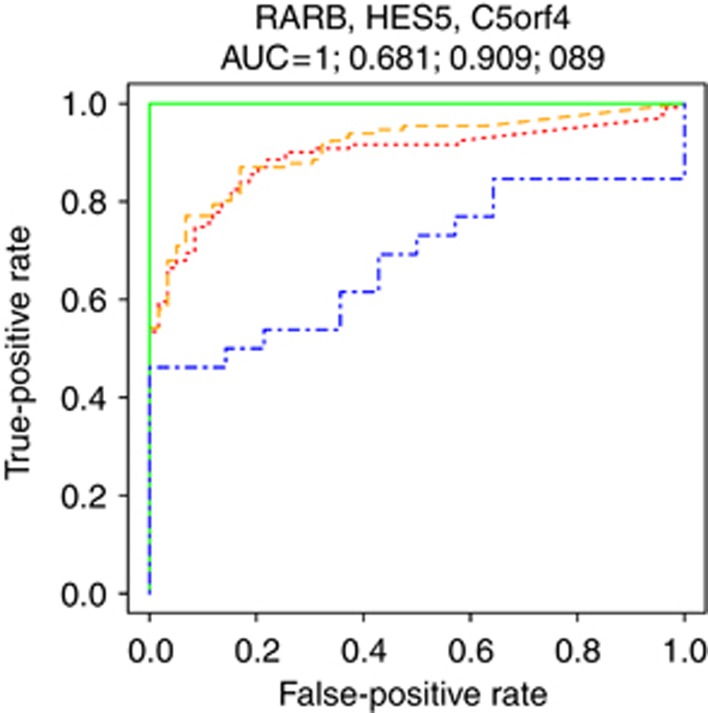
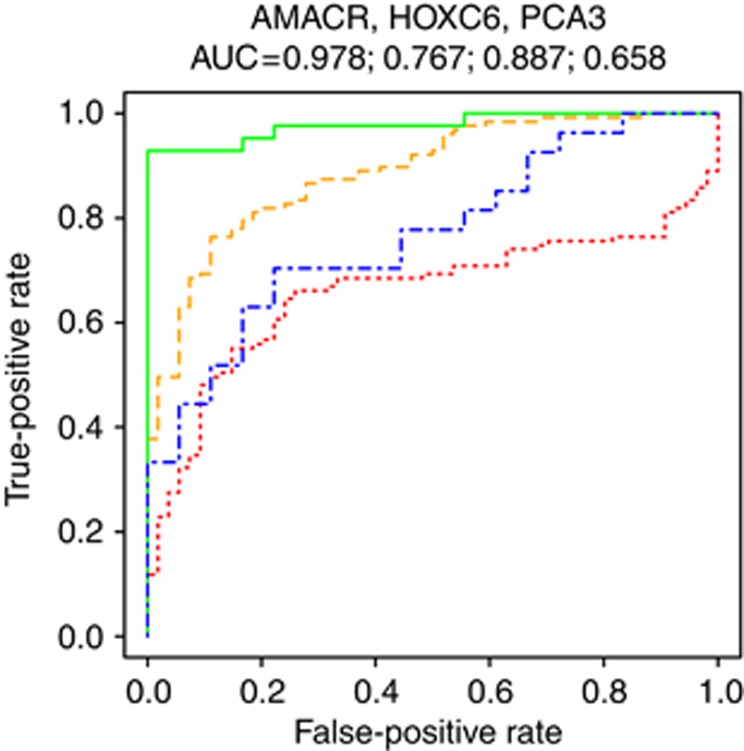
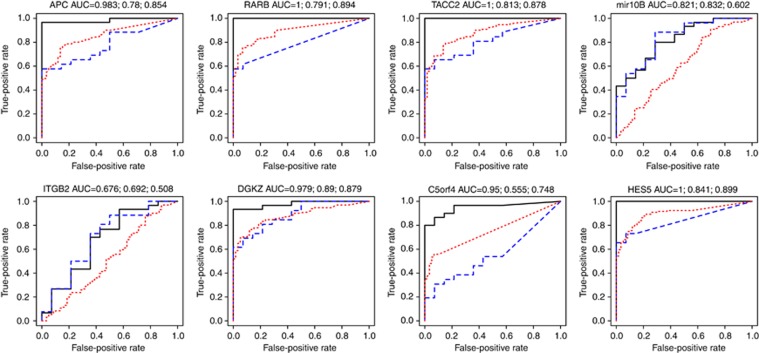
HOXC6, AMACR and PCA3 expression showed the best discrimination between PCa and BPH. All three genes were previously reported as the most promising mRNA-based markers for distinguishing cancerous lesions from benign prostate lesions; however, none were sufficiently sensitive and specific to meet the criteria for a PCa diagnostic biomarker. By contrast, DNA methylation levels of the APC, TACC2, RARB, DGKZ and HES5 promoter regions achieved high discriminating sensitivity and specificity, with area under the curve (AUCs) reaching 0.95-1.0. Only a small overlap was detected between the DNA methylation levels of PCa-positive and PCa-negative needle biopsies, with AUCs ranging between 0.854 and 0.899.
DNA methylation-based biomarkers reflect the prostate malignancy and might be useful in supporting clinical decisions for suspected PCa following an initial negative prostate biopsy.
我们批判性地分析了基于RNA和DNA的生物标志物在支持前列腺癌(PCa)检测的传统组织学诊断测试中的潜在效用。
对通过根治性前列腺切除术提取的16份良性前列腺增生(BPH)样本以及32份癌性和非癌性前列腺样本进行基因表达和DNA甲基化的微阵列分析。使用从58个前列腺中提取的组织样本,并分别使用227份前列腺穿刺活检样本,通过基于qPCR的方法验证所选生物标志物的预测价值。
HOXC6、AMACR和PCA3的表达在PCa和BPH之间显示出最佳区分度。此前所有这三个基因均被报道为区分癌性病变与良性前列腺病变最有前景的基于mRNA的标志物;然而,没有一个标志物的敏感性和特异性足以满足PCa诊断生物标志物的标准。相比之下,APC、TACC2、RARB、DGKZ和HES5启动子区域的DNA甲基化水平具有高区分敏感性和特异性,曲线下面积(AUC)达到0.95 - 1.0。在PCa阳性和PCa阴性穿刺活检的DNA甲基化水平之间仅检测到小范围重叠,AUC在0.854至0.899之间。
基于DNA甲基化的生物标志物反映前列腺恶性程度,可能有助于支持初次前列腺活检为阴性的疑似PCa患者的临床决策。