Miyashita Hiroaki, Chikazawa Miho, Otaki Natsuki, Hioki Yusuke, Shimozu Yuki, Nakashima Fumie, Shibata Takahiro, Hagihara Yoshihisa, Maruyama Shoichi, Matsumi Noriyoshi, Uchida Koji
Graduate School of Bioagricultural Sciences, Nagoya University, Nagoya 464-8601, Japan.
1] Graduate School of Bioagricultural Sciences, Nagoya University, Nagoya 464-8601, Japan [2] PRESTO, Japan Science and Technology Agency (JST), Kawaguchi, Saitama 332-0012, Japan.
Sci Rep. 2014 Jun 18;4:5343. doi: 10.1038/srep05343.
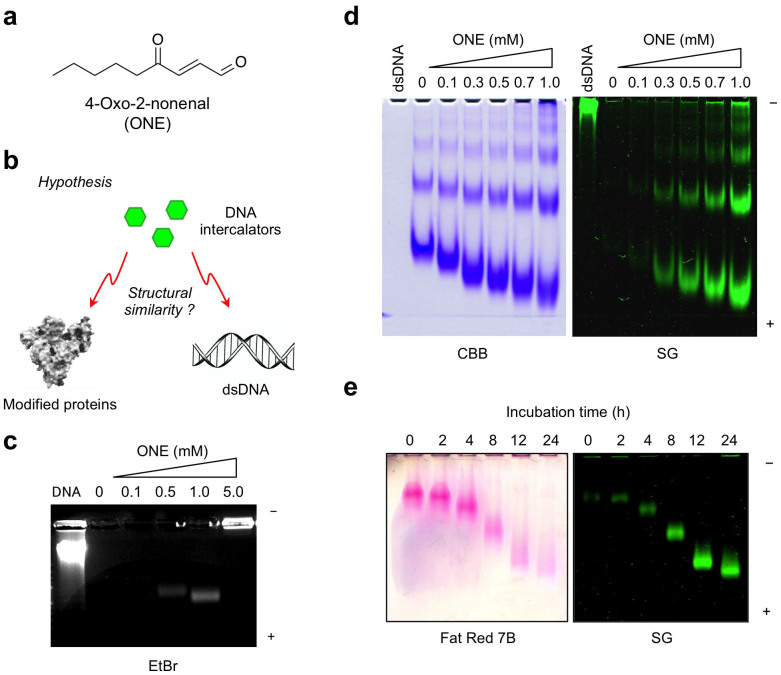
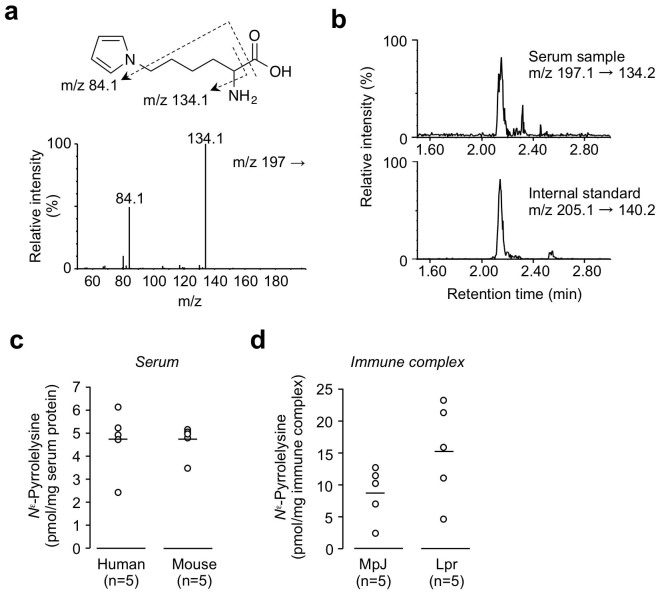
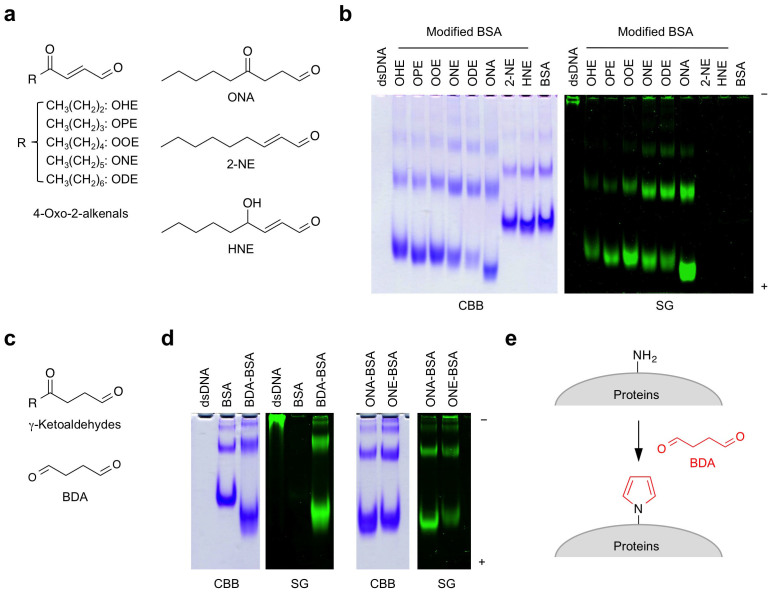
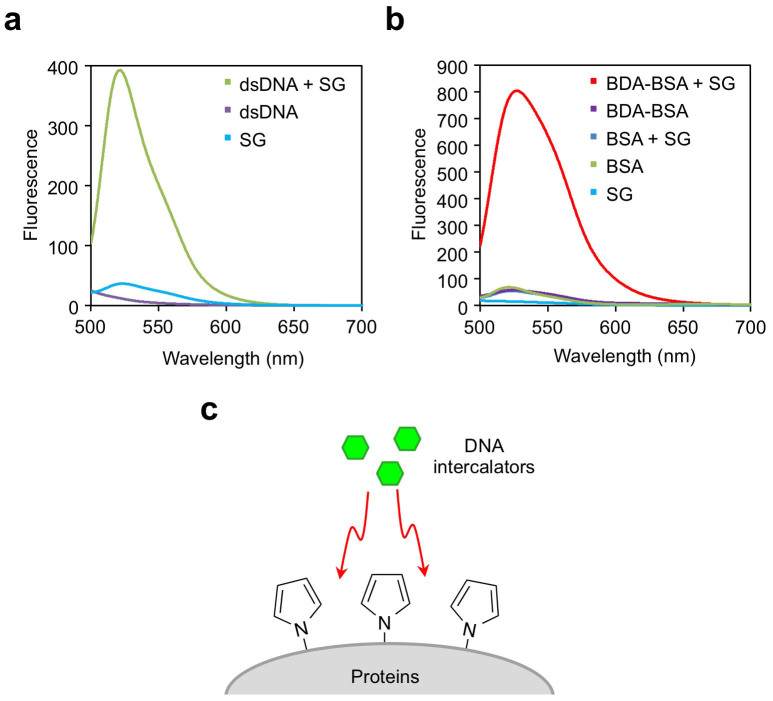
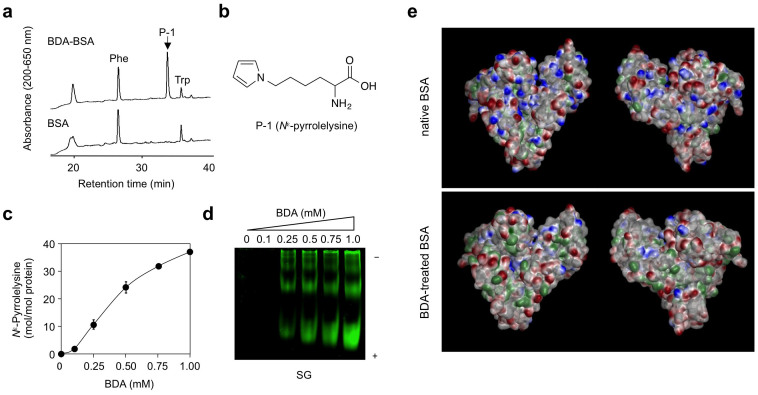
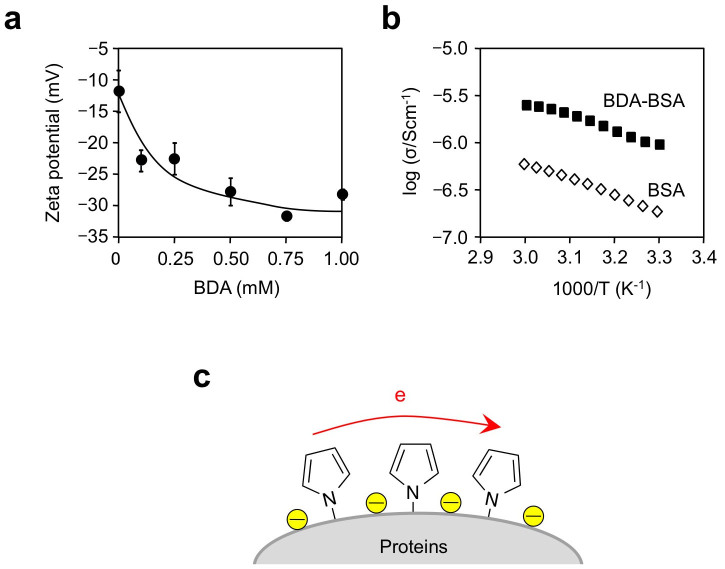
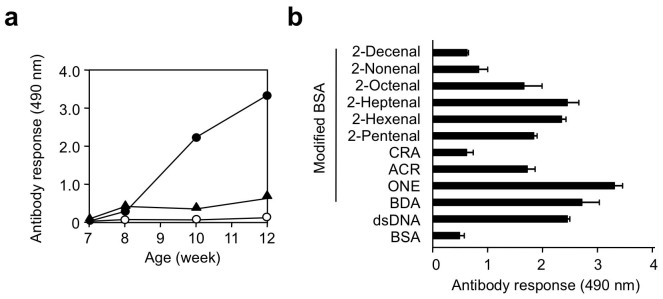
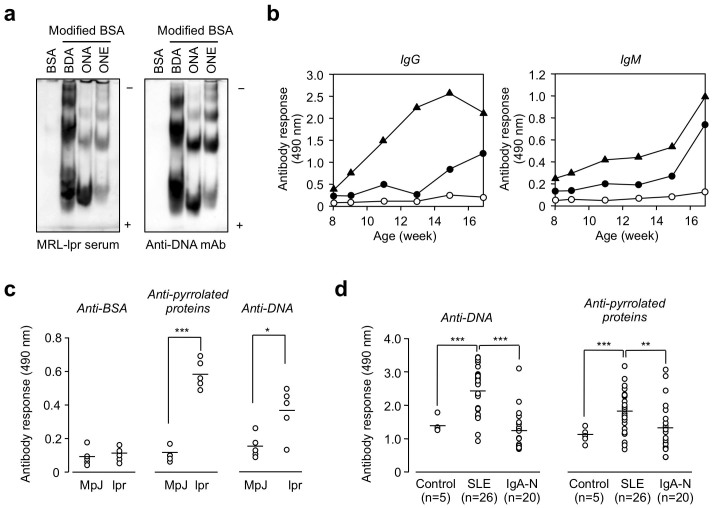
Covalent modification of proteins exerts significant effects on their chemical properties and has important functional and regulatory consequences. We now report the identification and verification of an electrically-active form of modified proteins recognized by a group of small molecules commonly used to interact with DNA. This previously unreported property of proteins was initially discovered when the γ-ketoaldehydes were identified as a source of the proteins stained by the DNA intercalators. Using 1,4-butanedial, the simplest γ-ketoaldehyde, we characterized the structural and chemical criteria governing the recognition of the modified proteins by the DNA intercalators and identified N(ε)-pyrrolelysine as a key adduct. Unexpectedly, the pyrrolation conferred an electronegativity and electronic properties on the proteins that potentially constitute an electrical mimic to the DNA. In addition, we found that the pyrrolated proteins indeed triggered an autoimmune response and that the production of specific antibodies against the pyrrolated proteins was accelerated in human systemic lupus erythematosus. These findings and the apparent high abundance of N(ε)-pyrrolelysine in vivo suggest that protein pyrrolation could be an endogenous source of DNA mimic proteins, providing a possible link connecting protein turnover and immune disorders.
蛋白质的共价修饰对其化学性质有显著影响,并具有重要的功能和调节作用。我们现在报告了一种被一组常用于与DNA相互作用的小分子识别的修饰蛋白质的电活性形式的鉴定和验证。蛋白质的这种以前未报道的特性最初是在γ-酮醛被确定为被DNA嵌入剂染色的蛋白质来源时发现的。使用最简单的γ-酮醛1,4-丁二醛,我们表征了DNA嵌入剂识别修饰蛋白质的结构和化学标准,并确定N(ε)-吡咯赖氨酸为关键加合物。出乎意料的是,吡咯化赋予了蛋白质电负性和电子性质,这可能构成了对DNA的电模拟。此外,我们发现吡咯化蛋白质确实引发了自身免疫反应,并且在人类系统性红斑狼疮中,针对吡咯化蛋白质的特异性抗体的产生加速。这些发现以及体内N(ε)-吡咯赖氨酸明显的高丰度表明,蛋白质吡咯化可能是DNA模拟蛋白的内源性来源,为连接蛋白质周转和免疫紊乱提供了可能的联系。