Huu Nguyen Tho, Yoshida Hideki, Umegawachi Takanari, Miyata Seiji, Yamaguchi Masamitsu
Department of Applied Biology, Matsugasaki, Sakyo-ku, Kyoto 606-8585, Japan.
BMC Biochem. 2014 Jun 18;15:11. doi: 10.1186/1471-2091-15-11.
Organic solute carrier partner 1 (OSCP1) is known to facilitate the transport of various organic solutes into cells and reported to play a role in cell growth and cell differentiation. Moreover, OSCP1 is known as a tumor suppressor gene that is frequently down-expressed in nasopharyngeal carcinomas and acute myeloid leukemia. However, the underlying mechanisms of action remain unclear and the subcellular localization of OSCP1 has yet to be determined in detail.
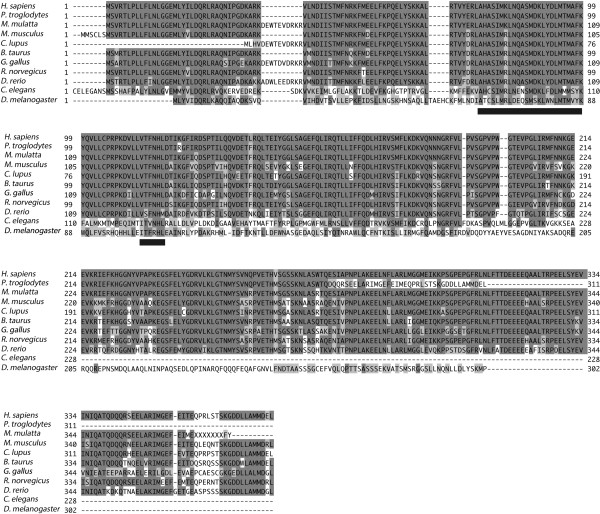
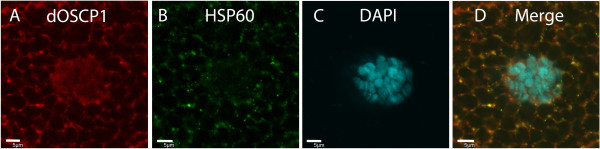
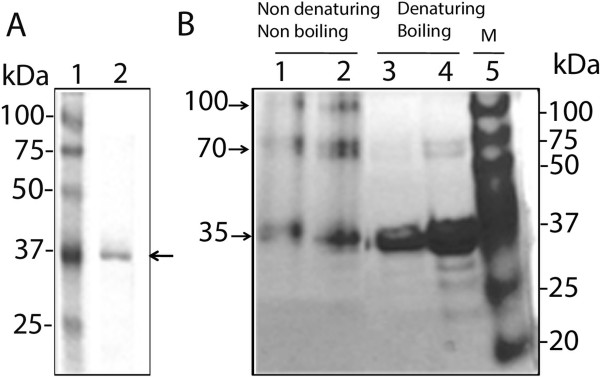
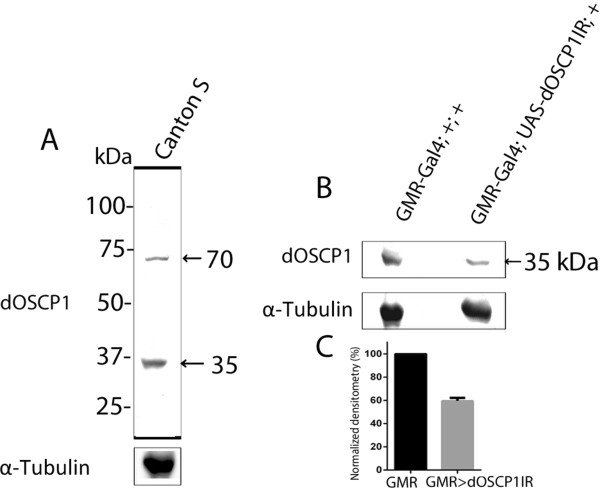
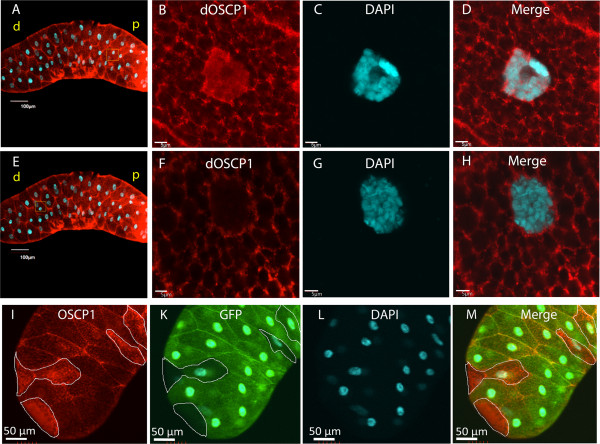
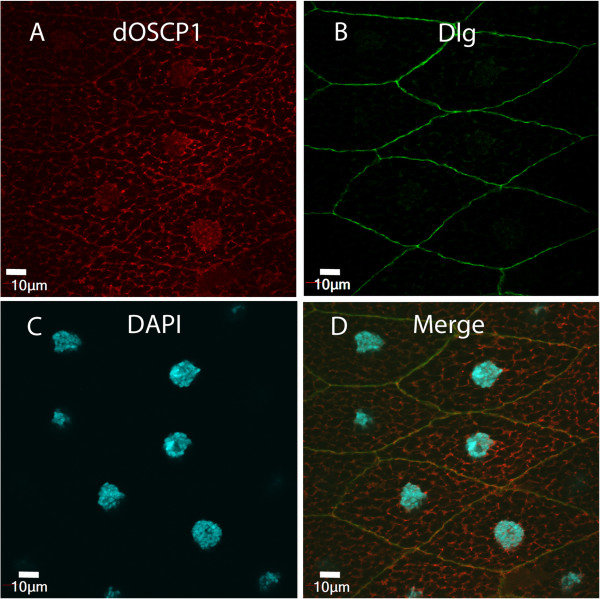
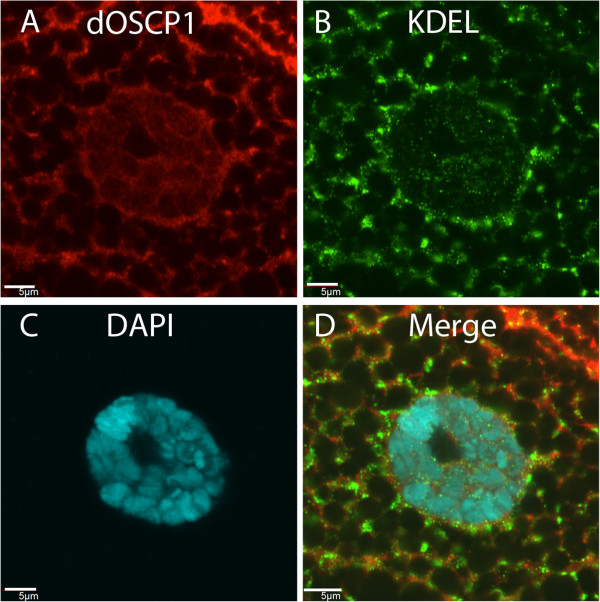
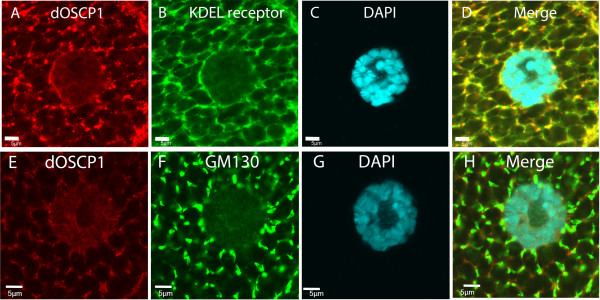
Drosophila contains a single orthologue of OSCP1 (dOSCP1) that shares 58% homology with its human counterpart. To study the expression pattern and subcellular localization of dOSCP1, we prepared a specific antibody. Subcellular localization analyses of dOSCP1 with these revealed localization in the plasma membrane, endoplasmic reticulum, Golgi apparatus and mitochondria, but no detection in cytosol. dOSCP1 signals were also detected in the nucleus, although at weaker intensity than in plasma membranes and subcellular organelles. In addition, native polyacrylamide gel electrophoresis analysis with and without β-mercaptoethanol treatment revealed that recombinant dOSCP1 forms dimers and trimers in solution. The dimer form of dOSCP1 could also be detected by Western immunoblot analyses in third instar larval extracts.
The data revealed that dOSCP1 localizes not only in the plasma membrane but also in the nucleus, ER, Golgi apparatus and mitochondria. It is therefore conceivable that this protein may interact with various partners or form multimeric complexes with other proteins to play multiple roles in cells, providing clues to understanding the functions of dOSCP1 during Drosophila development.
已知有机溶质载体伴侣1(OSCP1)可促进多种有机溶质进入细胞,并据报道在细胞生长和细胞分化中发挥作用。此外,OSCP1是一种肿瘤抑制基因,在鼻咽癌和急性髓系白血病中经常低表达。然而,其潜在的作用机制仍不清楚,OSCP1的亚细胞定位也尚未详细确定。
果蝇含有一个单一的OSCP1直系同源物(dOSCP1),与人类对应物具有58%的同源性。为了研究dOSCP1的表达模式和亚细胞定位,我们制备了一种特异性抗体。对dOSCP1进行亚细胞定位分析,结果显示其定位于质膜、内质网、高尔基体和线粒体,但在细胞质中未检测到。在细胞核中也检测到了dOSCP1信号,尽管强度比在质膜和亚细胞器中弱。此外,经β-巯基乙醇处理和未经处理的天然聚丙烯酰胺凝胶电泳分析表明,重组dOSCP1在溶液中形成二聚体和三聚体。在三龄幼虫提取物中,通过蛋白质免疫印迹分析也可检测到dOSCP1的二聚体形式。
数据表明,dOSCP1不仅定位于质膜,还定位于细胞核、内质网、高尔基体和线粒体。因此可以推测,该蛋白可能与各种伴侣相互作用,或与其他蛋白质形成多聚体复合物,从而在细胞中发挥多种作用,为理解dOSCP1在果蝇发育过程中的功能提供线索。