Yi Mei, Yang Jianbo, Li Wenjuan, Li Xiaoling, Xiong Wei, McCarthy James B, Li Guiyuan, Xiang Bo
Department of Dermatology, Xiangya Hospital, The Central South University, Changsha, 410008, Hunan, China;; The Key Laboratory of Carcinogenesis of the Chinese Ministry of Health, Xiangya Hospital, Central South University, Changsha, Hunan410078, China;; The Key Laboratory of Carcinogenesis and Cancer Invasion of the Chinese Ministry of Education, Cancer Research Institute, Central South University, Changsha, Hunan410078, China.
Department of Laboratory Medicine and Pathology, Masonic Cancer Center, University of Minnesota, Minneapolis, Minnesota 55455, USA.
J Cancer. 2017 Feb 25;8(4):626-635. doi: 10.7150/jca.17579. eCollection 2017.
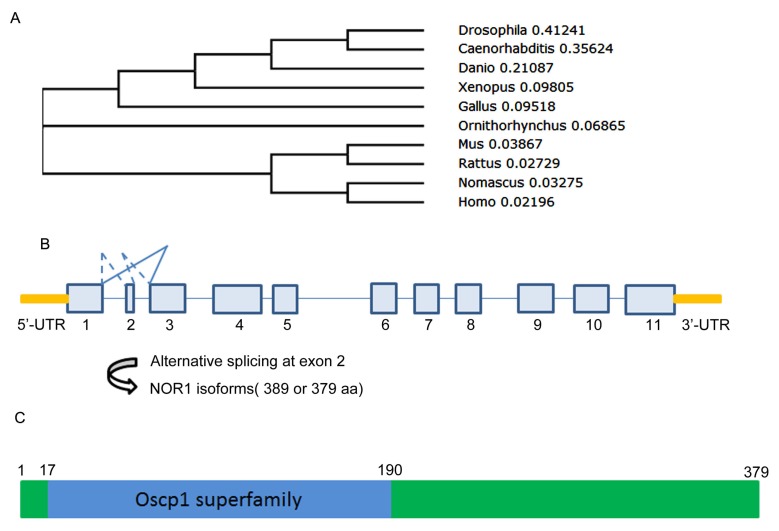
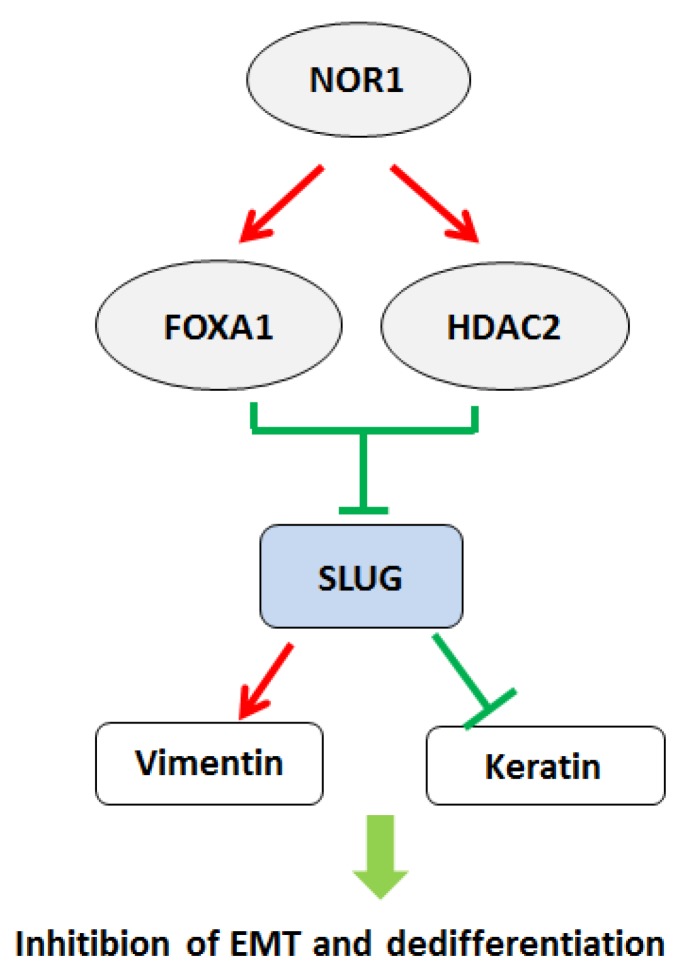
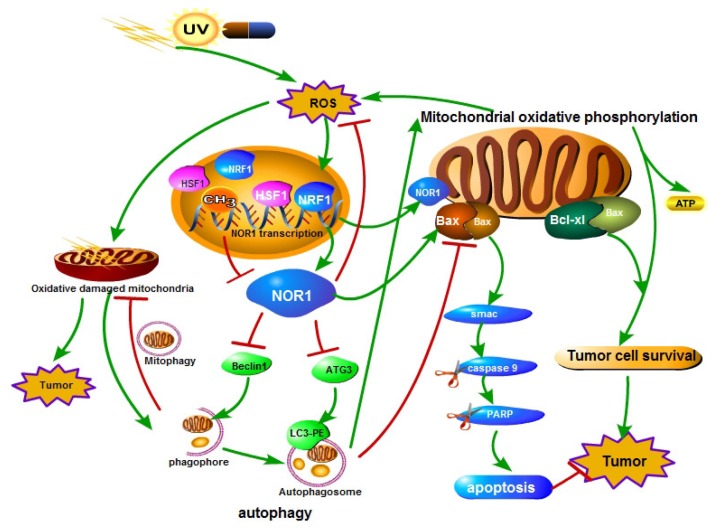
NOR1 (Oxidored-nitro domain-containing protein 1), also known as OSCP1, was first identified in nasopharyngeal carcinoma (NPC) cells in 2003. NOR1 is evolutionarily conserved among species with its expression is restricted to brain, testis and respiratory epithelial cells. NOR1 was downregulated in NPC and the downregulation associates with poor prognosis. Previous study demonstrated that hypermethylation of NOR1 promoter was observed in NPC and hematological malignancies, which has been believed to be the main epigenetic cause for NOR1 silencing in these cancers. Recently, the NOR1 tumor suppressor status has been fully established. NOR1 inhibited cancer cell growth by disturbing tumor cell energe metabolism. NOR1 also promote tumor cells apoptosis in oxidative stress and hypoxia by inhibition of stress induced autophagy. Moreover, NOR1 suppressed cancer cell epithelial-mesenchymal transition, invasion and metastasis via activation of FOXA1/HDAC2-slug regulatory network. Deciphering the molecular mechanisms underlying NOR1 mediated tumor suppressive role would be helpful to a deeper understanding of carcinogenesis and, furthermore, to the development of new therapeutic approaches. Here we summarize the current knowledge on NOR1 focusing on its expression pattern, epigenetic and genetic association with human cancers and its biological functions. This review will also elucidate the potential application of NOR1/OSCP1 for some human malignancies.
NOR1(含氧化还原-硝基结构域蛋白1),也被称为OSCP1,于2003年首次在鼻咽癌(NPC)细胞中被鉴定出来。NOR1在物种间具有进化保守性,其表达局限于脑、睾丸和呼吸道上皮细胞。NOR1在NPC中表达下调,且这种下调与预后不良相关。先前的研究表明,在NPC和血液系统恶性肿瘤中观察到NOR1启动子的高甲基化,这被认为是这些癌症中NOR1沉默的主要表观遗传原因。最近,NOR1的肿瘤抑制状态已得到充分确立。NOR1通过干扰肿瘤细胞能量代谢来抑制癌细胞生长。NOR1还通过抑制应激诱导的自噬促进氧化应激和缺氧条件下的肿瘤细胞凋亡。此外,NOR1通过激活FOXA1/HDAC2-蛞蝓调节网络抑制癌细胞的上皮-间质转化、侵袭和转移。阐明NOR1介导的肿瘤抑制作用的分子机制将有助于更深入地理解肿瘤发生,进而有助于开发新的治疗方法。在此,我们总结了目前关于NOR1的知识,重点关注其表达模式、与人类癌症的表观遗传和遗传关联及其生物学功能。本综述还将阐明NOR1/OSCP1在某些人类恶性肿瘤中的潜在应用。