Grgic Ivica, Hofmeister Andreas F, Genovese Giulio, Bernhardy Andrea J, Sun Hua, Maarouf Omar H, Bijol Vanesa, Pollak Martin R, Humphreys Benjamin D
1] Renal Division, Department of Medicine, Brigham and Women's Hospital, Harvard Medical School, Boston, Massachusetts, USA [2] Department of Internal Medicine and Nephrology, Philipps-University, Marburg, Germany.
1] Division of Nephrology, Department of Medicine, Beth Israel Deaconess Medical Center, Harvard Medical School, Boston, Massachusetts, USA [2] Program in Medical and Population Genetics, Broad Institute of MIT and Harvard, Cambridge, Massachusetts, USA.
Kidney Int. 2014 Dec;86(6):1116-29. doi: 10.1038/ki.2014.204. Epub 2014 Jun 18.
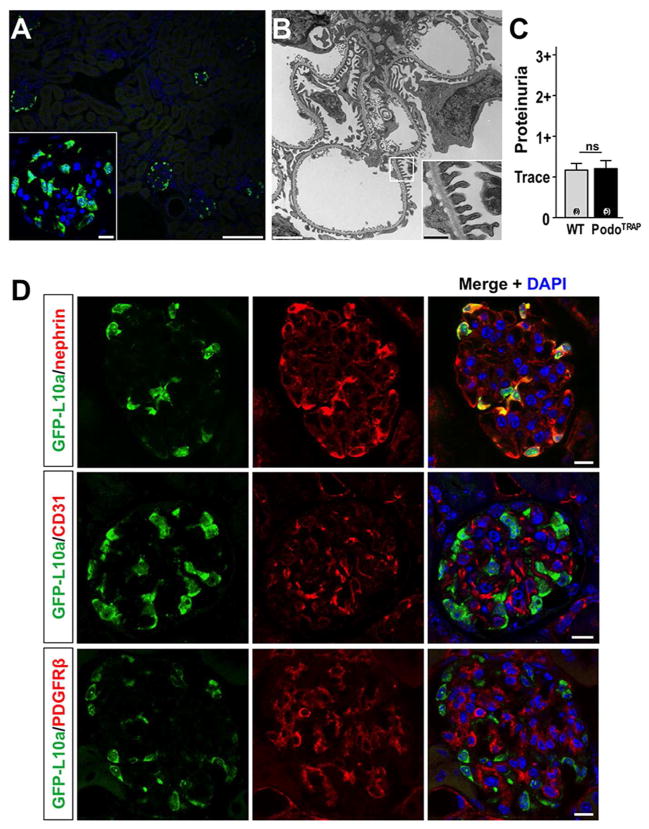
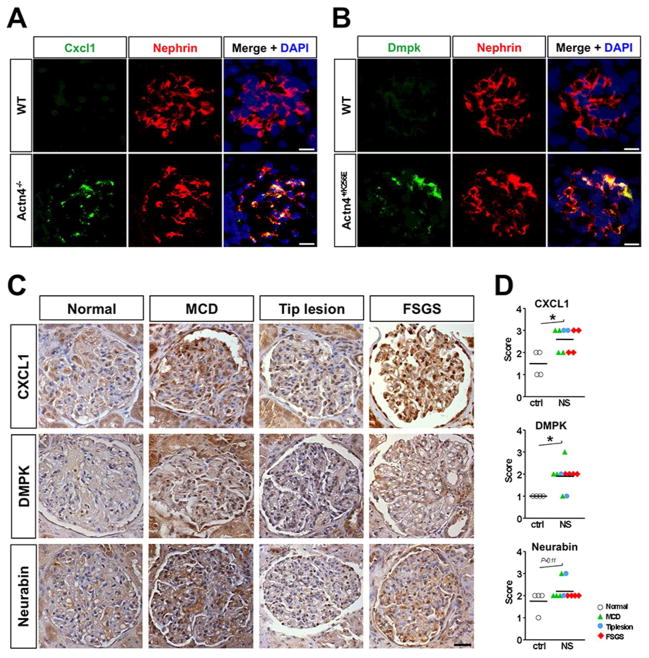
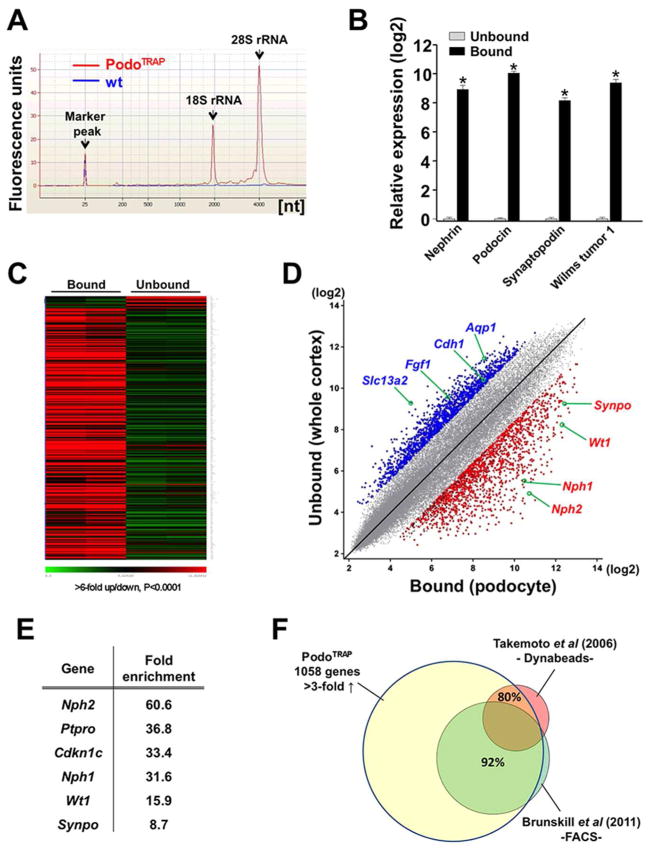
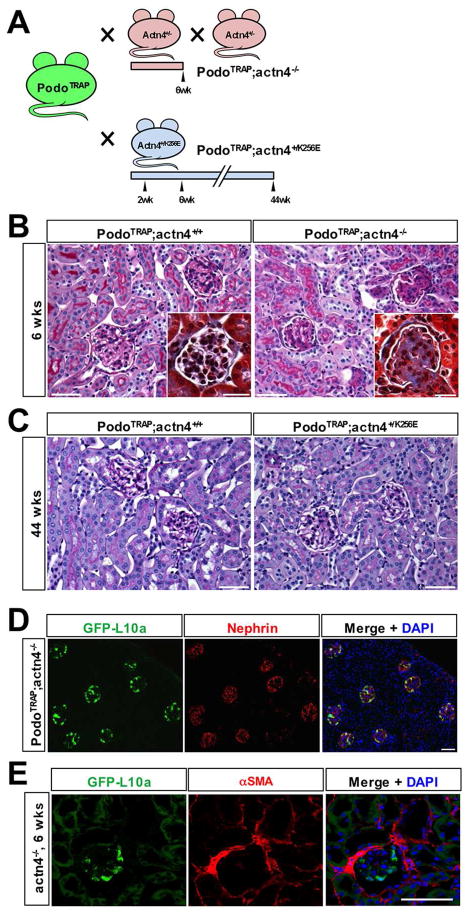
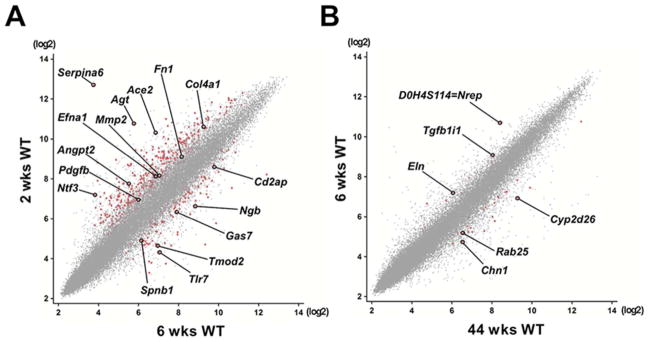
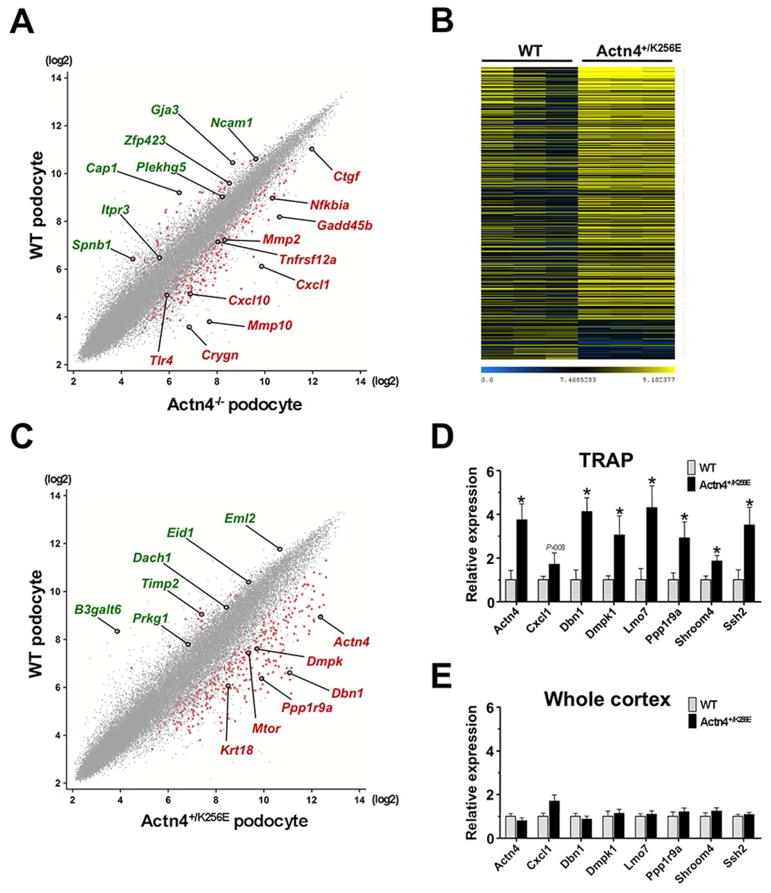
Identifying new biomarkers and therapeutic targets for podocytopathies such as focal segmental glomerulosclerosis (FSGS) requires a detailed analysis of transcriptional changes in podocytes over the course of disease. Here we used translating ribosome affinity purification (TRAP) to isolate and profile podocyte-specific mRNA in two different models of FSGS. We expressed enhanced green fluorescent protein-tagged to ribosomal protein L10a in podocytes under the control of the collagen-1α1 promoter, enabling one-step podocyte-specific mRNA isolation over the course of disease. This TRAP protocol robustly enriched known podocyte-specific mRNAs. We crossed Col1α1-eGFP-L10a mice with the Actn4(-/-) and Actn4(+/K256E) models of FSGS and analyzed podocyte transcriptional profiles at 2, 6, and 44 weeks of age. Two upregulated podocyte genes in murine FSGS (CXCL1 and DMPK) were found to be upregulated at the protein level in biopsies from patients with FSGS, validating this approach. There was no dilution of podocyte-specific transcripts during disease. These are the first podocyte-specific RNA expression data sets during aging and in two models of FSGS. This approach identified new podocyte proteins that are upregulated in FSGS and defines novel biomarkers and therapeutic targets for human glomerular disease.
识别局灶节段性肾小球硬化(FSGS)等足细胞病的新生物标志物和治疗靶点需要详细分析疾病过程中足细胞的转录变化。在此,我们使用翻译核糖体亲和纯化(TRAP)技术,在两种不同的FSGS模型中分离并分析足细胞特异性mRNA。我们在胶原蛋白-1α1启动子的控制下,在足细胞中表达增强型绿色荧光蛋白标记的核糖体蛋白L10a,从而在疾病过程中实现一步法分离足细胞特异性mRNA。这种TRAP方法能够有效地富集已知的足细胞特异性mRNA。我们将Col1α1-eGFP-L10a小鼠与FSGS的Actn4(-/-)和Actn4(+/K256E)模型进行杂交,并在2周、6周和44周龄时分析足细胞转录谱。结果发现,在小鼠FSGS中上调的两个足细胞基因(CXCL1和DMPK)在FSGS患者的活检组织中蛋白水平也上调,验证了该方法的有效性。在疾病过程中,足细胞特异性转录本没有稀释。这些是衰老过程中以及两种FSGS模型中首批足细胞特异性RNA表达数据集。该方法鉴定出了在FSGS中上调的新足细胞蛋白,并确定了人类肾小球疾病的新型生物标志物和治疗靶点。