Gedaly Roberto, Galuppo Roberto, Daily Michael F, Shah Malay, Maynard Erin, Chen Changguo, Zhang Xiping, Esser Karyn A, Cohen Donald A, Evers B Mark, Jiang Jieyun, Spear Brett T
Department of Surgery, University of Kentucky, Lexington, Kentucky, United States of America.
Department of Physiology, University of Kentucky, Lexington, Kentucky United States of America.
PLoS One. 2014 Jun 18;9(6):e99272. doi: 10.1371/journal.pone.0099272. eCollection 2014.
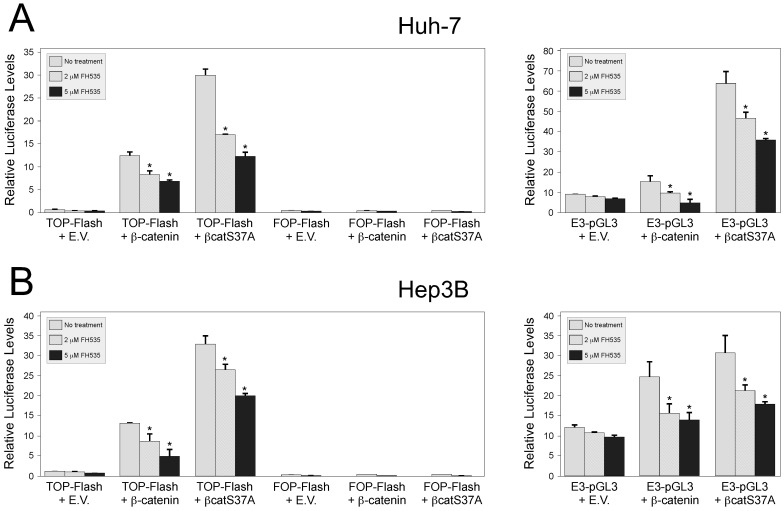
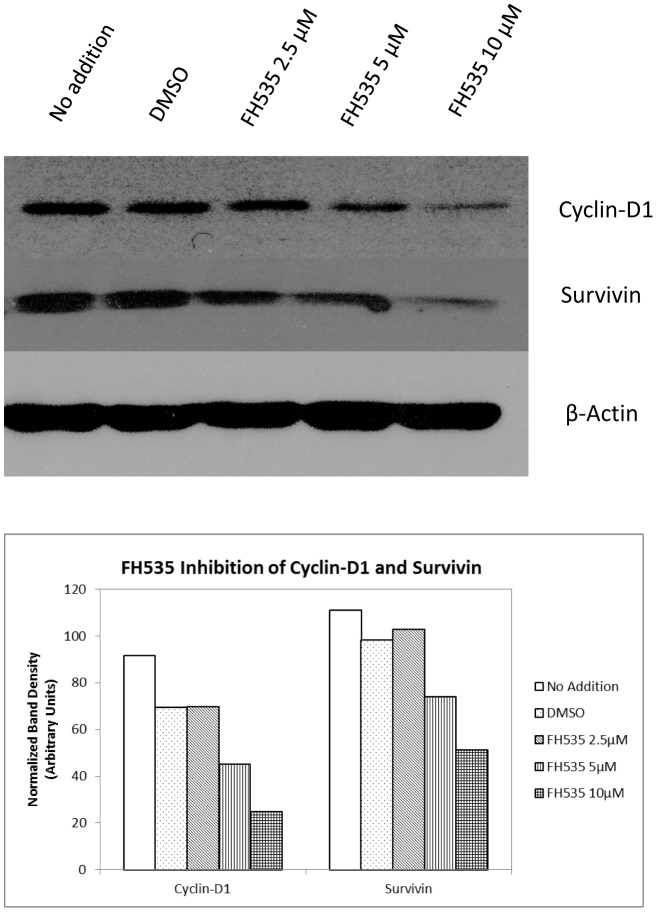
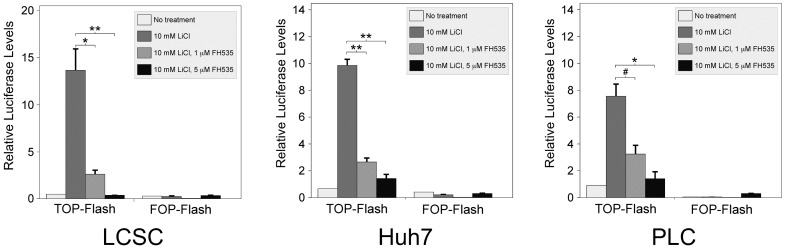
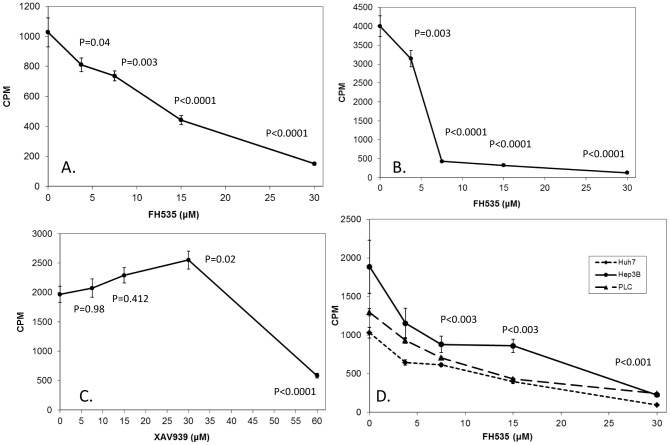
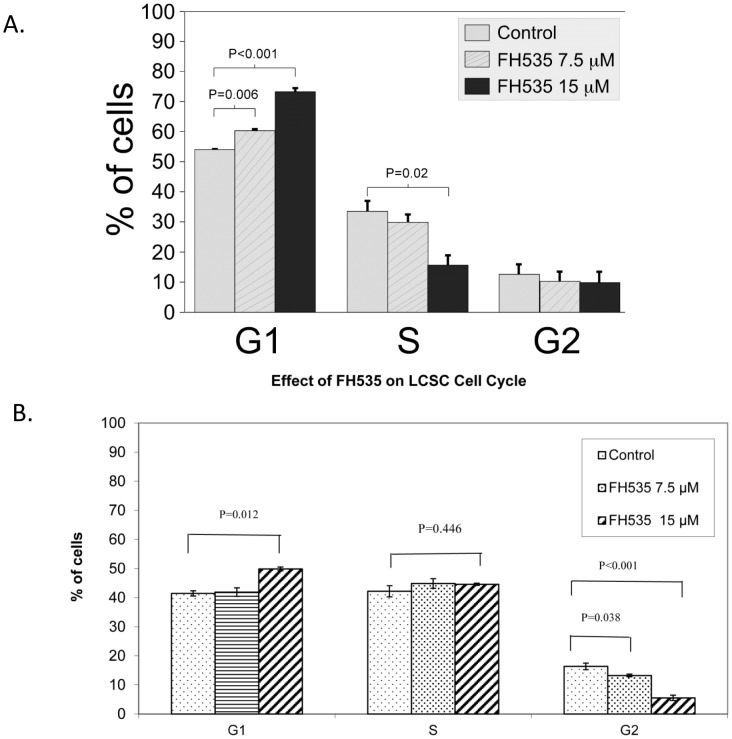
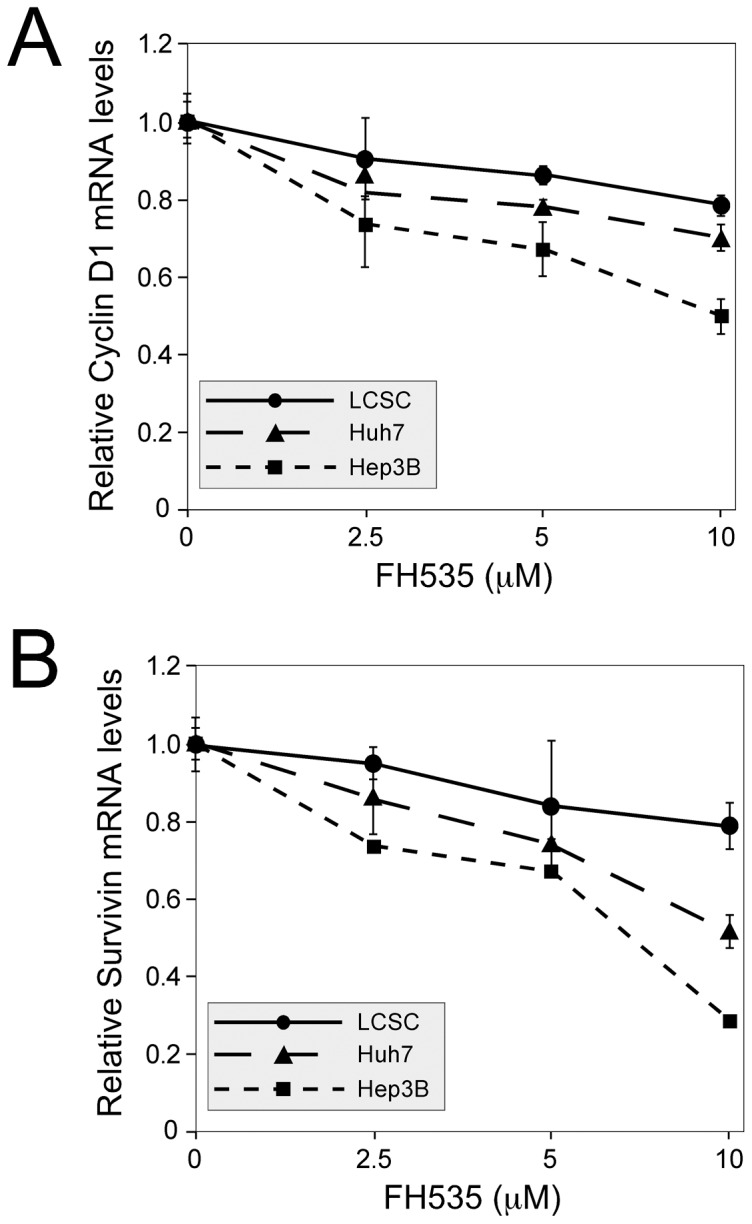
Activation of the Wnt/β-catenin pathway has been observed in at least 1/3 of hepatocellular carcinomas (HCC), and a significant number of these have mutations in the β-catenin gene. Therefore, effective inhibition of this pathway could provide a novel method to treat HCC. The purposed of this study was to determine whether FH535, which was previously shown to block the β-catenin pathway, could inhibit β-catenin activation of target genes and inhibit proliferation of Liver Cancer Stem Cells (LCSC) and HCC cell lines. Using β-catenin responsive reporter genes, our data indicates that FH535 can inhibit target gene activation by endogenous and exogenously expressed β-catenin, including the constitutively active form of β-catenin that contains a Serine37Alanine mutation. Our data also indicate that proliferation of LCSC and HCC lines is inhibited by FH535 in a dose-dependent manner, and that this correlates with a decrease in the percentage of cells in S phase. Finally, we also show that expression of two well-characterized targets of β-catenin, Cyclin D1 and Survivin, is reduced by FH535. Taken together, this data indicates that FH535 has potential therapeutic value in treatment of liver cancer. Importantly, these results suggest that this therapy may be effective at several levels by targeting both HCC and LCSC.
在至少1/3的肝细胞癌(HCC)中观察到Wnt/β-连环蛋白信号通路的激活,并且其中相当一部分在β-连环蛋白基因中存在突变。因此,有效抑制该信号通路可为治疗HCC提供一种新方法。本研究的目的是确定先前显示可阻断β-连环蛋白信号通路的FH535是否能够抑制靶基因的β-连环蛋白激活,并抑制肝癌干细胞(LCSC)和HCC细胞系的增殖。利用β-连环蛋白反应性报告基因,我们的数据表明,FH535能够抑制内源性和外源性表达的β-连环蛋白对靶基因的激活,包括含有丝氨酸37丙氨酸突变的组成型活性形式的β-连环蛋白。我们的数据还表明,FH535以剂量依赖性方式抑制LCSC和HCC细胞系的增殖,并且这与S期细胞百分比的降低相关。最后,我们还表明,FH535可降低β-连环蛋白的两个特征明确的靶标细胞周期蛋白D1和生存素的表达。综上所述,这些数据表明FH535在肝癌治疗中具有潜在的治疗价值。重要的是,这些结果表明,这种治疗方法可能通过靶向HCC和LCSC在多个层面上有效。