Shiner Erin K, Holbrook Beth C, Alexander-Miller Martha A
Department of Internal Medicine, Section on Rheumatology and Immunology, Wake Forest School of Medicine, Winston-Salem, North Carolina, United States of America.
Department of Microbiology and Immunology, Section on Rheumatology and Immunology, Wake Forest School of Medicine, Winston-Salem, North Carolina, United States of America.
PLoS One. 2014 Jun 18;9(6):e100175. doi: 10.1371/journal.pone.0100175. eCollection 2014.
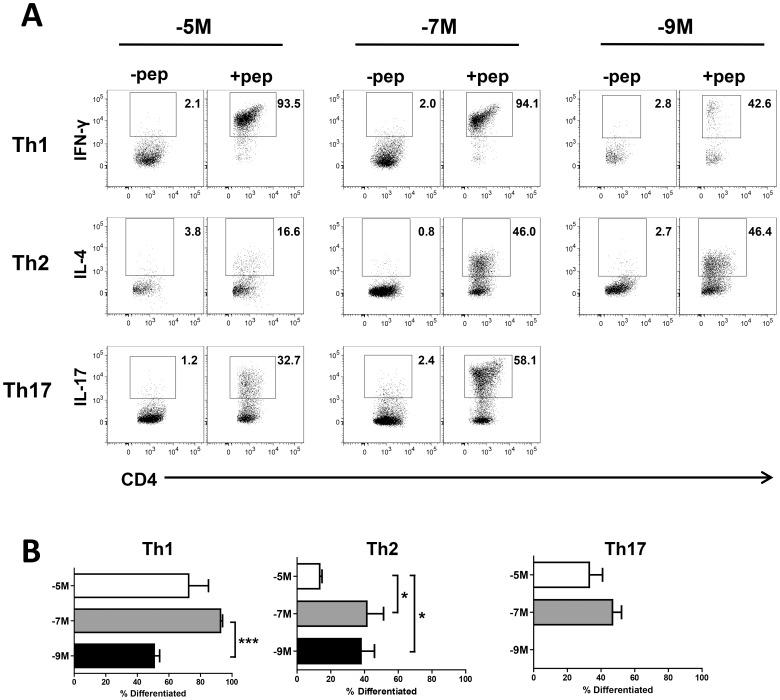
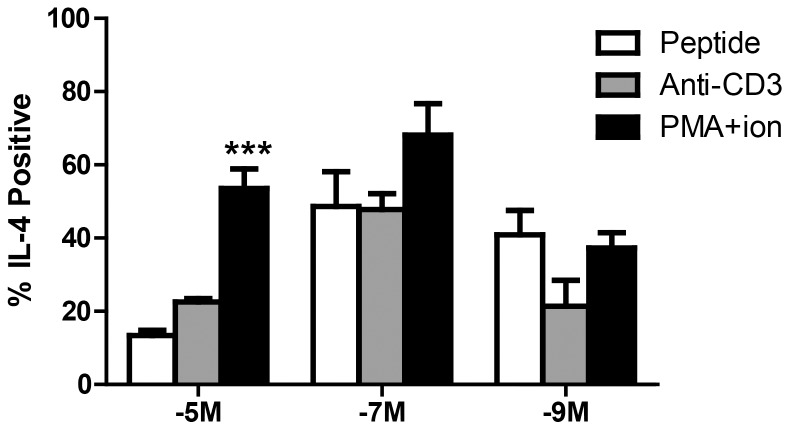
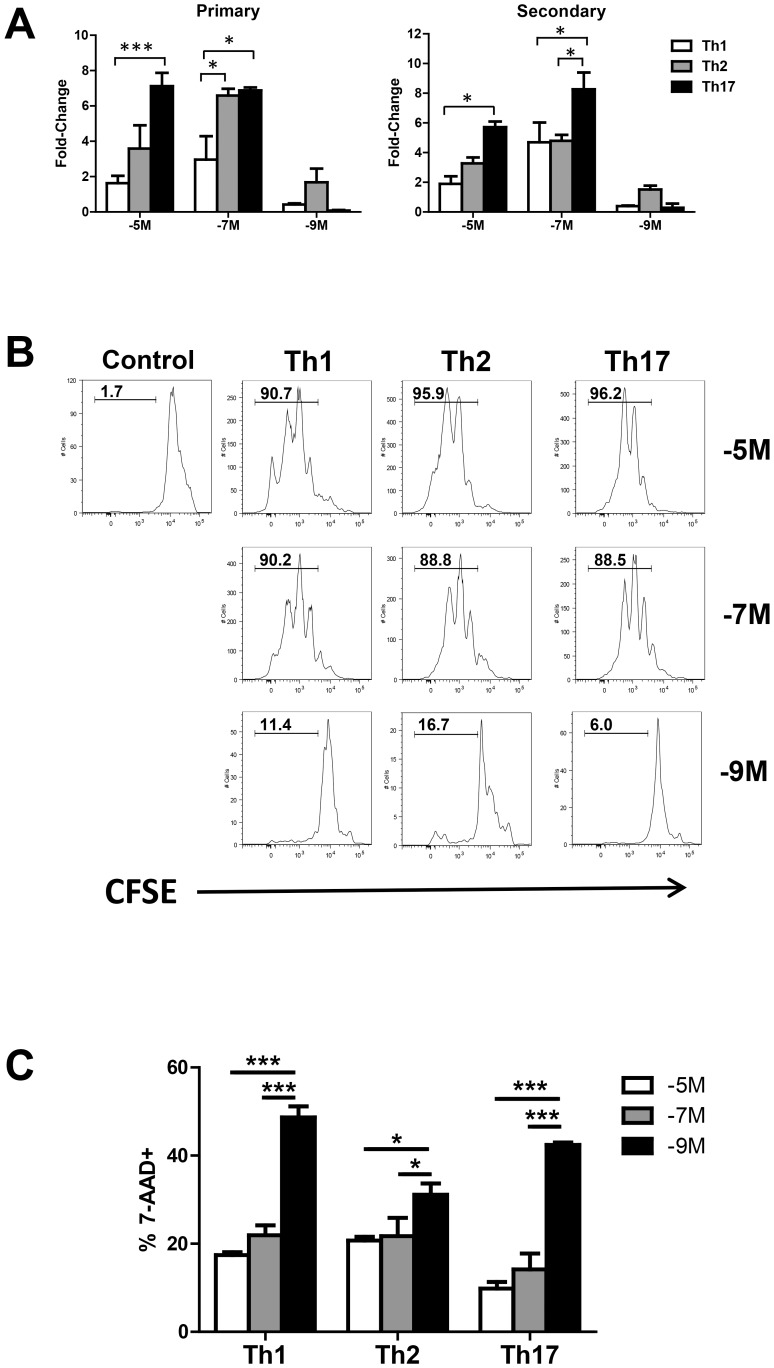
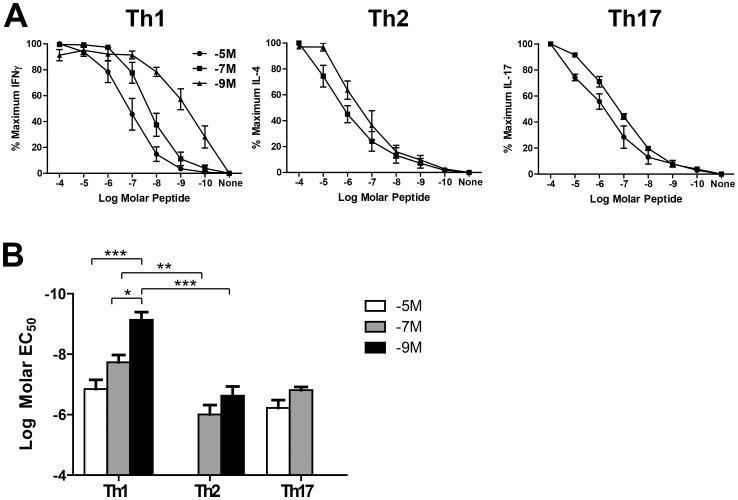
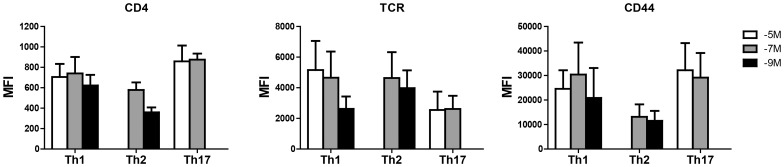
CD4(+) T cell differentiation has been shown to be regulated by the cytokine milieu present during activation as well as peptide MHC levels. However, the extent to which these two important regulatory signals work in concert to shape CD4(+) T cell function has not been investigated. Using a murine OT-II transgenic TCR model of in vitro differentiation, we demonstrate that the ability of CD4(+) T cells to commit to a distinct lineage, i.e. Th1 vs. Th2 vs. Th17, is restricted by the amount of peptide antigen present in the stimulating environment. In addition, whether cells succumb to inhibitory effects associated with high dose antigen is dependent on the array of cytokine signals encountered. Specifically, stimulation with high dose antigen in Th1 or Th17 conditions promoted efficient generation of functional cells, while Th2 polarizing conditions did not. Finally, we found that the peptide sensitivity of an effector cell was determined by the combined actions of cytokine and peptide level, with Th1 cells exhibiting the highest avidity, followed by Th17 and Th2 cells. Together, these data show that the interplay of antigen and cytokine signals shape both the differentiation fate and avidity setpoint of CD4(+) T cells.
CD4(+) T细胞分化已被证明受激活过程中存在的细胞因子环境以及肽MHC水平的调节。然而,这两个重要调节信号协同作用塑造CD4(+) T细胞功能的程度尚未得到研究。利用体外分化的小鼠OT-II转基因TCR模型,我们证明CD4(+) T细胞分化为不同谱系(即Th1、Th2、Th17)的能力受到刺激环境中肽抗原量的限制。此外,细胞是否会受到高剂量抗原相关抑制作用的影响取决于所遇到的细胞因子信号组合。具体而言,在Th1或Th17条件下用高剂量抗原刺激可促进功能性细胞的有效生成,而Th2极化条件下则不然。最后,我们发现效应细胞的肽敏感性由细胞因子和肽水平的联合作用决定,Th1细胞表现出最高亲和力,其次是Th17和Th2细胞。总之,这些数据表明抗原和细胞因子信号的相互作用塑造了CD4(+) T细胞的分化命运和亲和力设定点。