Brown Laura D, Thorn Stephanie R, O'Meara Meghan C, Lavezzi Jinny R, Rozance Paul J
Perinatal Research Center, Department of Pediatrics, University of Colorado Denver, Aurora, Colorado, USA Center for Women's Health Research, University of Colorado Denver, University of Colorado School of Medicine, Aurora, Colorado, USA.
Perinatal Research Center, Department of Pediatrics, University of Colorado Denver, Aurora, Colorado, USA.
Physiol Rep. 2014 Jun 18;2(6):e12045. doi: 10.14814/phy2.12045.
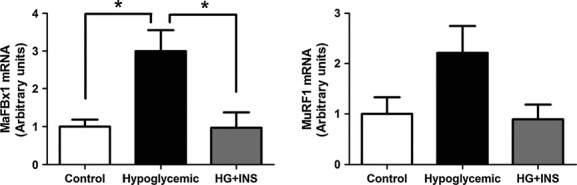
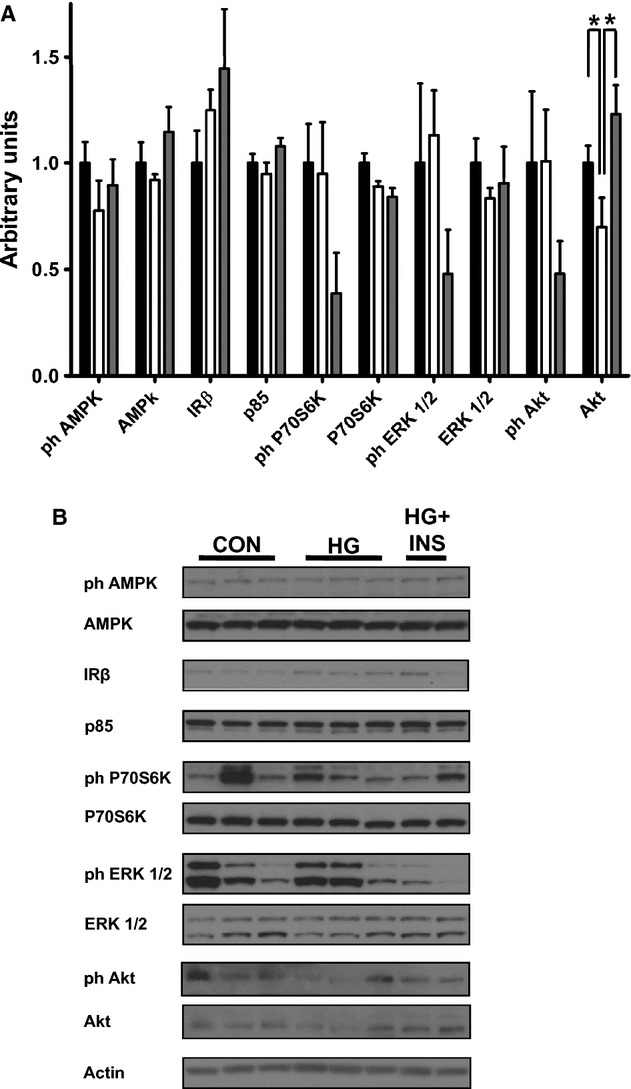
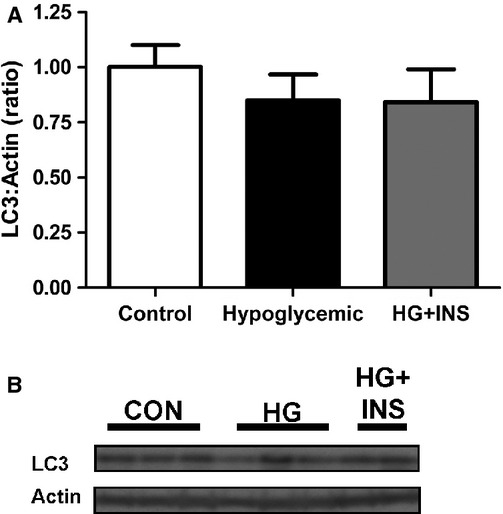
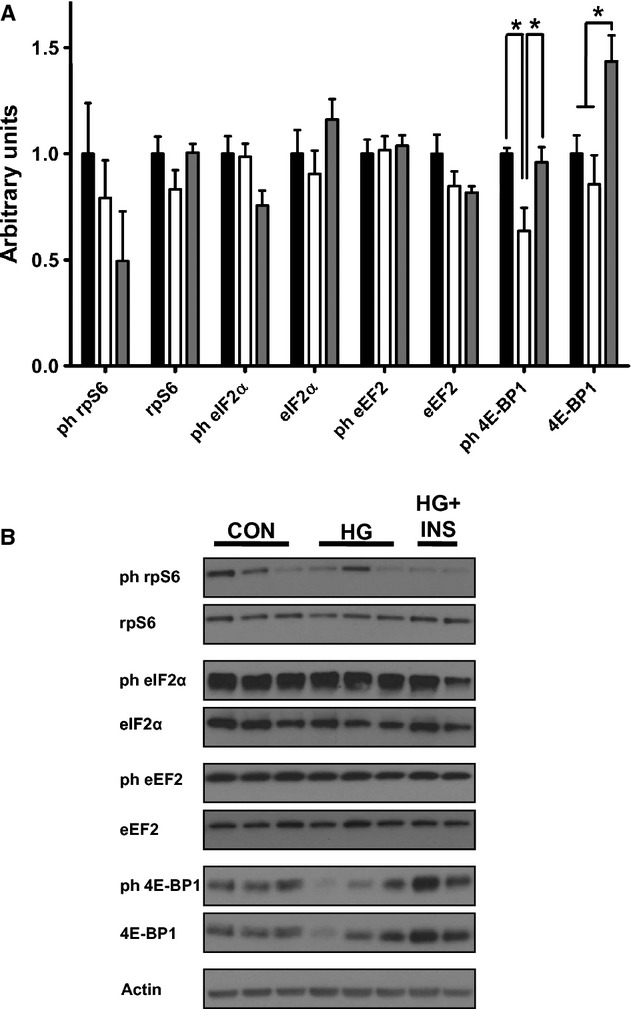
Decreased glucose transfer to the fetus is characteristic of pregnancies complicated by maternal under nutrition and placental insufficiency. Chronic experimental restriction of glucose transfer to the sheep fetus for the final 40% of gestation with a maternal insulin infusion (HG fetuses) results in fetal hypoglycemia, hypoinsulinemia, and decreased rates of fetal growth and protein accretion compared to controls (CON). Lower rates of fetal protein accretion are due to increased fetal protein breakdown and not decreased protein synthesis. However, the specific skeletal muscle pathways responsible for increased protein breakdown have not been determined. Nor has it been determined if low fetal glucose or insulin concentrations are more important for regulating these skeletal muscle protein breakdown pathways. We tested whether chronic restriction of glucose transfer to the fetus increased the ubiquitin-proteosome pathway or autophagy-lysosome pathway in fetal sheep skeletal muscle and found no evidence for an increase in the autophagy-lysosome pathway. However, HG fetuses had increase mRNA expression of MaFBx1 (twofold, P < 0.01) and a trend for increased mRNA expression of MuRF1 (P = 0.08) compared to CON. A subset of chronically hypoglycemic fetuses received an isoglycemic insulin infusion for the final 7 days of the maternal insulin infusion (HG + INS fetuses) and had MaFBx1 and MuRF1 mRNA concentrations similar to CON fetuses. These results demonstrate that fetuses exposed to sustained hypoglycemia have decreased protein accretion due to activation of the skeletal muscle ubiquitin-proteosome pathway and that a fetal hyperinsulinemic clamp can suppress this pathway even in the context of continued hypoglycemia.
母体营养不足和胎盘功能不全所导致的妊娠,其特征是葡萄糖向胎儿的转运减少。在妊娠最后40%的时间里,通过母体输注胰岛素对绵羊胎儿进行葡萄糖转运的慢性实验性限制(高血糖胎儿),与对照组(CON)相比,会导致胎儿低血糖、低胰岛素血症,以及胎儿生长速率和蛋白质积聚降低。胎儿蛋白质积聚速率较低是由于胎儿蛋白质分解增加,而非蛋白质合成减少。然而,导致蛋白质分解增加的特定骨骼肌途径尚未确定。低胎儿葡萄糖或胰岛素浓度对调节这些骨骼肌蛋白质分解途径是否更重要也尚未确定。我们测试了慢性限制葡萄糖向胎儿的转运是否会增加绵羊胎儿骨骼肌中的泛素 - 蛋白酶体途径或自噬 - 溶酶体途径,结果发现没有证据表明自噬 - 溶酶体途径增加。然而,与CON相比,高血糖胎儿的MaFBx1 mRNA表达增加(两倍,P < 0.01),MuRF1 mRNA表达有增加趋势(P = 0.08)。一部分慢性低血糖胎儿在母体胰岛素输注的最后7天接受了等血糖胰岛素输注(高血糖 + 胰岛素胎儿),其MaFBx1和MuRF1 mRNA浓度与CON胎儿相似。这些结果表明,暴露于持续性低血糖的胎儿由于骨骼肌泛素 - 蛋白酶体途径的激活而导致蛋白质积聚减少,并且胎儿高胰岛素钳夹即使在持续低血糖的情况下也能抑制该途径。