Diabetes and Obesity Research Program, Garvan Institute of Medical Research, Darlinghurst, New South Wales 2010, Australia ; School of Medical Sciences, University of New South Wales, New South Wales 2052, Australia.
Diabetes and Obesity Research Program, Garvan Institute of Medical Research, Darlinghurst, New South Wales 2010, Australia.
Mol Metab. 2014 Mar 14;3(4):465-73. doi: 10.1016/j.molmet.2014.02.005. eCollection 2014 Jul.
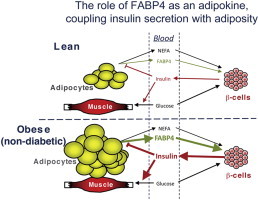
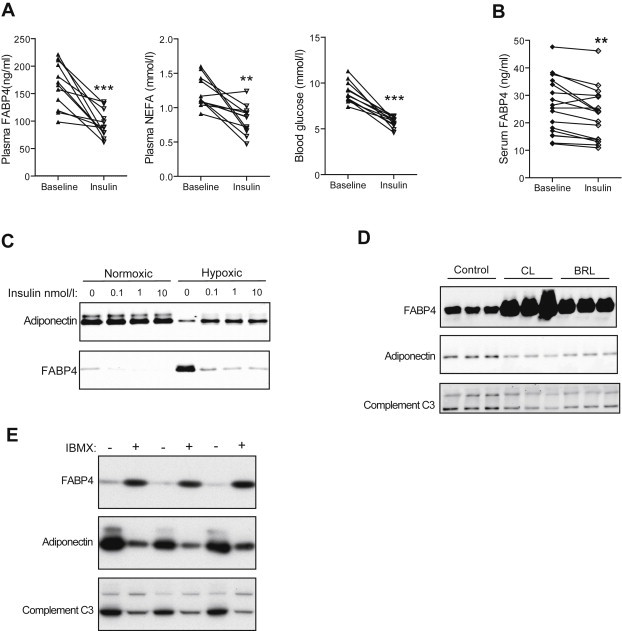
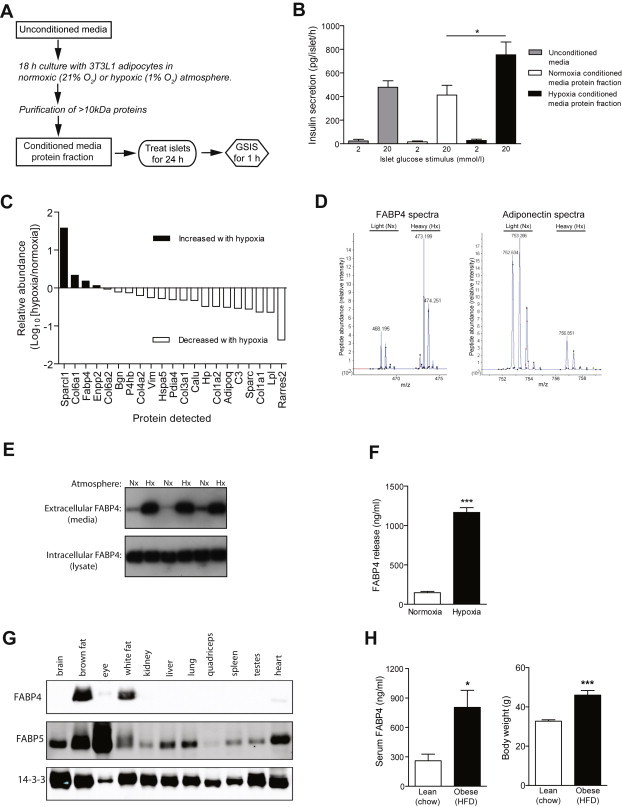
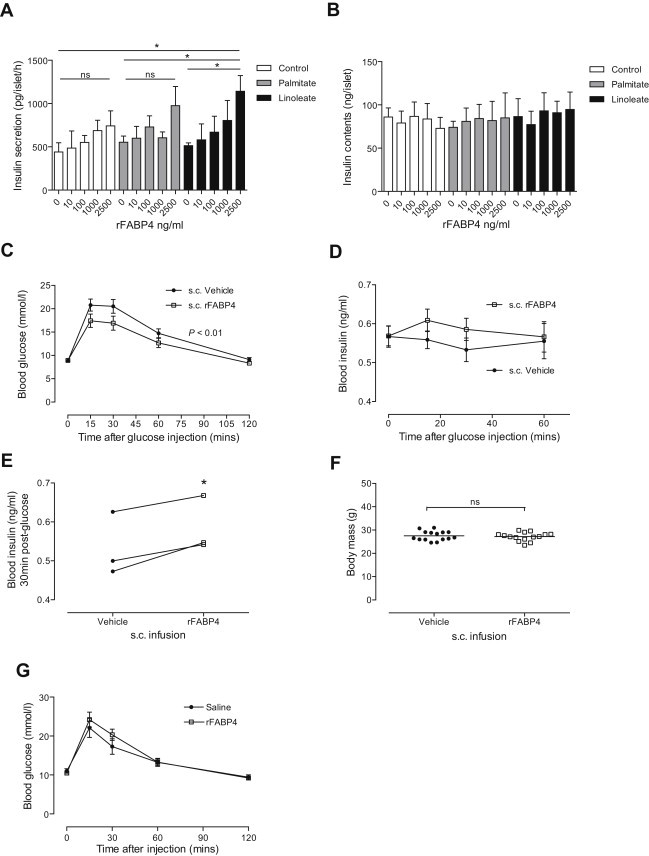
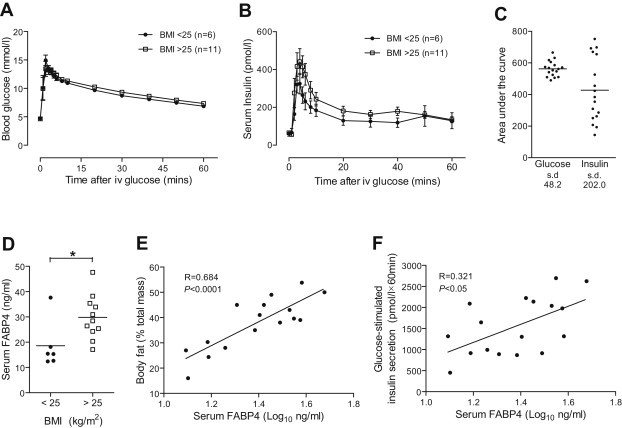
A critical feature of obesity is enhanced insulin secretion from pancreatic β-cells, enabling the majority of individuals to maintain glycaemic control despite adiposity and insulin resistance. Surprisingly, the factors coordinating this adaptive β-cell response with adiposity have not been delineated. Here we show that fatty acid binding protein 4 (FABP4/aP2) is an adipokine released from adipocytes under obesogenic conditions, such as hypoxia, to augment insulin secretion. The insulinotropic action of FABP4 was identified using an in vitro system that recapitulates adipocyte to β-cell endocrine signalling, with glucose-stimulated insulin secretion (GSIS) as a functional readout, coupled with quantitative proteomics. Exogenous FABP4 potentiated GSIS in vitro and in vivo, and circulating FABP4 levels correlated with GSIS in humans. Insulin inhibited FABP4 release from adipocytes in vitro, in mice and in humans, consistent with feedback regulation. These data suggest that FABP4 and insulin form an endocrine loop coordinating the β-cell response to obesity.
肥胖的一个关键特征是胰腺β细胞中胰岛素的分泌增强,使大多数人能够在肥胖和胰岛素抵抗的情况下维持血糖控制。令人惊讶的是,协调这种适应性β细胞反应与肥胖的因素尚未确定。在这里,我们表明脂肪酸结合蛋白 4(FABP4/aP2)是一种脂肪因子,在肥胖条件下(如缺氧)从脂肪细胞中释放出来,以增强胰岛素分泌。使用体外系统鉴定了 FABP4 的胰岛素促分泌作用,该系统重现了脂肪细胞到β细胞内分泌信号,以葡萄糖刺激的胰岛素分泌(GSIS)作为功能读数,并结合了定量蛋白质组学。外源性 FABP4 增强了体外和体内的 GSIS,并且循环 FABP4 水平与人类的 GSIS 相关。胰岛素抑制了体外、小鼠和人体内脂肪细胞中 FABP4 的释放,这与反馈调节一致。这些数据表明,FABP4 和胰岛素形成了一个内分泌环,协调了β细胞对肥胖的反应。