Okujava Rusudan, Guye Patrick, Lu Yun-Yueh, Mistl Claudia, Polus Florine, Vayssier-Taussat Muriel, Halin Cornelia, Rolink Antonius G, Dehio Christoph
Focal Area Infection Biology, Biozentrum, University of Basel, Basel, Switzerland.
Unité Sous Contrat Bartonella, Institut national de la recherche agronomique (INRA), Maisons-Alfort, France.
PLoS Pathog. 2014 Jun 19;10(6):e1004187. doi: 10.1371/journal.ppat.1004187. eCollection 2014 Jun.
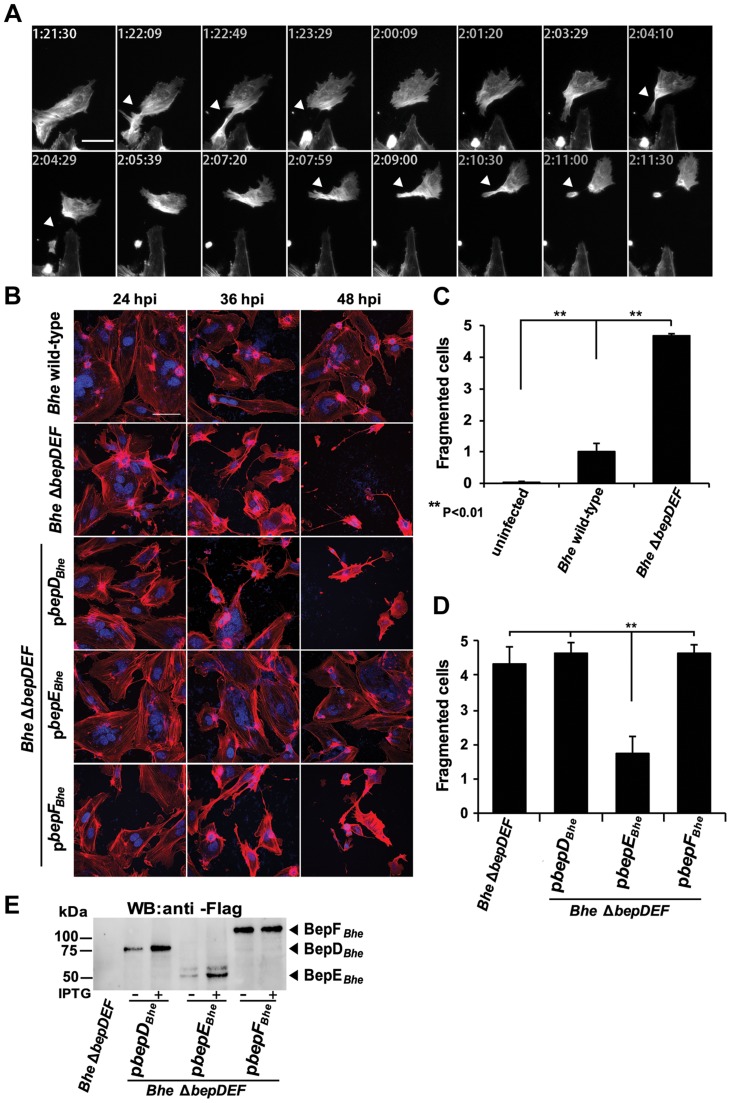
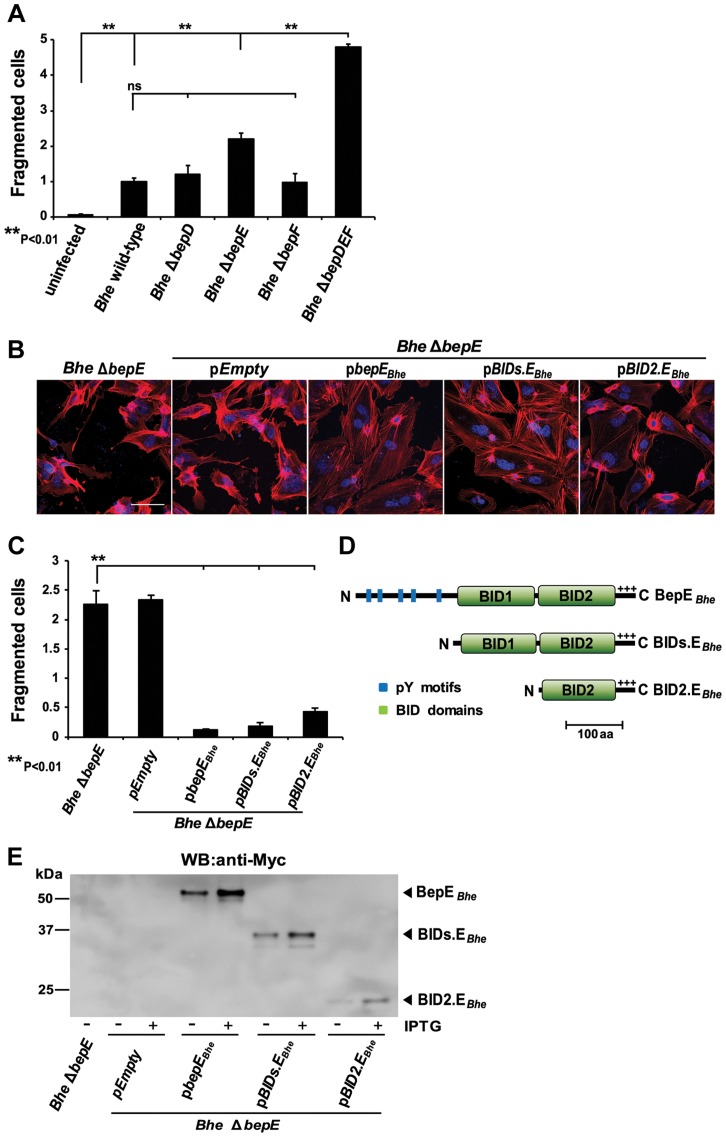
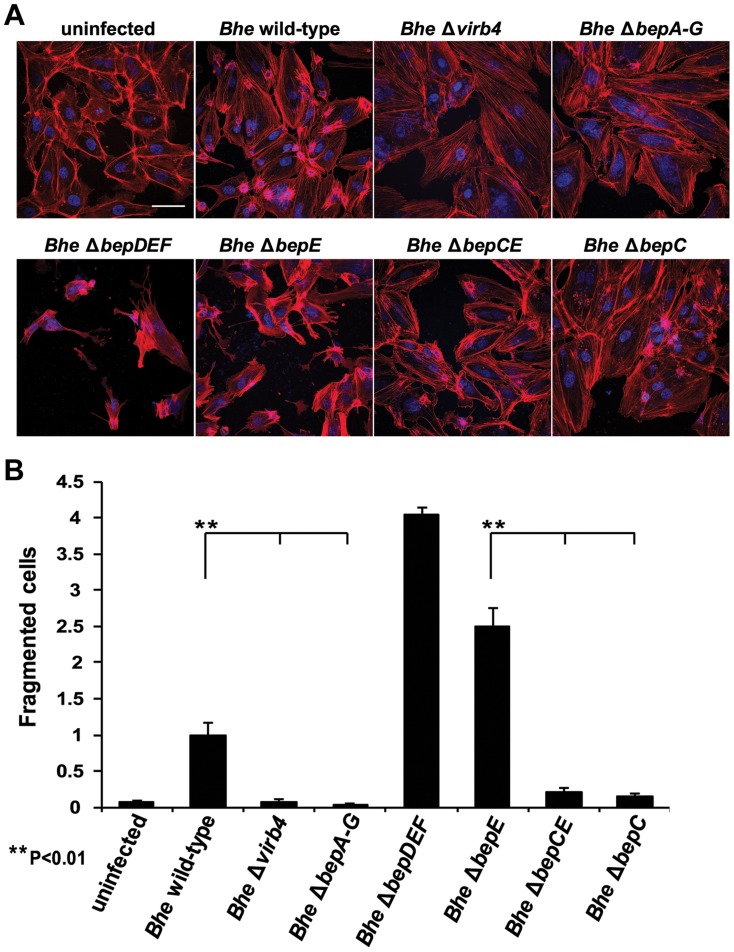
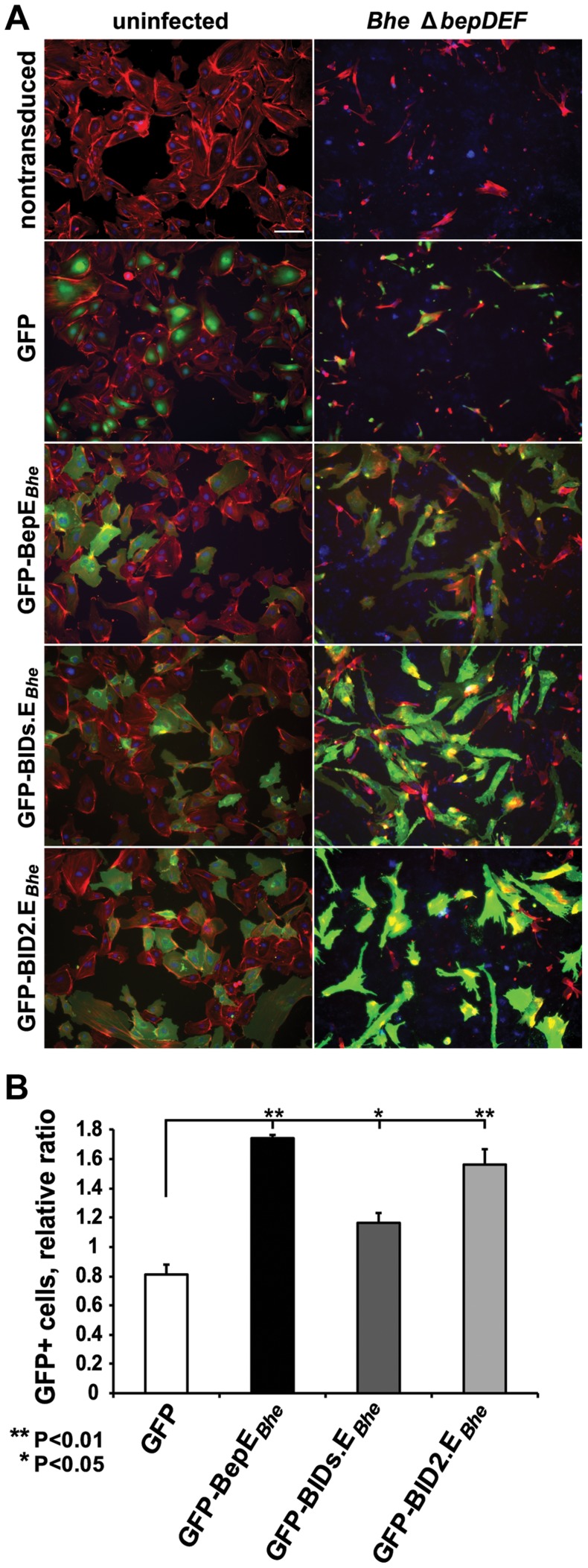
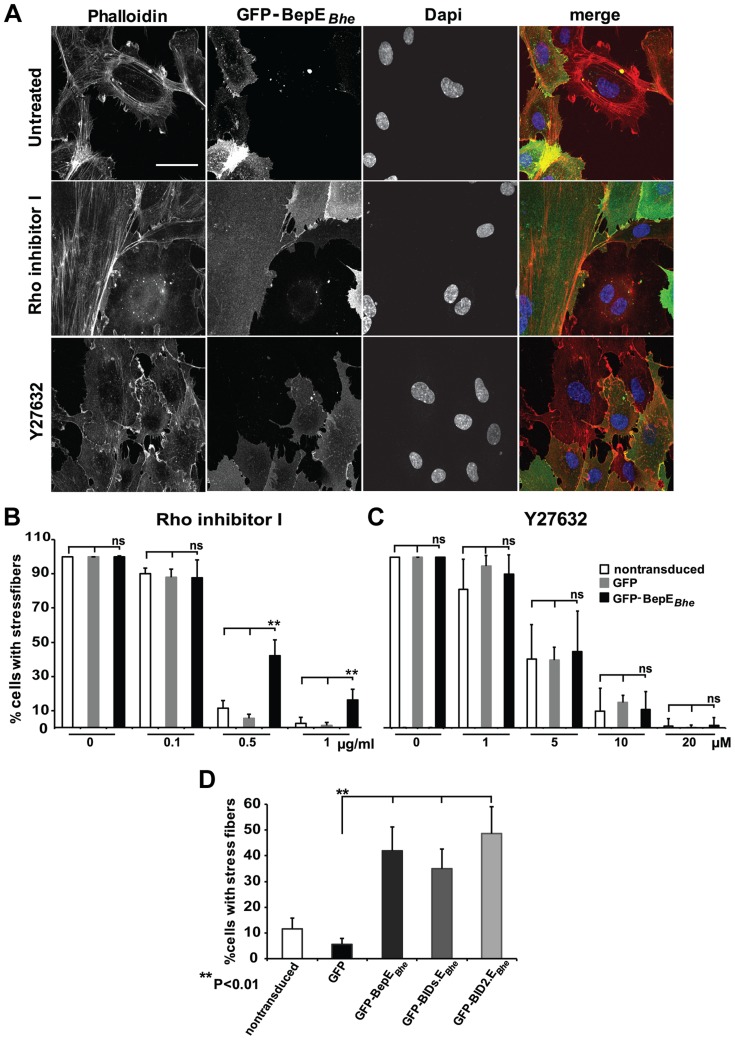
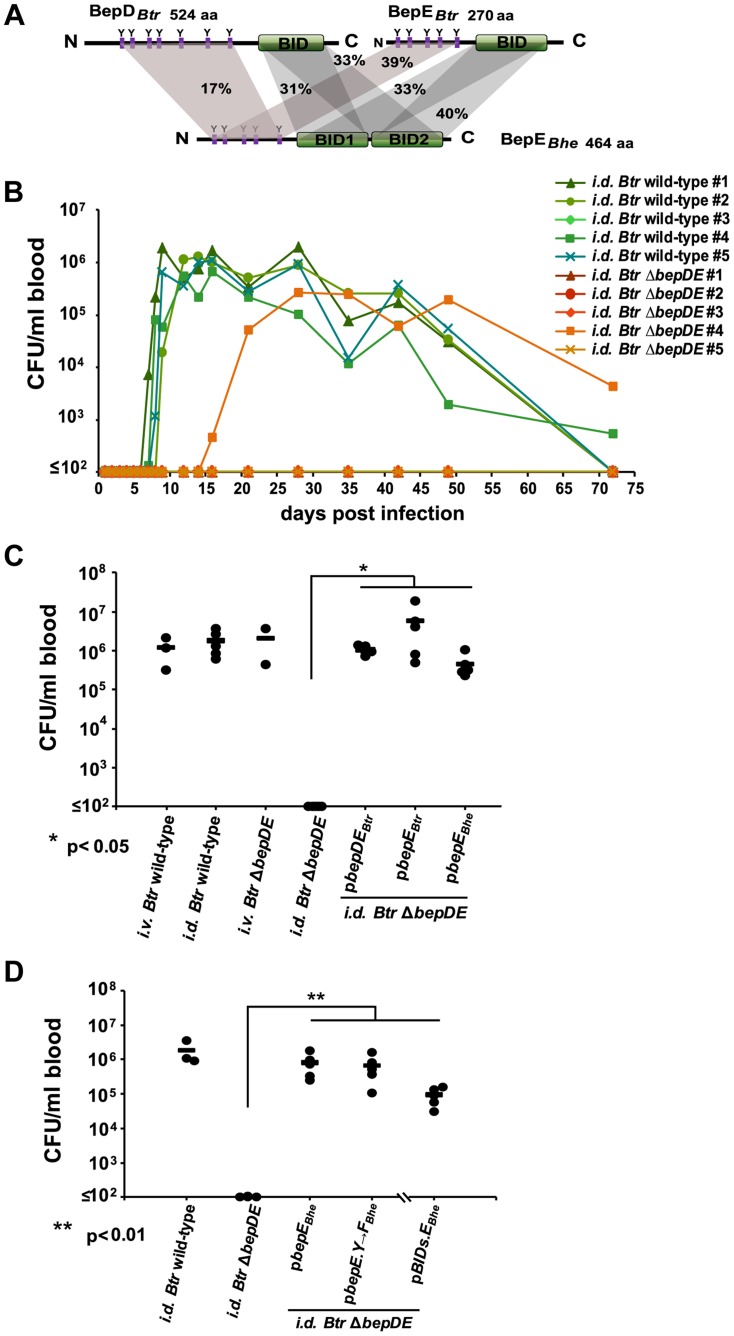
Numerous bacterial pathogens secrete multiple effectors to modulate host cellular functions. These effectors may interfere with each other to efficiently control the infection process. Bartonellae are Gram-negative, facultative intracellular bacteria using a VirB type IV secretion system to translocate a cocktail of Bartonella effector proteins (Beps) into host cells. Based on in vitro infection models we demonstrate here that BepE protects infected migratory cells from injurious effects triggered by BepC and is required for in vivo dissemination of bacteria from the dermal site of inoculation to blood. Human endothelial cells (HUVECs) infected with a ΔbepE mutant of B. henselae (Bhe) displayed a cell fragmentation phenotype resulting from Bep-dependent disturbance of rear edge detachment during migration. A ΔbepCE mutant did not show cell fragmentation, indicating that BepC is critical for triggering this deleterious phenotype. Complementation of ΔbepE with BepEBhe or its homologues from other Bartonella species abolished cell fragmentation. This cyto-protective activity is confined to the C-terminal Bartonella intracellular delivery (BID) domain of BepEBhe (BID2.EBhe). Ectopic expression of BID2.EBhe impeded the disruption of actin stress fibers by Rho Inhibitor 1, indicating that BepE restores normal cell migration via the RhoA signaling pathway, a major regulator of rear edge retraction. An intradermal (i.d.) model for B. tribocorum (Btr) infection in the rat reservoir host mimicking the natural route of infection by blood sucking arthropods allowed demonstrating a vital role for BepE in bacterial dissemination from derma to blood. While the Btr mutant ΔbepDE was abacteremic following i.d. inoculation, complementation with BepEBtr, BepEBhe or BIDs.EBhe restored bacteremia. Given that we observed a similar protective effect of BepEBhe on infected bone marrow-derived dendritic cells migrating through a monolayer of lymphatic endothelial cells we propose that infected dermal dendritic cells may be involved in disseminating Bartonella towards the blood stream in a BepE-dependent manner.
许多细菌病原体分泌多种效应蛋白来调节宿主细胞功能。这些效应蛋白可能会相互干扰,以有效控制感染过程。巴尔通体是革兰氏阴性兼性胞内细菌,利用VirB IV型分泌系统将一组巴尔通体效应蛋白(Beps)转运到宿主细胞中。基于体外感染模型,我们在此证明BepE可保护受感染的迁移细胞免受BepC触发的有害影响,并且是细菌从接种的皮肤部位向血液体内传播所必需的。感染了亨氏巴尔通体(Bhe)的ΔbepE突变体的人内皮细胞(HUVECs)表现出细胞破碎表型,这是由于迁移过程中后缘脱离的Bep依赖性干扰所致。ΔbepCE突变体未显示细胞破碎,表明BepC对于触发这种有害表型至关重要。用BepEBhe或其他巴尔通体物种的同源物对ΔbepE进行互补可消除细胞破碎。这种细胞保护活性仅限于BepEBhe的C末端巴尔通体细胞内递送(BID)结构域(BID2.EBhe)。BID2.EBhe的异位表达阻碍了Rho抑制剂1对肌动蛋白应力纤维的破坏,表明BepE通过RhoA信号通路恢复正常细胞迁移,RhoA信号通路是后缘回缩的主要调节因子。在大鼠储存宿主中模拟吸血节肢动物自然感染途径的三部落巴尔通体(Btr)感染的皮内(i.d.)模型,证明了BepE在细菌从皮肤向血液传播中的重要作用。虽然Btr突变体ΔbepDE在皮内接种后无细菌血症,但用BepEBtr、BepEBhe或BIDs.EBhe进行互补可恢复菌血症。鉴于我们观察到BepEBhe对通过单层淋巴管内皮细胞迁移的受感染骨髓来源树突状细胞具有类似的保护作用,我们提出受感染的皮肤树突状细胞可能以BepE依赖的方式参与将巴尔通体传播到血流中。