Division of Hematology-Oncology, Department of Medicine, Samsung Medical Center, Sungkyunkwan University School of Medicine, Seoul 135-710, Korea.
Biomedical Research Institute, Samsung Medical Center, Seoul 135-710, Korea.
Br J Cancer. 2014 Jul 29;111(3):497-505. doi: 10.1038/bjc.2014.283. Epub 2014 Jun 19.
Statins, 3-hydroxy-3-methylglutaryl coenzyme A reductase inhibitors, are commonly prescribed because of their therapeutic and preventive effects on cardiovascular diseases. Even though they have been occasionally reported to have antitumour activity, it is unknown whether statins have anti-angiogenic effect in human colorectal cancer (CRC).
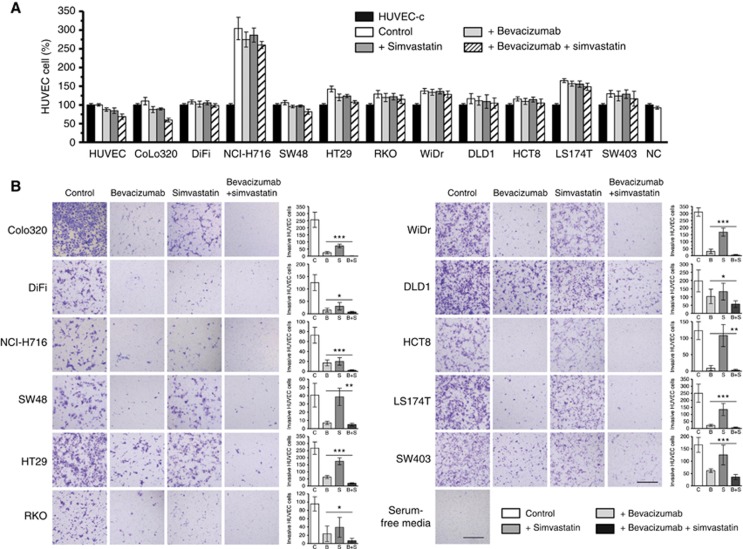
A total of 11 human CRC cell lines were used to test the effects of bevacizumab, statins, and bevacizumab plus statins on human umbilical vein endothelial cell (HUVEC) viability and invasion in vitro. To determine the molecular mechanism of statins as anti-angiogenic agents, we performed an angiogenesis antibody array and proteomics analysis and confirmed the results using immunoblot assay, HUVEC invasion rescue assay, and siRNA assay. The antitumoural effects of bevacizumab and statins were evaluated in xenograft models.
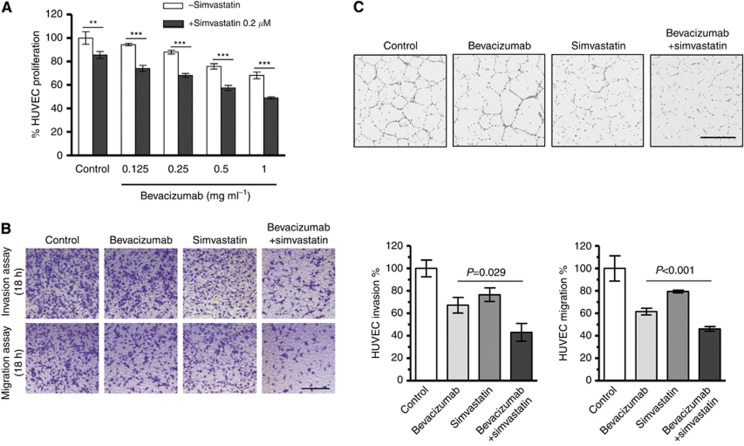
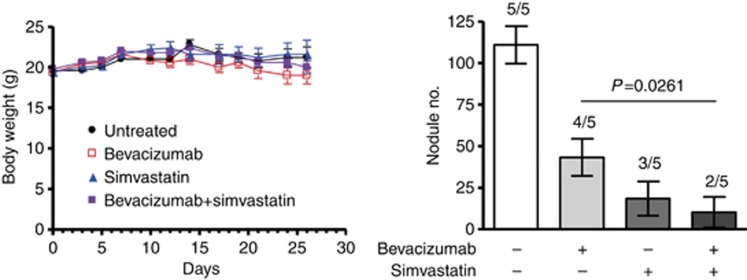
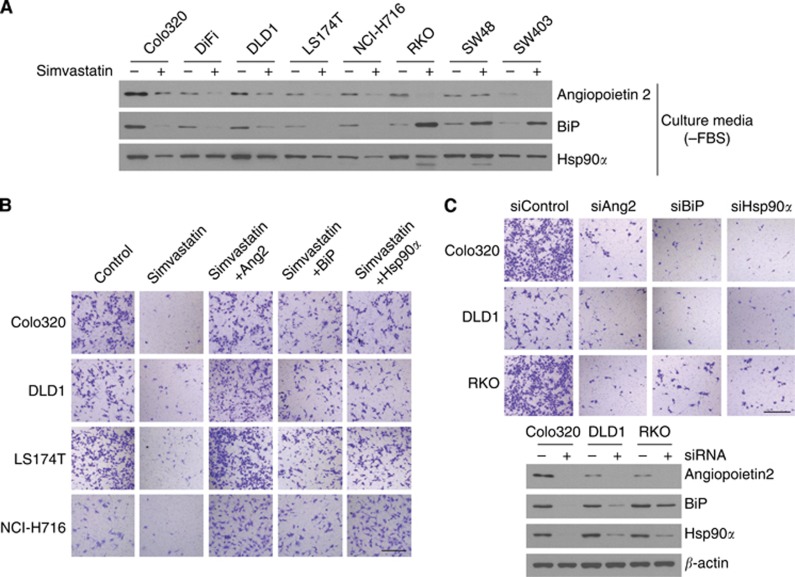
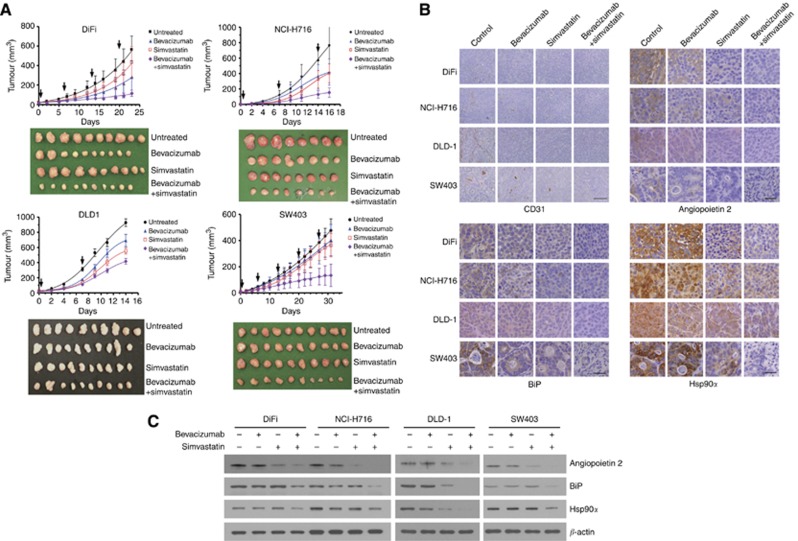
A conventional dose of statins (simvastatin 0.2 μM, lovastatin 0.4 μM, atorvastatin 0.1 μM, and pravastatin 0.4 μM) in combination with bevacizumab directly reduced the cell viability, migration, invasion, and tube formation of HUVECs. The culture media of the CRC cells treated with bevacizumab or statins were also found to inhibit HUVEC invasion by suppressing angiogenic mediators, such as angiopoietin2, binding immunoglobulin protein (BiP), and Hsp90α. The combined treatment with bevacizumab and simvastatin significantly reduced the growth and metastases of xenograft tumours compared with treatment with bevacizumab alone.
The addition of simvastatin at a dose used in patients with cardiovascular diseases (40-80 mg once daily) may potentiate the anti-angiogenic effects of bevacizumab on CRC by suppressing angiopoietin2, BiP, and Hsp90α in cancer cells. A clinical trial of simvastatin in combination with bevacizumab in patients with CRC is needed.
他汀类药物,即 3-羟基-3-甲基戊二酰辅酶 A 还原酶抑制剂,由于其在心血管疾病方面的治疗和预防作用而被广泛应用。尽管已有偶尔报道称他汀类药物具有抗肿瘤活性,但目前尚不清楚他汀类药物是否对人结直肠癌(CRC)具有抗血管生成作用。
我们使用 11 个人 CRC 细胞系来检测贝伐单抗、他汀类药物以及贝伐单抗联合他汀类药物对人脐静脉内皮细胞(HUVEC)活力和体外侵袭的影响。为了确定他汀类药物作为抗血管生成剂的分子机制,我们进行了血管生成抗体阵列和蛋白质组学分析,并通过免疫印迹检测、HUVEC 侵袭拯救实验和 siRNA 实验验证了这些结果。我们还在异种移植模型中评估了贝伐单抗和他汀类药物的抗肿瘤作用。
常规剂量的他汀类药物(辛伐他汀 0.2 μM、洛伐他汀 0.4 μM、阿托伐他汀 0.1 μM 和普伐他汀 0.4 μM)联合贝伐单抗可直接降低 HUVEC 的细胞活力、迁移、侵袭和管形成。贝伐单抗或他汀类药物处理的 CRC 细胞的培养上清液也可通过抑制血管生成介质,如血管生成素 2、结合免疫球蛋白蛋白(BiP)和热休克蛋白 90α,抑制 HUVEC 的侵袭。与单独使用贝伐单抗相比,贝伐单抗联合辛伐他汀的联合治疗可显著降低异种移植瘤的生长和转移。
在心血管疾病患者中使用的剂量(40-80mg 每日一次)添加辛伐他汀可能通过抑制癌细胞中的血管生成素 2、BiP 和 Hsp90α,增强贝伐单抗对 CRC 的抗血管生成作用。需要在 CRC 患者中开展辛伐他汀联合贝伐单抗的临床试验。