Department of Medicine, Division of Gastroenterology, Centre Hospitalier de l'Université de Montréal, St-Luc Hospital, Quebec H2X 3J4, Canada.
Endosc Ultrasound. 2014 Jan;3(1):12-6. doi: 10.4103/2303-9027.127123.
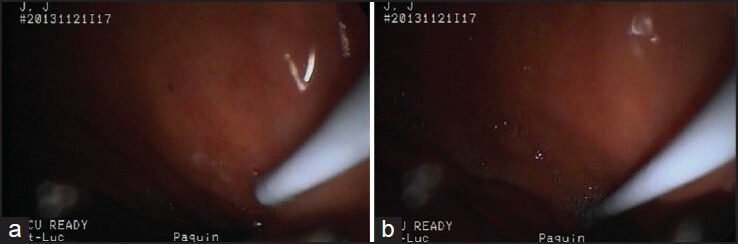
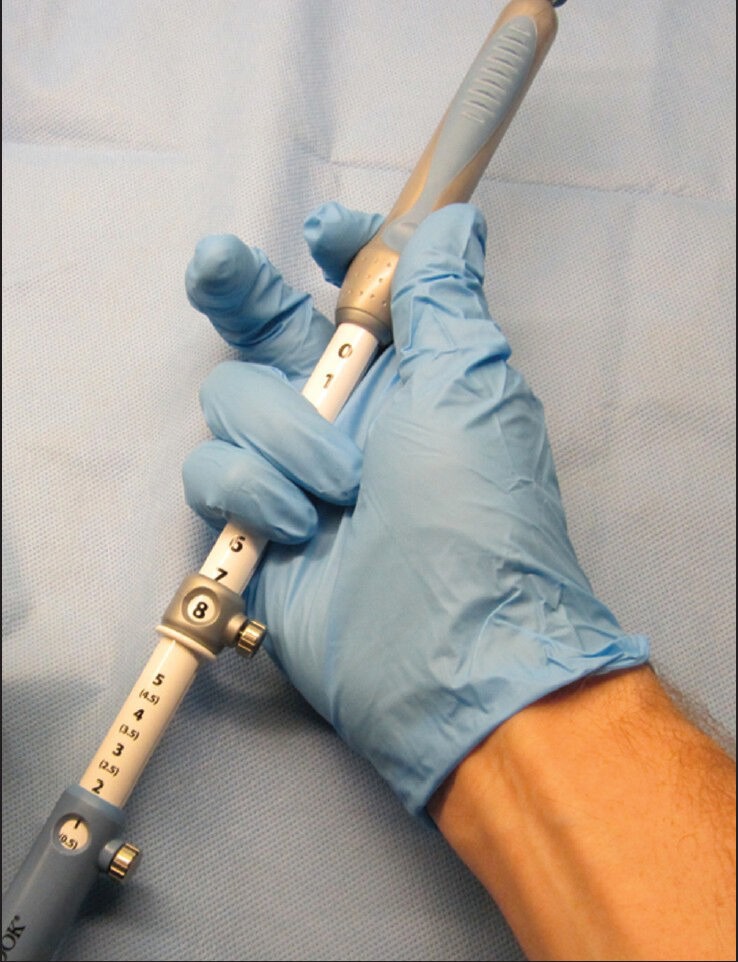
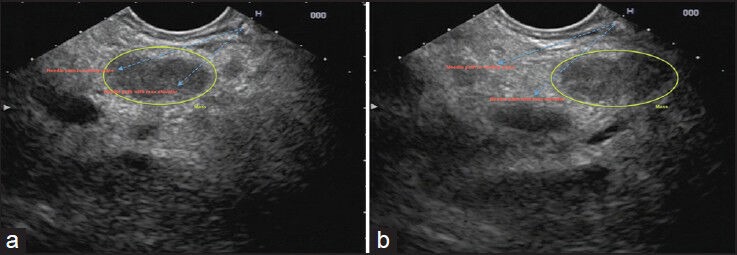
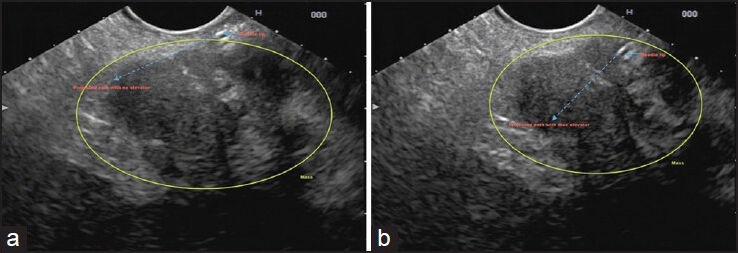
Like any other technique, fine needle aspiration (FNA) proficiency requires adequate experience. Although this technique is not difficult to master, formal training will allow endosonographers to achieve better results. The following article is derived in two parts: (1) To review current knowledge on endoscopic ultrasound (EUS)-FNA training, discuss the current recommendations on training guidelines, explore other training adjuncts and review the latest studies evaluating the validity of current recommendations; and (2) to provide some basic grounds on the EUS-FNA technique. EUS-FNA can be broken down into a series of steps. Proper execution of each step will make FNA easier and likely increase its diagnostic yield. Adequate positioning of the lesion in regards to the ultrasound probe is a key factor to obtain best results. The following will discuss useful tips in order to achieve maximal success rates.
与其他任何技术一样,细针穿刺(FNA)技术需要足够的经验。虽然这种技术并不难掌握,但正规的培训将使超声内镜医师取得更好的结果。以下文章分为两部分:(1)复习内镜超声(EUS)-FNA 培训的现有知识,讨论培训指南的现行建议,探索其他培训辅助手段,并审查评估现行建议有效性的最新研究;(2)提供有关 EUS-FNA 技术的一些基本依据。EUS-FNA 可以分为一系列步骤。正确执行每一步骤将使 FNA 变得更加容易,并可能提高其诊断率。将病变适当地定位在超声探头是获得最佳结果的关键因素。下面将讨论一些有用的技巧,以达到最高的成功率。