Azarenko Olga, Jordan Mary Ann, Wilson Leslie
Department of Molecular, Cellular, and Developmental Biology, and the Neuroscience Research Institute, University of California Santa Barbara, Santa Barbara, California, United States of America.
PLoS One. 2014 Jun 20;9(6):e100599. doi: 10.1371/journal.pone.0100599. eCollection 2014.
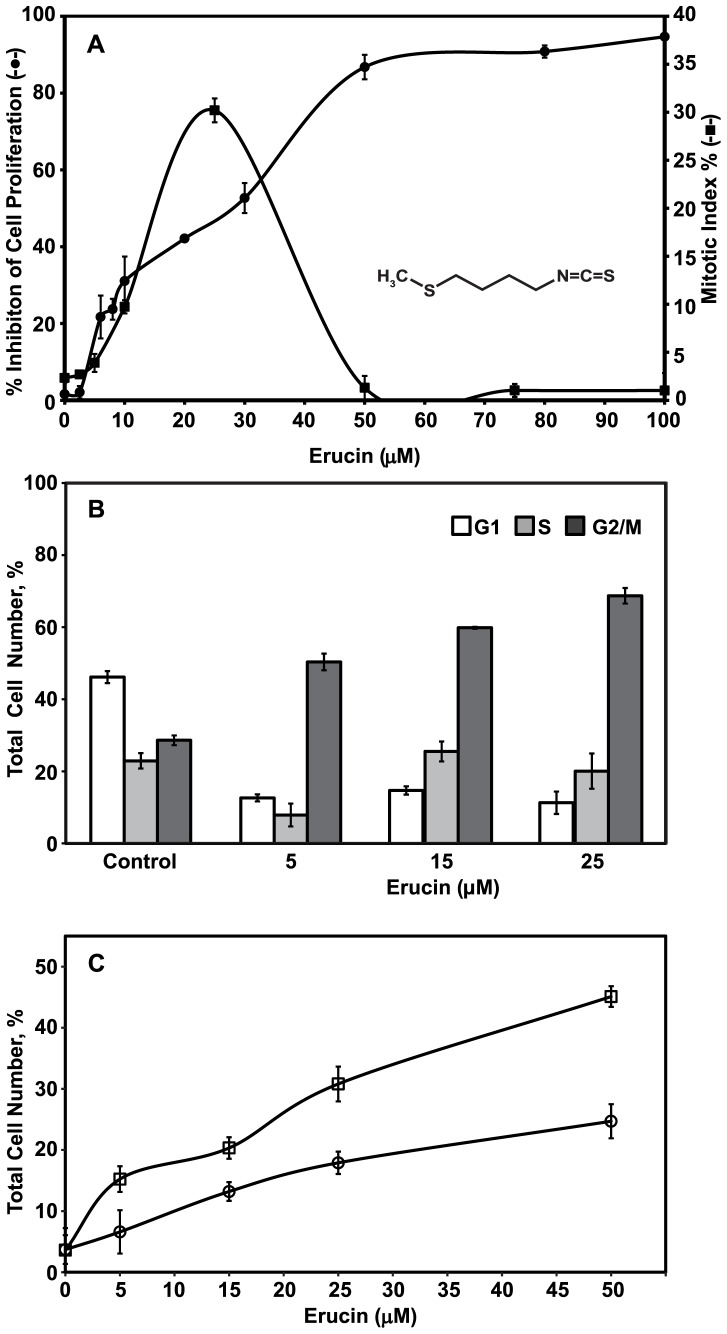
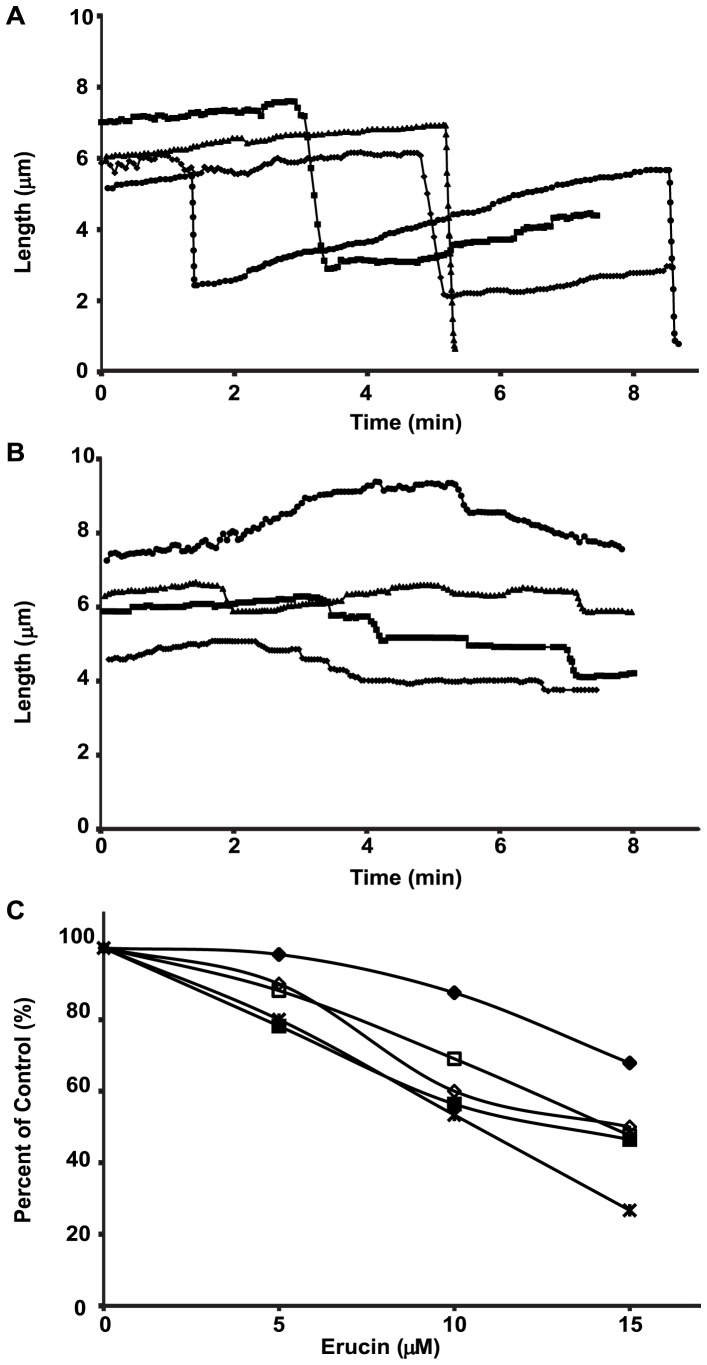
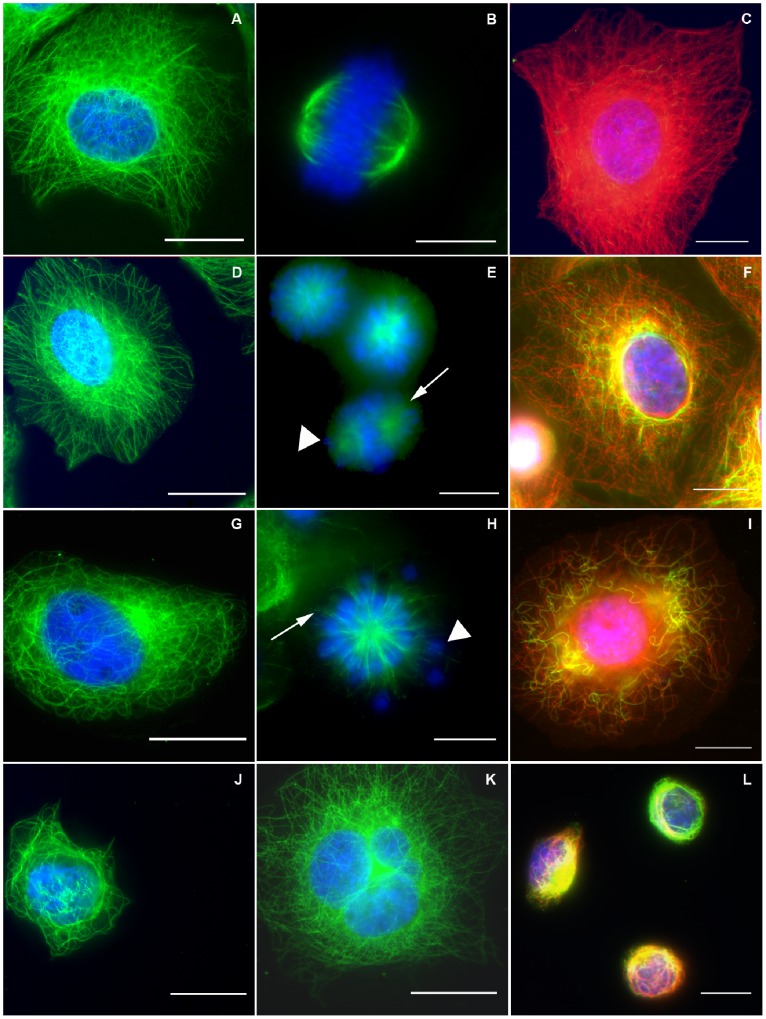
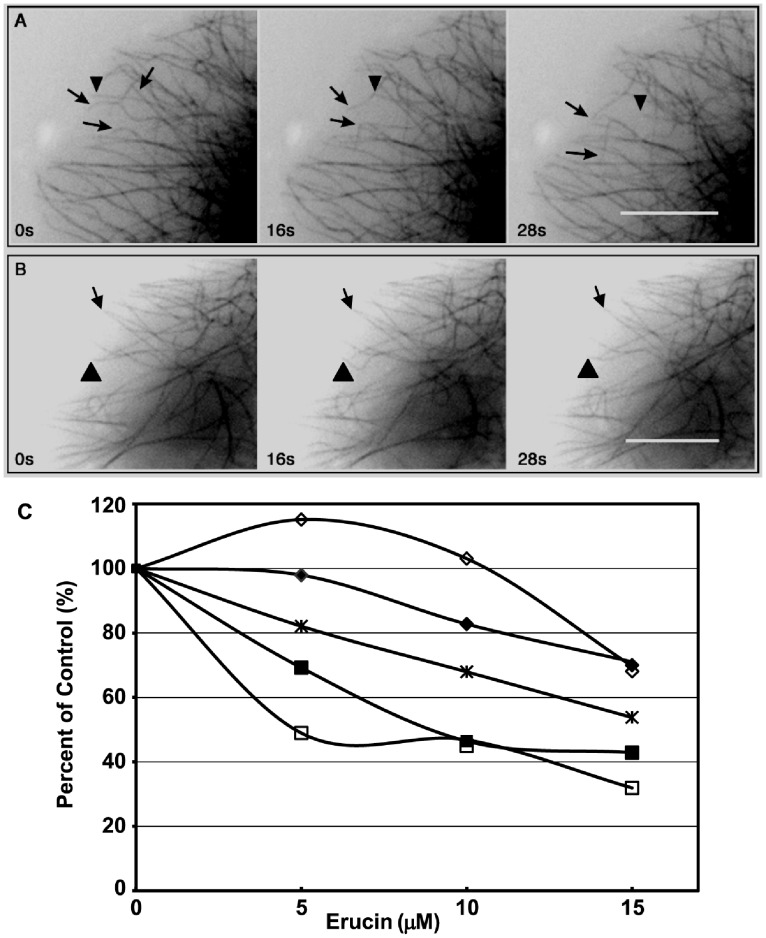
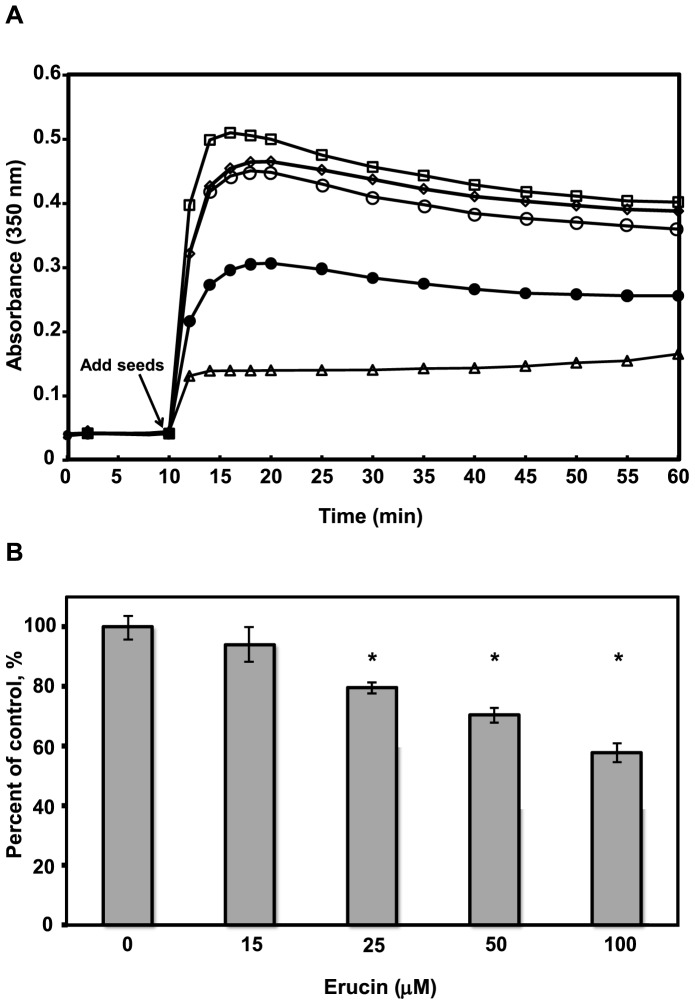
Consumption of cruciferous vegetables is associated with reduced risk of various types of cancer. Isothiocyanates including sulforaphane and erucin are believed to be responsible for this activity. Erucin [1-isothiocyanato-4-(methylthio)butane], which is metabolically and structurally related to sulforaphane, is present in large quantities in arugula (Eruca sativa, Mill.), kohlrabi and Chinese cabbage. However, its cancer preventive mechanisms remain poorly understood. We found that erucin inhibits proliferation of MCF7 breast cancer cells (IC50 = 28 µM) in parallel with cell cycle arrest at mitosis (IC50 = 13 µM) and apoptosis, by a mechanism consistent with impairment of microtubule dynamics. Concentrations of 5-15 µM erucin suppressed the dynamic instability of microtubules during interphase in the cells. Most dynamic instability parameters were inhibited, including the rates and extents of growing and shortening, the switching frequencies between growing and shortening, and the overall dynamicity. Much higher erucin concentrations were required to reduce the microtubule polymer mass. In addition, erucin suppressed dynamic instability of microtubules reassembled from purified tubulin in similar fashion. The effects of erucin on microtubule dynamics, like those of sulforaphane, are similar qualitatively to those of much more powerful clinically-used microtubule-targeting anticancer drugs, including taxanes and the vinca alkaloids. The results suggest that suppression of microtubule dynamics by erucin and the resulting impairment of critically important microtubule-dependent cell functions such as mitosis, cell migration and microtubule-based transport may be important in its cancer preventive activities.
食用十字花科蔬菜与降低多种癌症风险相关。包括萝卜硫素和芥酸在内的异硫氰酸盐被认为是导致这种作用的原因。芥酸[1-异硫氰酸酯-4-(甲硫基)丁烷]在代谢和结构上与萝卜硫素相关,大量存在于芝麻菜(芝麻菜,米尔.)、球茎甘蓝和大白菜中。然而,其癌症预防机制仍知之甚少。我们发现,芥酸通过一种与微管动力学受损一致的机制,抑制MCF7乳腺癌细胞的增殖(IC50 = 28 μM),同时使细胞周期停滞在有丝分裂期(IC50 = 13 μM)并诱导细胞凋亡。5-15 μM的芥酸浓度可抑制细胞间期微管的动态不稳定性。大多数动态不稳定参数均受到抑制,包括生长和缩短的速率及程度、生长与缩短之间的转换频率以及整体动态性。需要更高的芥酸浓度才能降低微管聚合物质量。此外,芥酸以类似方式抑制从纯化微管蛋白重新组装的微管的动态不稳定性。芥酸对微管动力学的影响,与萝卜硫素一样,在质量上类似于更强大的临床使用的微管靶向抗癌药物,包括紫杉烷类和长春花生物碱。结果表明,芥酸抑制微管动力学以及由此导致的对诸如有丝分裂、细胞迁移和基于微管的运输等至关重要的微管依赖性细胞功能的损害,可能在其癌症预防活性中起重要作用。