1] Department of Medicine, Division of Gastroenterology, Stanford University School of Medicine, Stanford, California, USA. [2] Department of Microbiology and Immunology, Stanford University School of Medicine, Stanford, California, USA.
Program in Computational and Systems Immunology, Institute for Immunity, Transplantation and Infection, Stanford University School of Medicine, Stanford, California, USA.
Nat Biotechnol. 2014 Jul;32(7):684-92. doi: 10.1038/nbt.2938. Epub 2014 Jun 22.
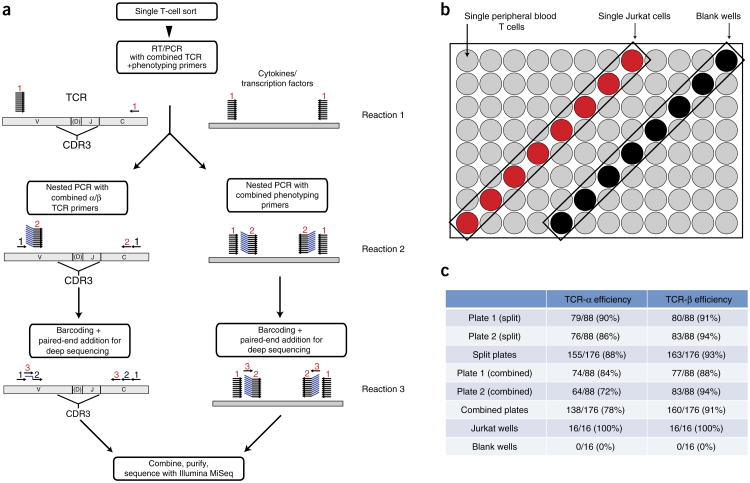
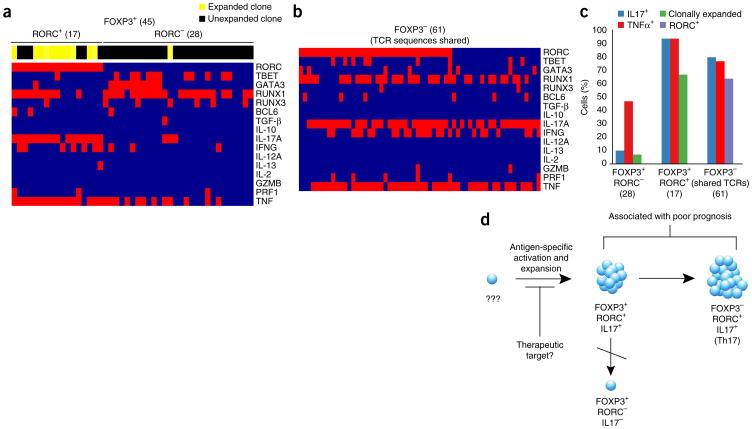
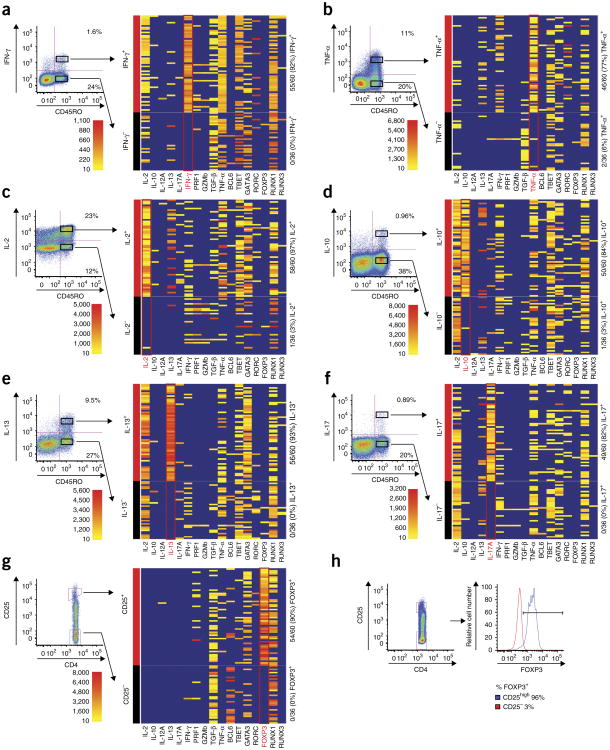
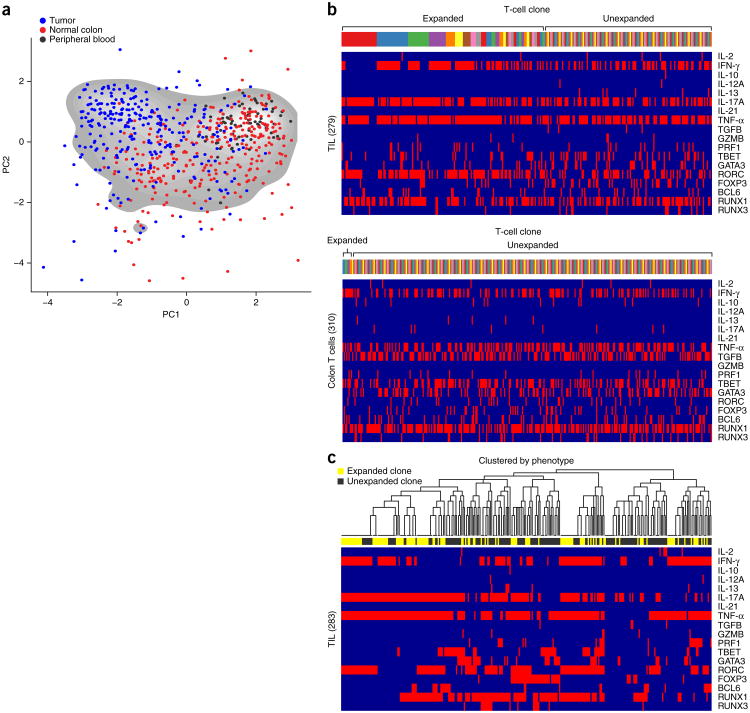
Although each T lymphocyte expresses a T-cell receptor (TCR) that recognizes cognate antigen and controls T-cell activation, different T cells bearing the same TCR can be functionally distinct. Each TCR is a heterodimer, and both α- and β-chains contribute to determining TCR antigen specificity. Here we present a methodology enabling integration of information about TCR specificity with information about T cell function. This method involves sequencing of TCRα and TCRβ genes, and amplifying functional genes characteristic of different T cell subsets, in single T cells. Because this approach retains information about individual TCRα-TCRβ pairs, TCRs of interest can be expressed and used in functional studies, for antigen discovery, or in therapeutic applications. We apply this approach to study the clonal ancestry and differentiation of T lymphocytes infiltrating a human colorectal carcinoma.
虽然每个 T 淋巴细胞都表达一种识别同源抗原并控制 T 细胞活化的 T 细胞受体(TCR),但具有相同 TCR 的不同 T 细胞在功能上可能不同。每个 TCR 都是异二聚体,α 和 β 链都有助于确定 TCR 抗原特异性。在这里,我们提出了一种将 TCR 特异性信息与 T 细胞功能信息整合的方法。该方法涉及单个 T 细胞中 TCRα 和 TCRβ 基因的测序,以及扩增不同 T 细胞亚群特征的功能性基因。由于这种方法保留了关于单个 TCRα-TCRβ 对的信息,因此可以表达和在功能研究、抗原发现或治疗应用中使用感兴趣的 TCR。我们应用这种方法来研究浸润人类结直肠癌的 T 淋巴细胞的克隆起源和分化。