Aihara Arihiro, Huang Chiung-Kuei, Olsen Mark J, Lin Qiushi, Chung Waihong, Tang Qi, Dong Xiaoqun, Wands Jack R
Liver Research Center, Rhode Island Hospital and The Warren Alpert Medical School of Brown University, Providence, RI.
Hepatology. 2014 Oct;60(4):1302-13. doi: 10.1002/hep.27275. Epub 2014 Aug 25.
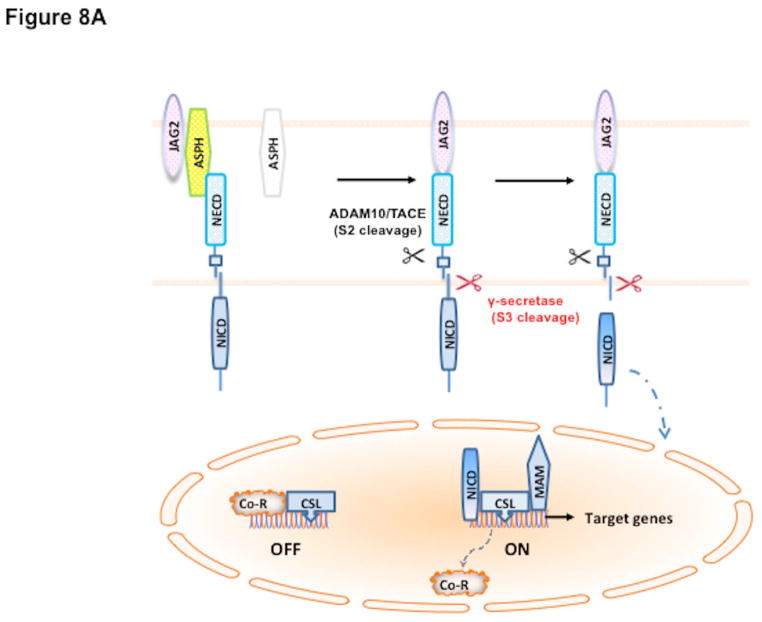
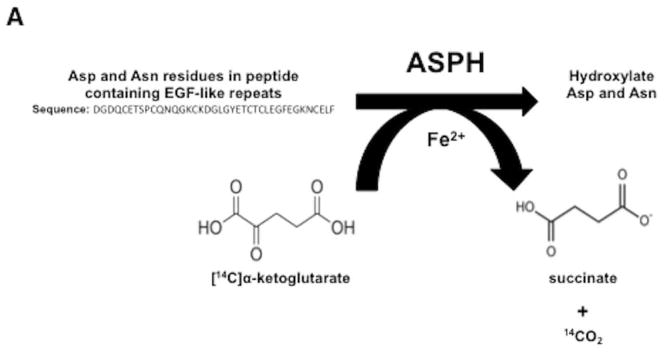
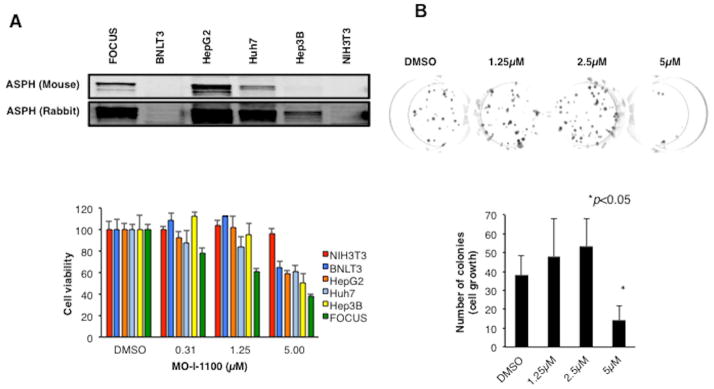
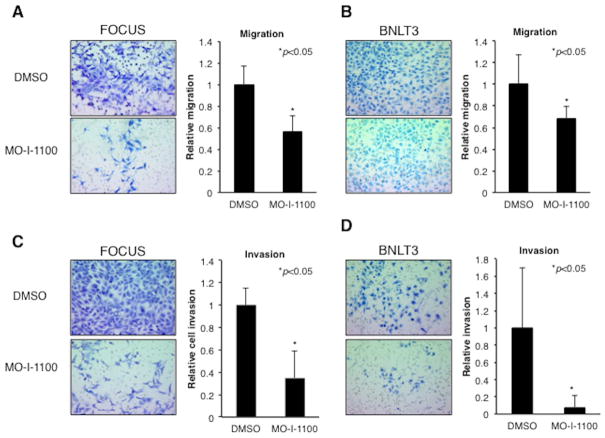
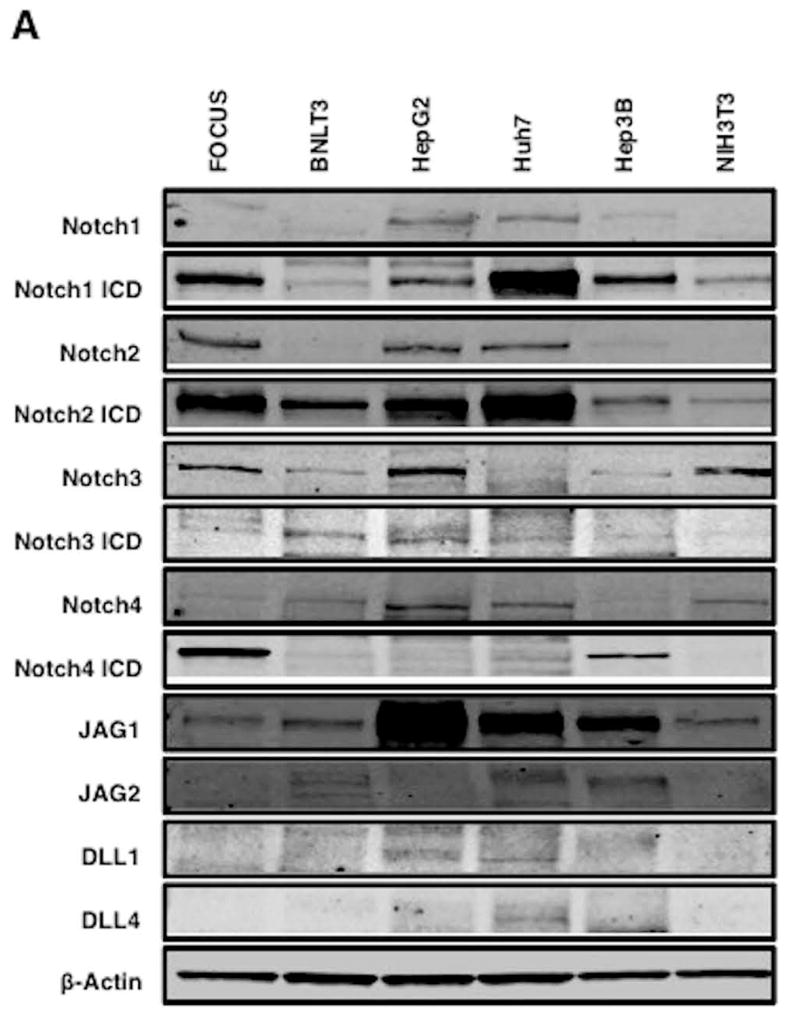
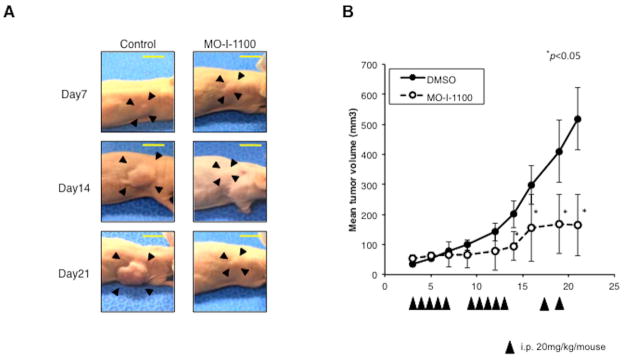
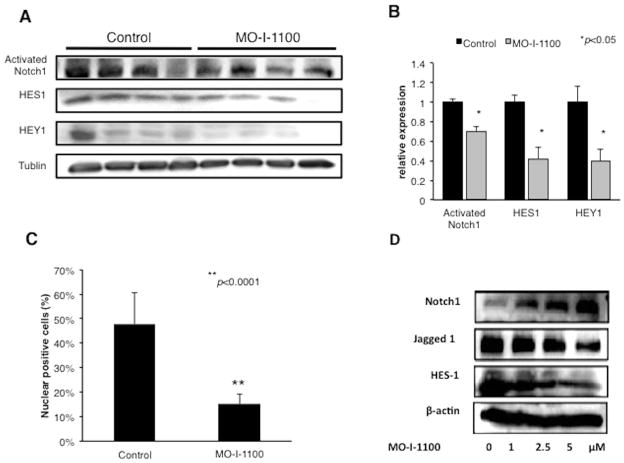
Hepatocellular carcinoma (HCC) has a poor prognosis as a result of widespread intra- and extrahepatic metastases. There is an urgent need to understand signaling cascades that promote disease progression. Aspartyl-(asparaginyl)-β-hydroxylase (ASPH) is a cell-surface enzyme that generates enhanced cell motility, migration, invasion, and metastatic spread in HCC. We hypothesize that inhibition of its enzymatic activity could have antitumor effects. Small molecule inhibitors (SMIs) were developed based on the crystal structure of the ASPH catalytic site followed by computer-assisted drug design. Candidate compounds were tested for inhibition of β-hydroxylase activity and selected for their capability to modulate cell proliferation, migration, invasion, and colony formation in vitro and to inhibit HCC tumor growth in vivo using orthotopic and subcutaneous murine models. The biological effects of SMIs on the Notch signaling cascade were evaluated. The SMI inhibitor, MO-I-1100, was selected because it reduced ASPH enzymatic activity by 80% and suppressed HCC cell migration, invasion, and anchorage-independent growth. Furthermore, substantial inhibition of HCC tumor growth and progression was observed in both animal models. The mechanism(s) for this antitumor effect was associated with reduced activation of Notch signaling both in vitro and in vivo.
These studies suggest that the enzymatic activity of ASPH is important for hepatic oncogenesis. Reduced β-hydroxylase activity generated by the SMI MO-I-1100 leads to antitumor effects through inhibiting Notch signaling cascade in HCC. ASPH promotes the generation of an HCC malignant phenotype and represents an attractive molecular target for therapy of this fatal disease.
由于广泛的肝内和肝外转移,肝细胞癌(HCC)的预后较差。迫切需要了解促进疾病进展的信号级联反应。天冬氨酰-(天冬酰胺酰)-β-羟化酶(ASPH)是一种细胞表面酶,可增强HCC中的细胞运动、迁移、侵袭和转移扩散。我们假设抑制其酶活性可能具有抗肿瘤作用。基于ASPH催化位点的晶体结构并通过计算机辅助药物设计开发了小分子抑制剂(SMIs)。测试候选化合物对β-羟化酶活性的抑制作用,并根据其在体外调节细胞增殖、迁移、侵袭和集落形成以及使用原位和皮下小鼠模型在体内抑制HCC肿瘤生长的能力进行选择。评估了SMIs对Notch信号级联反应的生物学效应。选择了SMI抑制剂MO-I-1100,因为它可将ASPH酶活性降低80%,并抑制HCC细胞迁移、侵袭和非锚定依赖性生长。此外,在两种动物模型中均观察到对HCC肿瘤生长和进展的显著抑制。这种抗肿瘤作用的机制与体外和体内Notch信号激活的减少有关。
这些研究表明ASPH的酶活性对肝癌发生很重要。SMI MO-I-1100产生的β-羟化酶活性降低通过抑制HCC中的Notch信号级联反应导致抗肿瘤作用。ASPH促进HCC恶性表型的产生,是治疗这种致命疾病的一个有吸引力的分子靶点。