Thomason Elizabeth, Volling Brenda L, Flynn Heather A, McDonough Susan C, Marcus Sheila M, Lopez Juan F, Vazquez Delia M
University of Michigan, School of Social Work, Ann Arbor, MI, United States.
University of Michigan, Center for Human Growth and Development, Ann Arbor, MI, United States.
Infant Behav Dev. 2014 Aug;37(3):406-15. doi: 10.1016/j.infbeh.2014.05.009. Epub 2014 Jun 20.
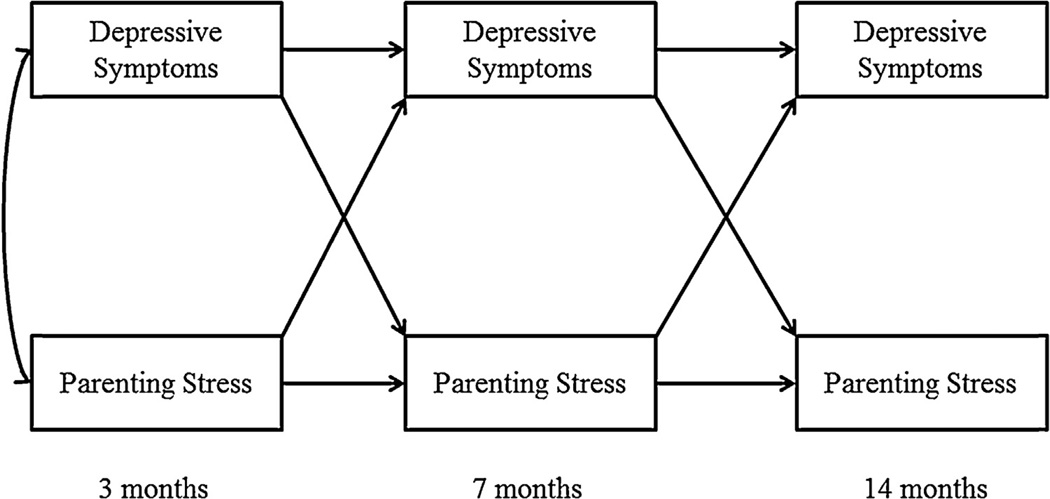
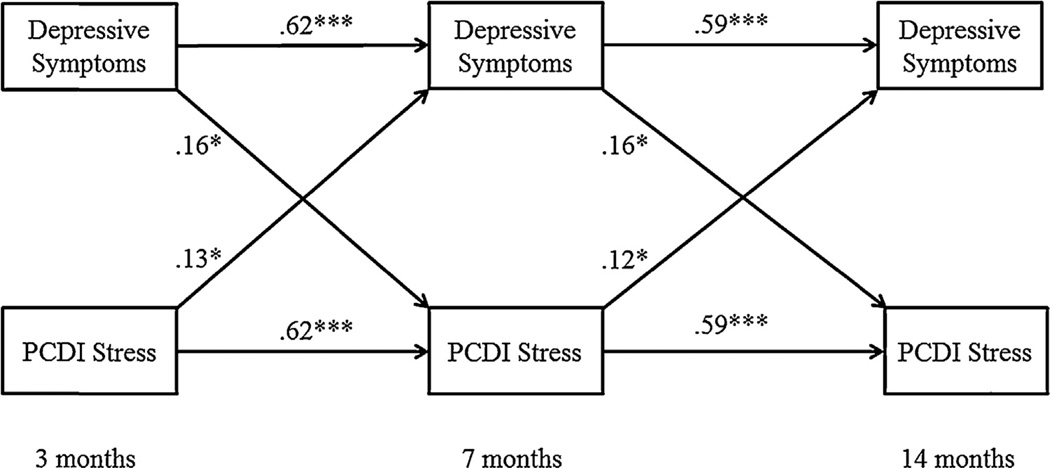
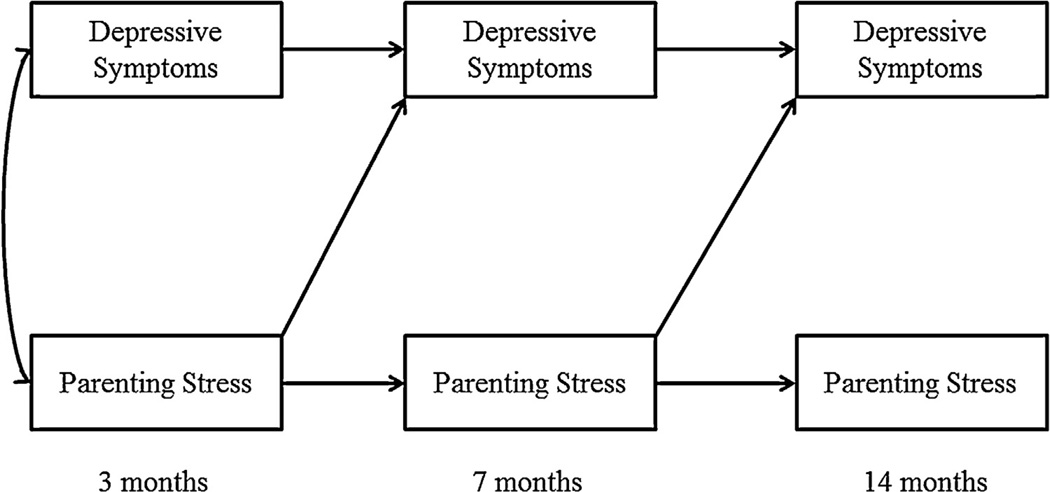
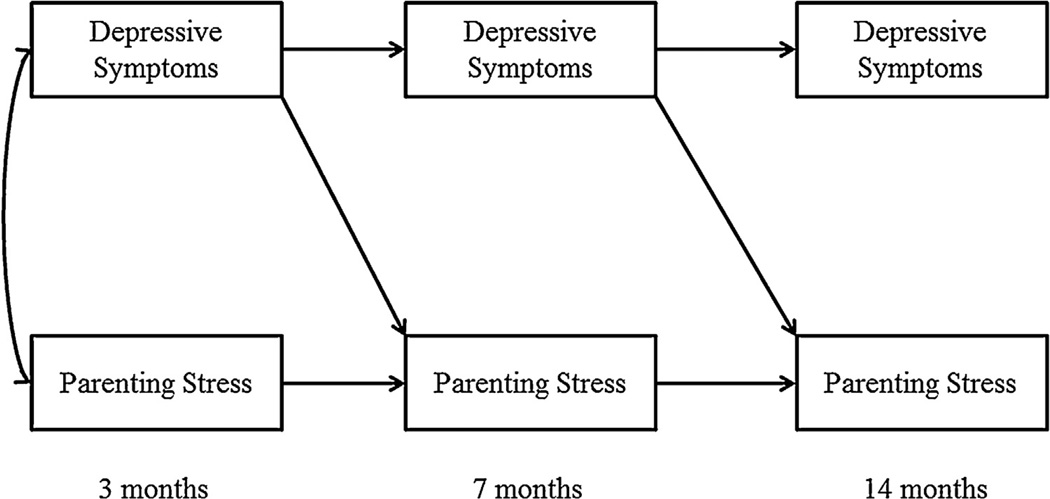
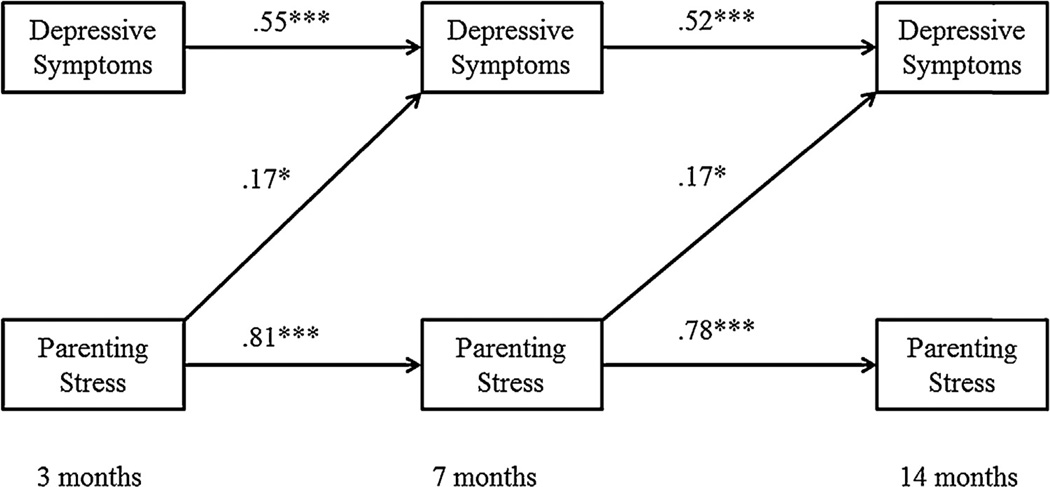
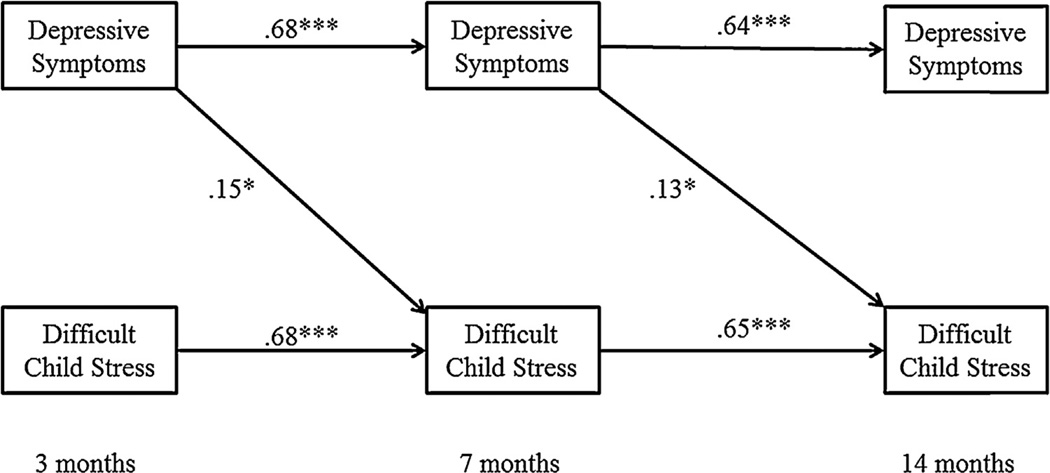
Despite the consistent link between parenting stress and postpartum depressive symptoms, few studies have explored the relationships longitudinally. The purpose of this study was to test bidirectional and unidirectional models of depressive symptoms and parenting stress. Uniquely, three specific domains of parenting stress were examined: parental distress, difficult child stress, and parent-child dysfunctional interaction (PCDI). One hundred and five women completed the Beck Depression Inventory and the Parenting Stress Index - Short Form at 3, 7, and 14 months after giving birth. Structural equation modeling revealed that total parenting stress predicted later depressive symptoms, however, there were different patterns between postpartum depressive symptoms and different types of parenting stress. A unidirectional model of parental distress predicting depressive symptoms best fit the data, with significant stability paths but non-significant cross-lagged paths. A unidirectional model of depressive symptoms predicted significant later difficult child stress. No model fit well with PCDI. Future research should continue to explore the specific nature of the associations of postpartum depression and different types of parenting stress on infant development and the infant-mother relationship.
尽管育儿压力与产后抑郁症状之间存在持续的联系,但很少有研究对这种关系进行纵向探讨。本研究的目的是检验抑郁症状与育儿压力的双向和单向模型。独特的是,研究考察了育儿压力的三个特定领域:父母困扰、难养子女压力和亲子功能失调互动(PCDI)。105名女性在产后3个月、7个月和14个月完成了贝克抑郁量表和简版育儿压力指数。结构方程模型显示,总的育儿压力可预测后期的抑郁症状,然而,产后抑郁症状与不同类型的育儿压力之间存在不同的模式。父母困扰预测抑郁症状的单向模型最符合数据,具有显著的稳定性路径,但交叉滞后路径不显著。抑郁症状的单向模型预测了后期显著的难养子女压力。没有模型与PCDI拟合良好。未来的研究应继续探索产后抑郁症与不同类型的育儿压力对婴儿发育和母婴关系影响的具体关联性质。