Yin Ge, Asplund Lillemor, Qiu Yanling, Zhou Yihui, Wang Hua, Yao Zongli, Jiang Jianbin, Bergman Åke
Department of Materials and Environmental Chemistry, Stockholm University, 10691, Stockholm, Sweden,
Environ Sci Pollut Res Int. 2015 Feb;22(3):1713-22. doi: 10.1007/s11356-014-3198-8. Epub 2014 Jun 25.
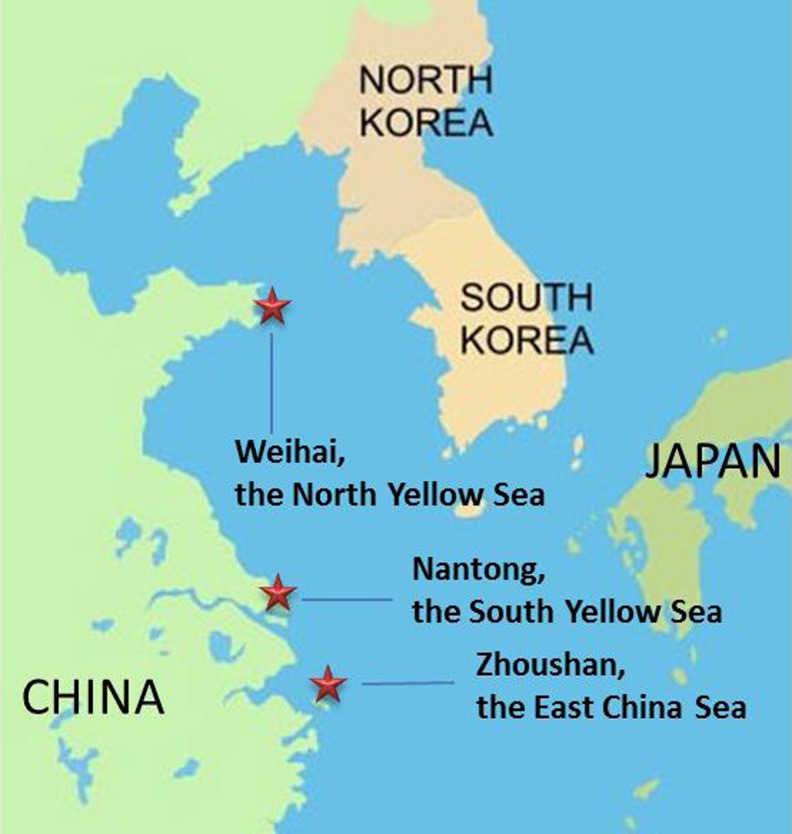
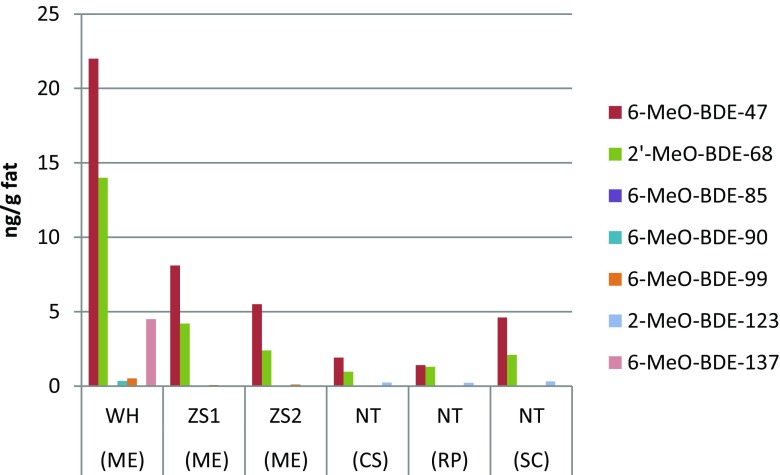
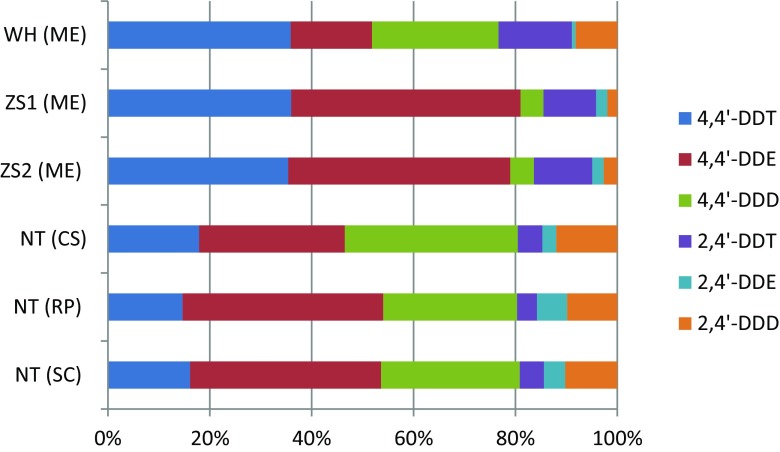
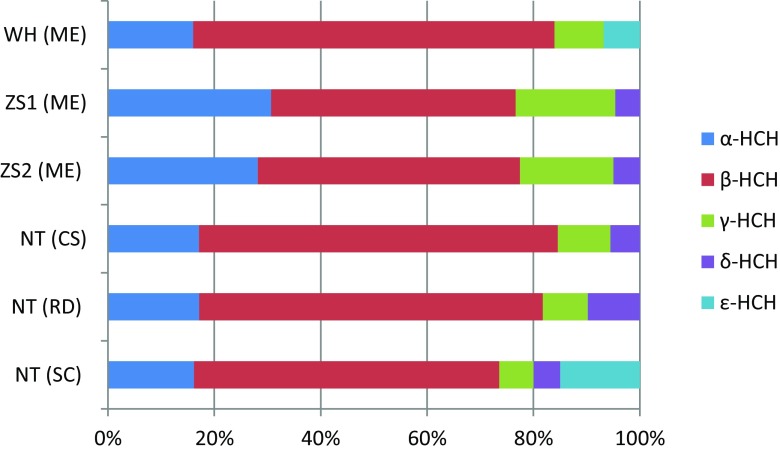
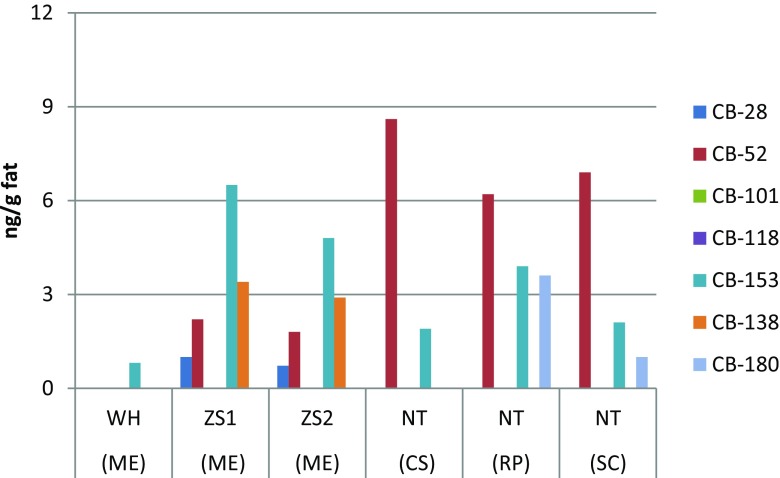
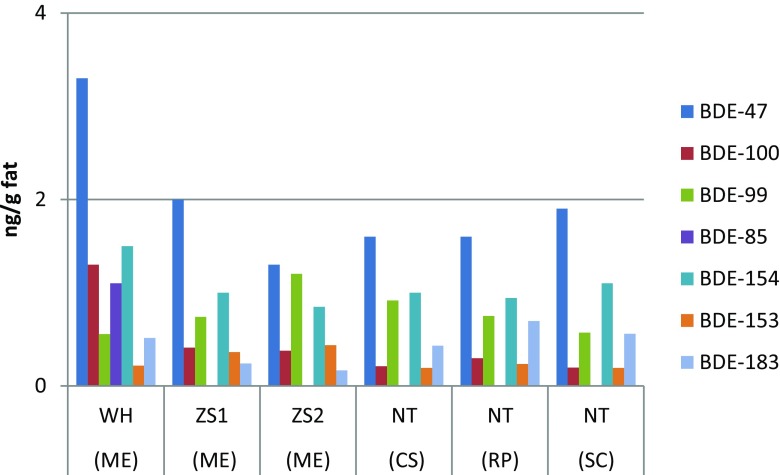
The global contamination with persistent organic pollutants (POPs), or compounds with similar characteristics, is well known. Still there are data gaps for POP concentrations from many areas in the world. The aim of the present study is to assess several legacies POPs and also hexabromocyclododecane (HBCDD) and methoxylated polybrominated diphenyl ethers (MeO-PBDEs) in shellfish from three locations in the Yellow Sea and East China Sea. The sources of the contaminants are discussed. Pooled samples were treated by liquid-liquid extraction and acid and column cleanup prior to analysis by gas chromatogram equipped with electron capture detector (GC-ECD) and gas chromatography-mass spectrometry (GC-MS). The by far most abundant environmental contaminant originates from dichlorodiphenyltrichloroethane (DDT), independent of species analyzed or sampling site. The results indicate ongoing or at least recent discharges of DDT. The second highest concentrations were reported for HBCDD (21-40 ng/g fat) in the shellfish, independent of sampling sites. The two natural products, 6-MeO-BDE-47 and 2'-MeO-BDE-68, were also present in the shellfish (1.3-22 and 1-14 ng/g fat, respectively). The polychlorinated biphenyl (PCB) congener CB-153 (0.8-6.5 ng/g fat), hexachlorobenzene (HCB) (1.1-3.6 ng/g fat), and β-hexachlorocyclohexane (β-HCH) (2.3-4.9 ng/g fat) were all higher than the concentrations of other HCH isomers, β-endosulfan, PBDE congeners, and mirex. Apart from the DDTs and HBCDDs, it is evident that the pollution of shellfish was similar to, or lower than, the contamination of shellfish in other parts of the world.
全球持久性有机污染物(POPs)或具有类似特性的化合物的污染情况众所周知。然而,世界上许多地区的POPs浓度数据仍存在空白。本研究的目的是评估来自黄海和东海三个地点的贝类中几种遗留POPs以及六溴环十二烷(HBCDD)和甲氧基多溴二苯醚(MeO-PBDEs)的情况,并讨论污染物的来源。在采用配备电子捕获检测器(GC-ECD)的气相色谱仪和气相色谱-质谱联用仪(GC-MS)进行分析之前,对混合样本进行液-液萃取、酸处理和柱净化。到目前为止,最主要的环境污染物源自滴滴涕(DDT),与所分析的物种或采样地点无关。结果表明滴滴涕仍在持续排放或至少近期有排放。贝类中HBCDD的浓度次之(21 - 40 ng/g脂肪),与采样地点无关。两种天然产物6-MeO-BDE-47和2'-MeO-BDE-68也存在于贝类中(分别为1.3 - 22 ng/g脂肪和1 - 14 ng/g脂肪)。多氯联苯(PCB)同系物CB-153(0.8 - 6.5 ng/g脂肪)、六氯苯(HCB)(1.1 - 3.6 ng/g脂肪)和β-六氯环己烷(β-HCH)(2.3 - 4.9 ng/g脂肪)的浓度均高于其他六氯环己烷异构体、β-硫丹、多溴二苯醚同系物和灭蚁灵的浓度。除滴滴涕和HBCDD外,显然贝类的污染情况与世界其他地区的贝类污染情况相似或更低。