Harris Christopher M, Waddington Jonathan, Biscione Valerio, Manzi Sean
Centre for Robotics and Neural Systems and Cognition Institute, Plymouth University Plymouth, UK ; School of Psychology, Plymouth University Plymouth, UK.
The WESC Foundation Exeter, UK ; School of Psychology, University of Lincoln Lincoln, UK.
Front Hum Neurosci. 2014 Jun 10;8:418. doi: 10.3389/fnhum.2014.00418. eCollection 2014.
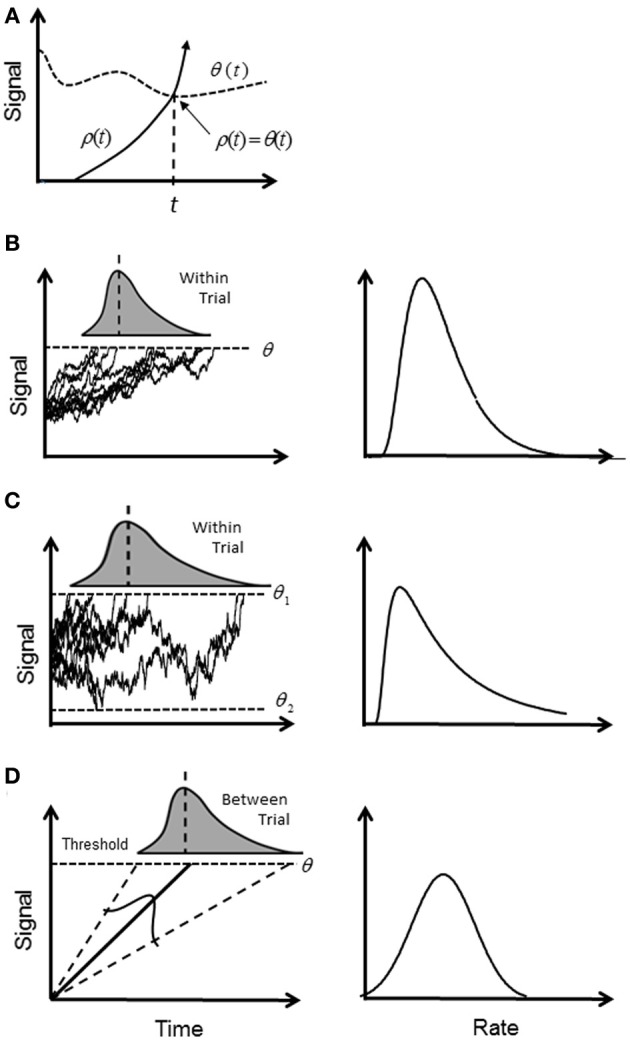
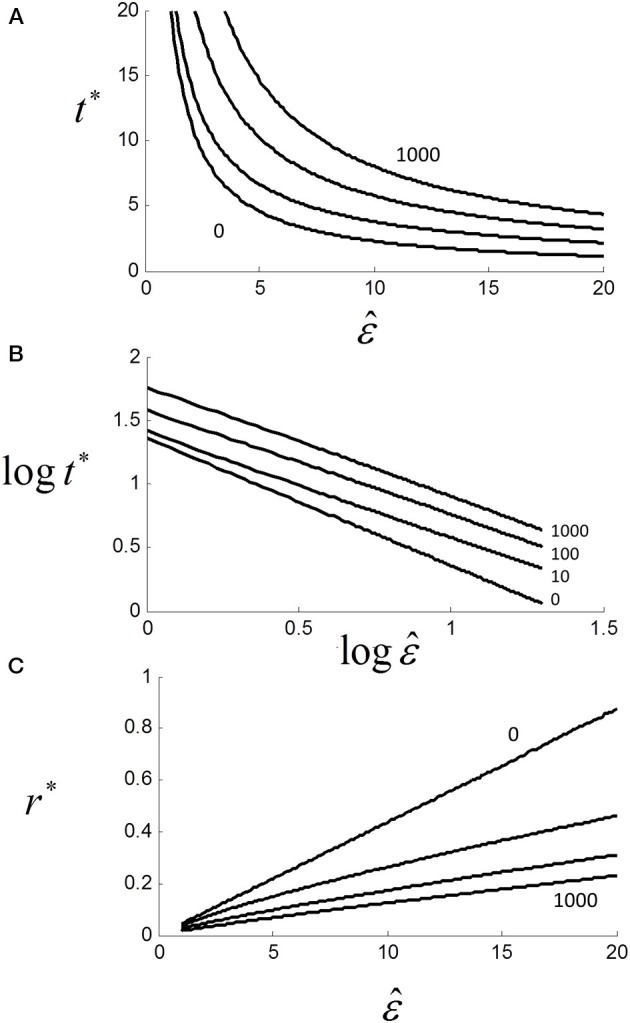
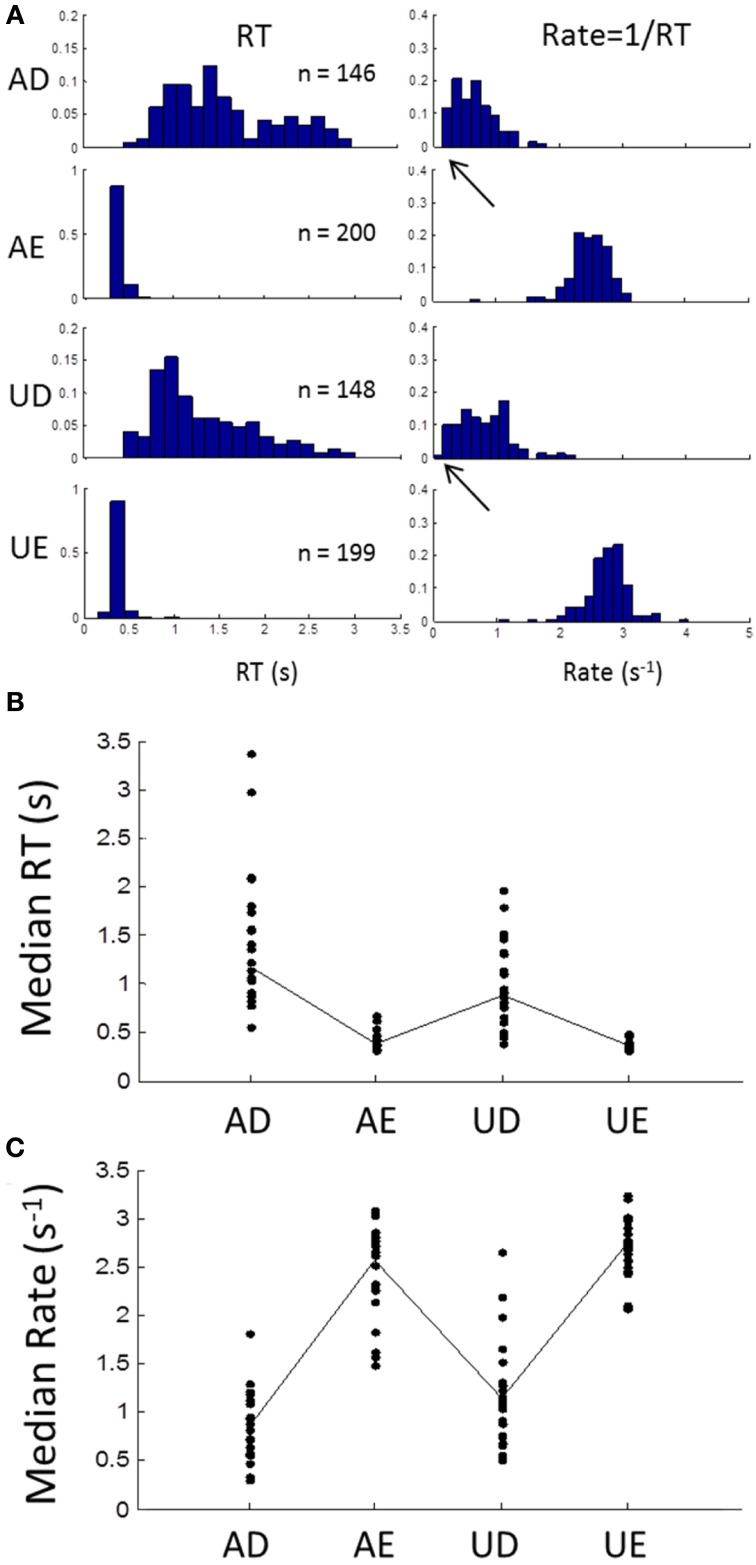
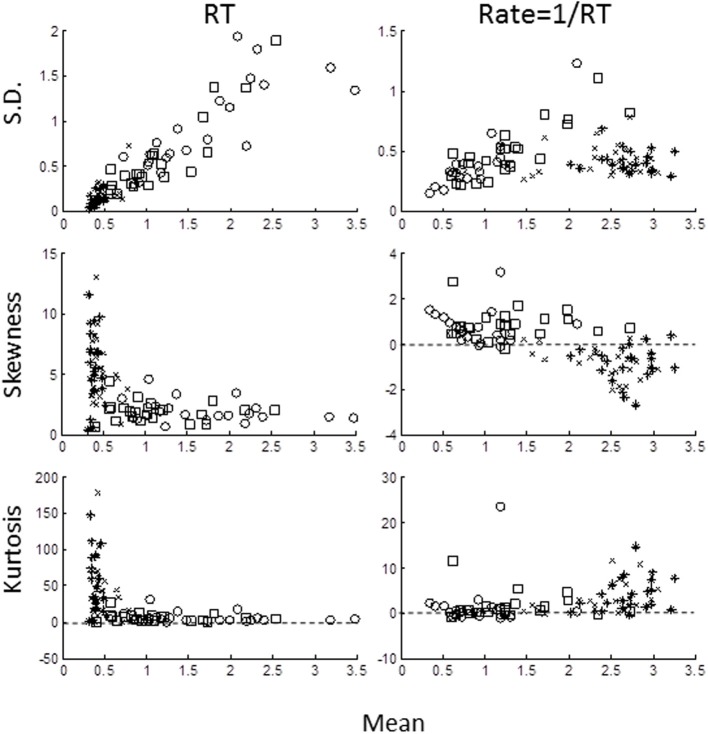
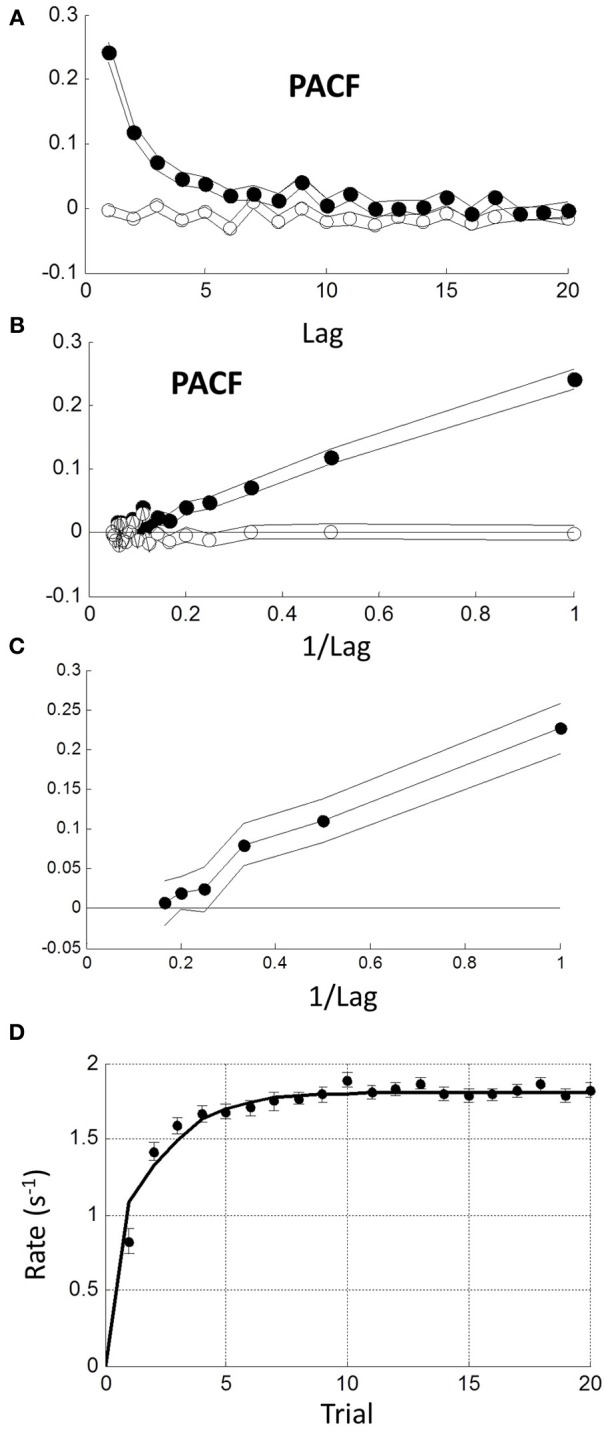
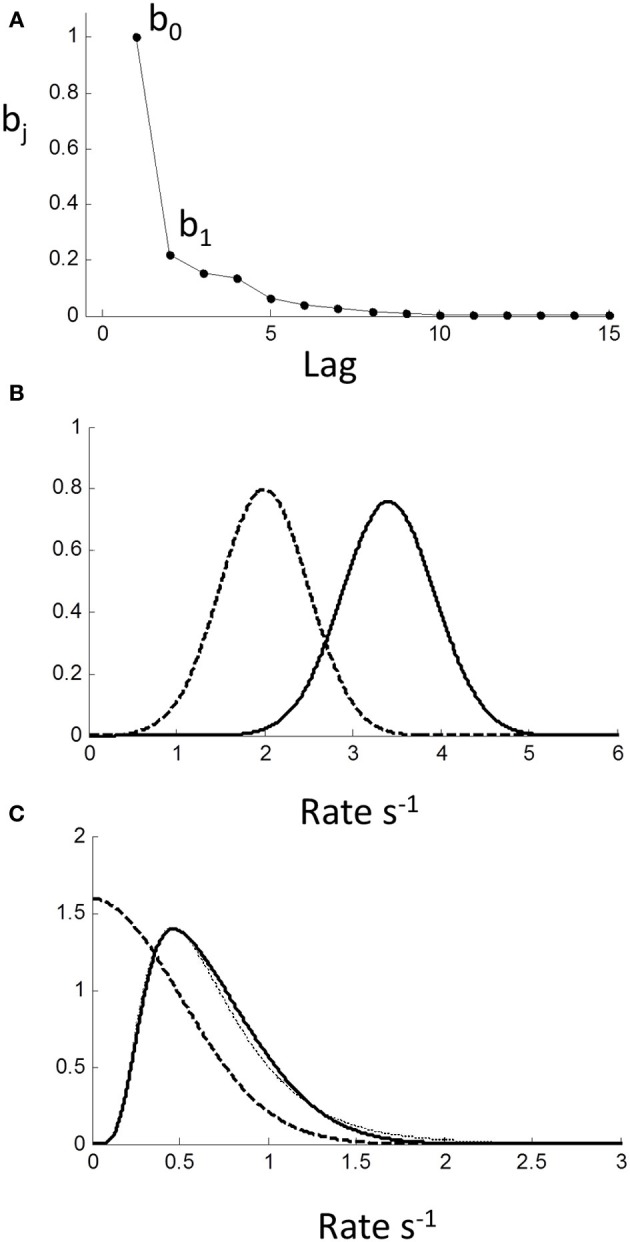
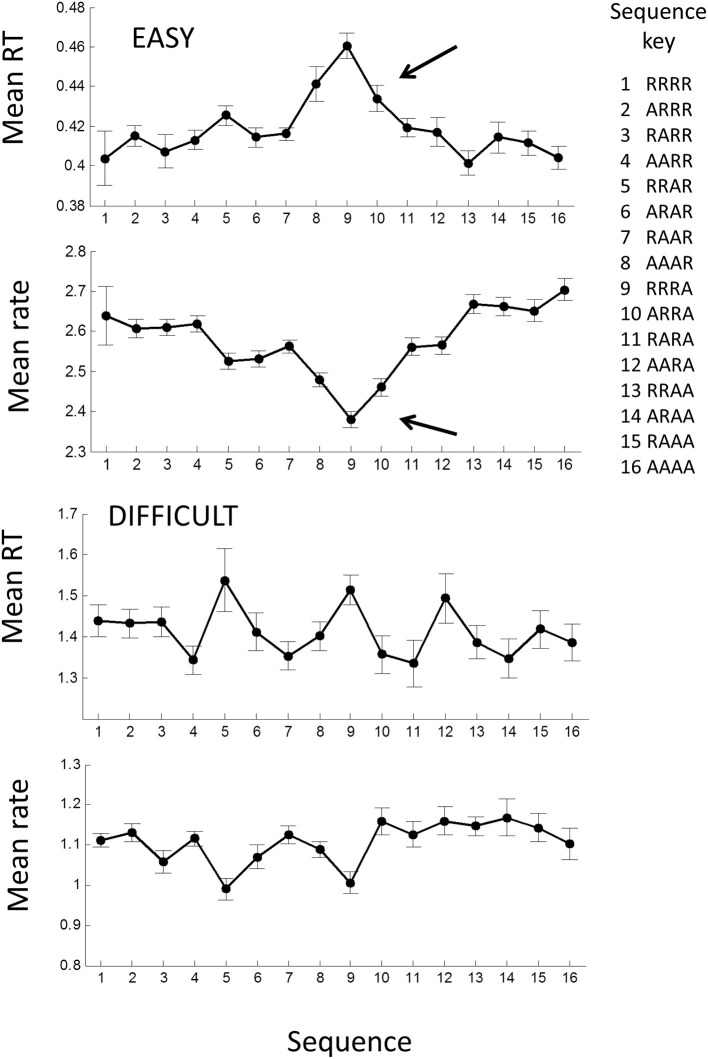
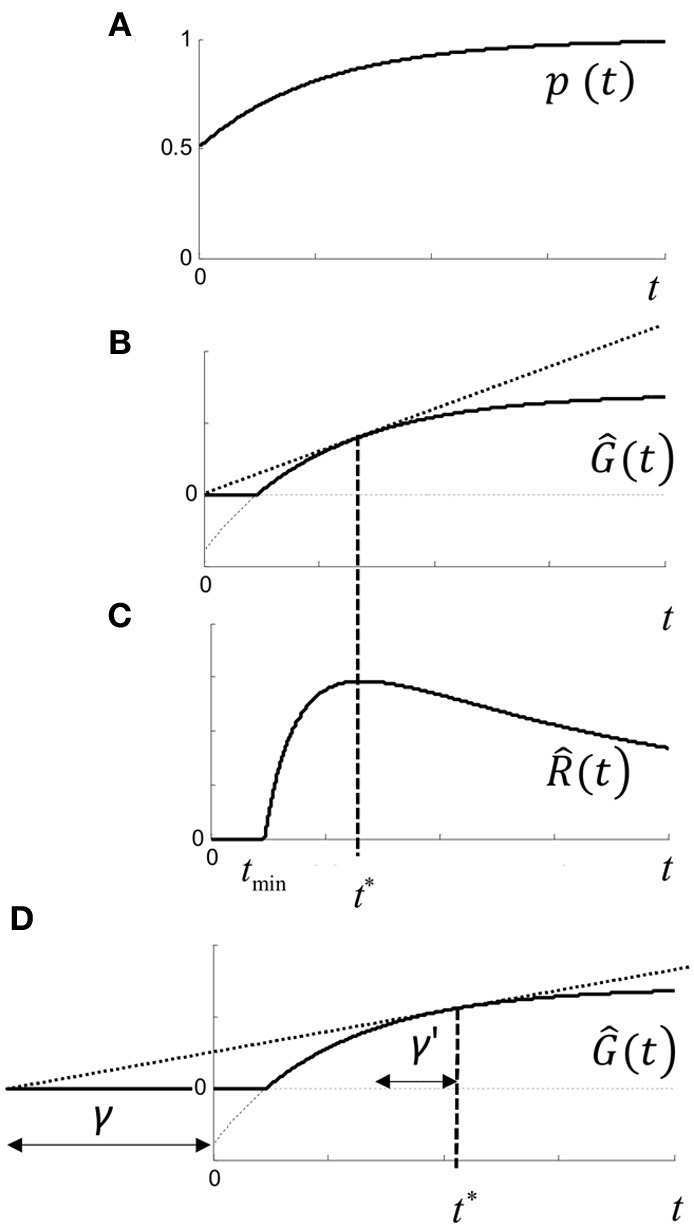
Over the last 150 years, human manual reaction times (RTs) have been recorded countless times. Yet, our understanding of them remains remarkably poor. RTs are highly variable with positively skewed frequency distributions, often modeled as an inverse Gaussian distribution reflecting a stochastic rise to threshold (diffusion process). However, latency distributions of saccades are very close to the reciprocal Normal, suggesting that "rate" (reciprocal RT) may be the more fundamental variable. We explored whether this phenomenon extends to choice manual RTs. We recorded two-alternative choice RTs from 24 subjects, each with 4 blocks of 200 trials with two task difficulties (easy vs. difficult discrimination) and two instruction sets (urgent vs. accurate). We found that rate distributions were, indeed, very close to Normal, shifting to lower rates with increasing difficulty and accuracy, and for some blocks they appeared to become left-truncated, but still close to Normal. Using autoregressive techniques, we found temporal sequential dependencies for lags of at least 3. We identified a transient and steady-state component in each block. Because rates were Normal, we were able to estimate autoregressive weights using the Box-Jenkins technique, and convert to a moving average model using z-transforms to show explicit dependence on stimulus input. We also found a spatial sequential dependence for the previous 3 lags depending on whether the laterality of previous trials was repeated or alternated. This was partially dissociated from temporal dependency as it only occurred in the easy tasks. We conclude that 2-alternative choice manual RT distributions are close to reciprocal Normal and not the inverse Gaussian. This is not consistent with stochastic rise to threshold models, and we propose a simple optimality model in which reward is maximized to yield to an optimal rate, and hence an optimal time to respond. We discuss how it might be implemented.
在过去的150年里,人类的手动反应时间(RTs)已经被记录了无数次。然而,我们对它们的理解仍然非常有限。RTs具有高度的变异性,频率分布呈正偏态,通常被建模为反映随机上升到阈值的逆高斯分布(扩散过程)。然而,扫视的潜伏期分布非常接近倒数正态分布,这表明“速率”(倒数RT)可能是更基本的变量。我们探讨了这种现象是否也适用于选择手动RTs。我们记录了24名受试者的二选一选择RTs,每个受试者有4个包含200次试验的组块,试验有两种任务难度(容易与困难辨别)和两种指令集(紧急与准确)。我们发现,速率分布确实非常接近正态分布,随着难度和准确性的增加,速率分布向更低的速率偏移,并且在某些组块中它们似乎变得左截断,但仍然接近正态分布。使用自回归技术,我们发现至少滞后3步存在时间序列依赖性。我们在每个组块中识别出一个瞬态和稳态成分。由于速率是正态分布的,我们能够使用Box-Jenkins技术估计自回归权重,并使用z变换转换为移动平均模型,以显示对刺激输入的明确依赖性。我们还发现,根据前一次试验的偏侧性是重复还是交替,前3步存在空间序列依赖性。这与时间依赖性部分分离,因为它只发生在简单任务中。我们得出结论,二选一选择手动RT分布接近倒数正态分布,而不是逆高斯分布。这与随机上升到阈值模型不一致,我们提出了一个简单的最优性模型,其中奖励最大化以产生最优速率,从而产生最优反应时间。我们讨论了它可能如何实现。