Li Kun-Lung, Lu Tsai-Ming, Yu Jr-Kai
Institute of Cellular and Organismic Biology, Academia Sinica, 128 Academia Road, Section 2, Nankang, Taipei 11529, Taiwan ; Institute of Oceanography, National Taiwan University, Taipei 10617, Taiwan.
Institute of Cellular and Organismic Biology, Academia Sinica, 128 Academia Road, Section 2, Nankang, Taipei 11529, Taiwan.
Evodevo. 2014 Jun 3;5:20. doi: 10.1186/2041-9139-5-20. eCollection 2014.
The bHLH-PAS transcription factors are found in both protostomes and deuterostomes. They are involved in many developmental and physiological processes, including regional differentiation of the central nervous system, tube-formation, hypoxia signaling, aromatic hydrocarbon sensing, and circadian rhythm regulation. To understand the evolution of these genes in chordates, we analyzed the bHLH-PAS genes of the basal chordate amphioxus (Branchiostoma floridae).
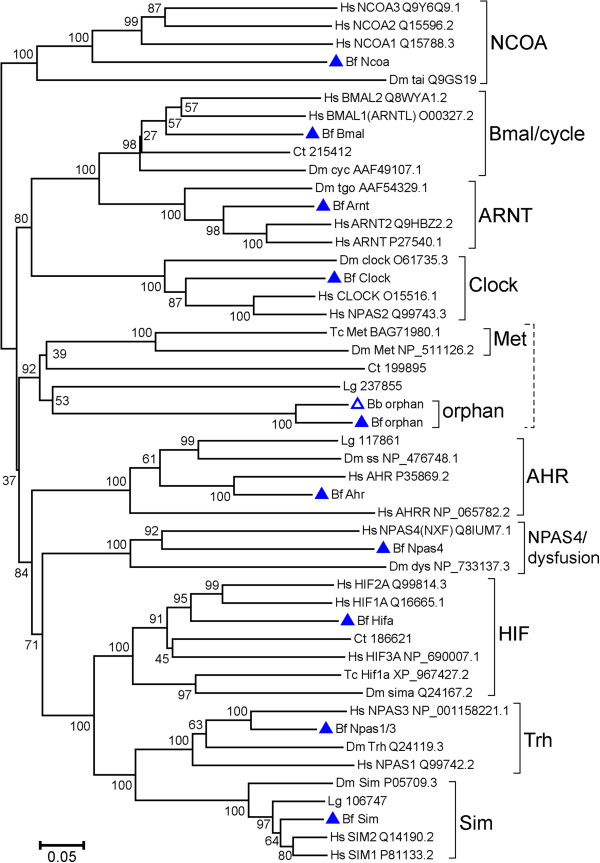
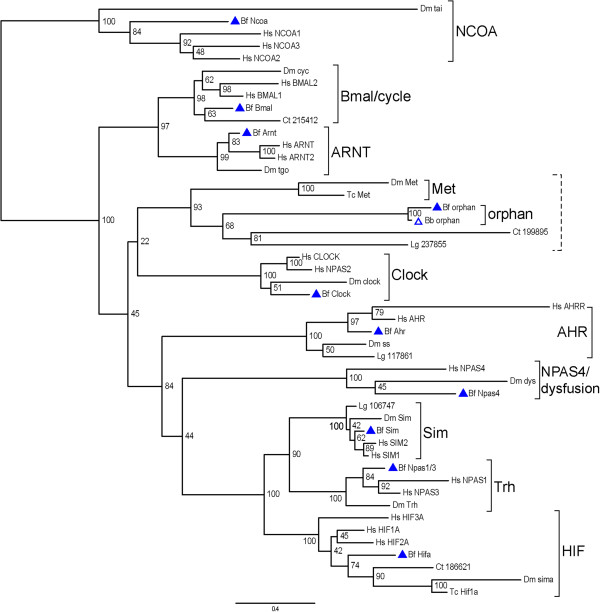
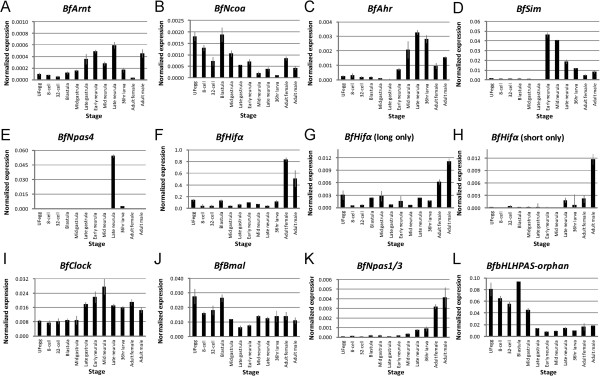
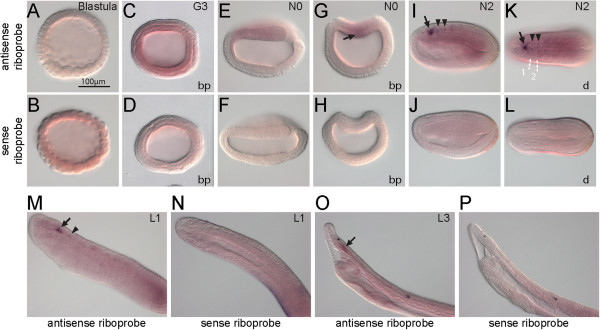
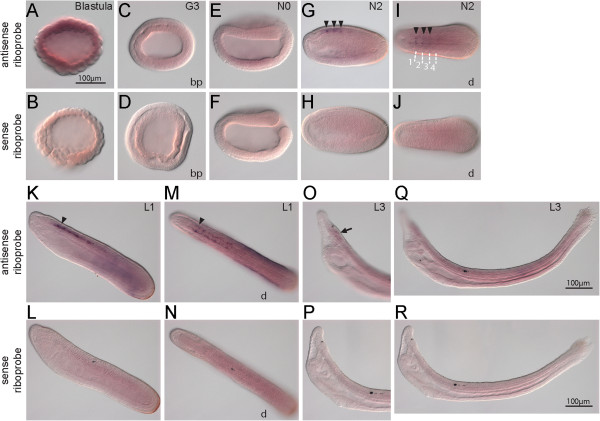
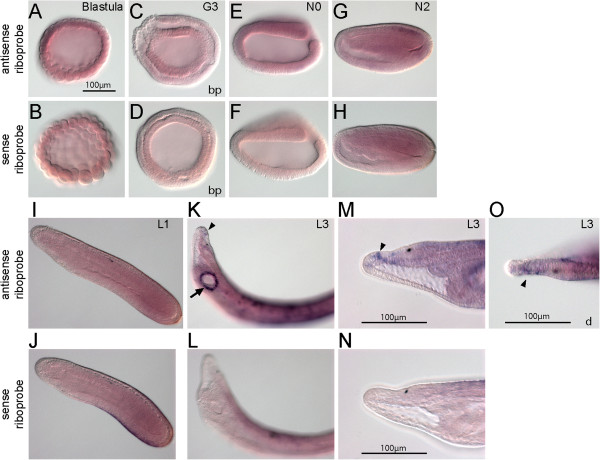
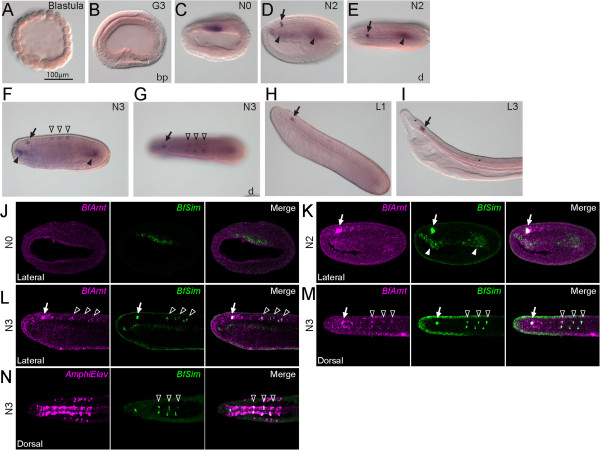
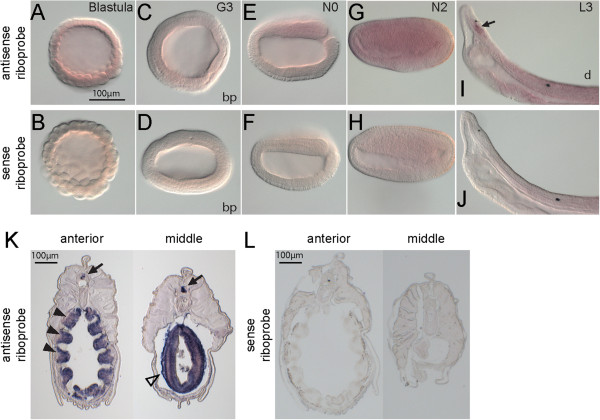
From the amphioxus draft genome database, we identified ten bHLH-PAS genes, nine of which could be assigned to known orthologous families. The tenth bHLH-PAS gene could not be assigned confidently to any known bHLH family; however, phylogenetic analysis clustered this gene with arthropod Met family genes and two spiralian bHLH-PAS-containing sequences, suggesting that they may share the same ancestry. We examined temporal and spatial expression patterns of these bHLH-PAS genes in developing amphioxus embryos. We found that BfArnt, BfNcoa, BfSim, and BfHifα were expressed in the central nervous system in patterns similar to those of their vertebrate homologs, suggesting that their functions may be conserved. By contrast, the amphioxus BfAhr and BfNpas4 had expression patterns distinct from those in vertebrates. These results imply that there were changes in gene regulation after the divergence of cephalochordates and vertebrates.
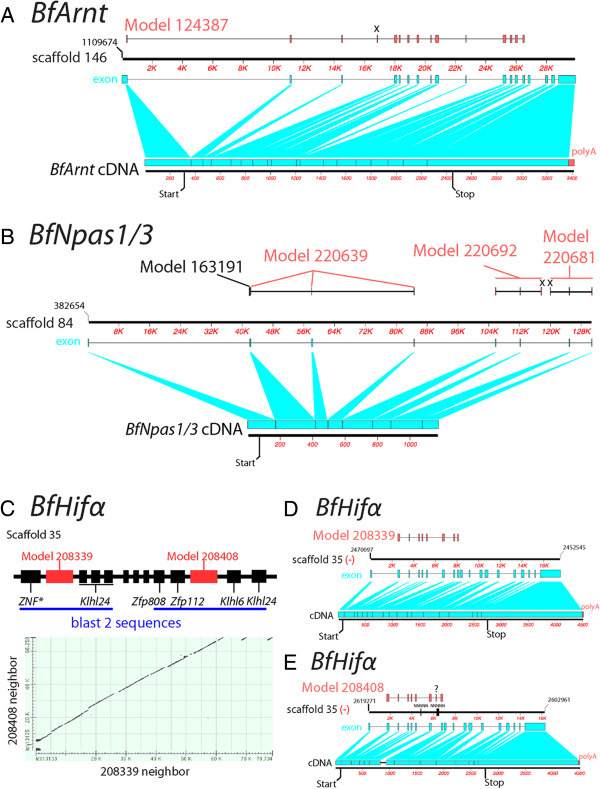
We have identified ten bHLH-PAS genes from the amphioxus genome and determined the embryonic expression profiles for these genes. In addition to the nine currently recognized bHLH-PAS families, our survey suggests that the BfbHLHPAS-orphan gene along with arthropod Met genes and the newly identified spiralian bHLH-PAS-containing sequences represent an ancient group of genes that were lost in the vertebrate lineage. In a comparison with the expression patterns of the vertebrate bHLH-PAS paralogs, which are the result of whole-genome duplication, we found that although several members seem to retain conserved expression patterns during chordate evolution, many duplicated paralogs may have undergone subfunctionalization and neofunctionalization in the vertebrate lineage. In addition, our survey of amphioxus bHLH-PAS gene models from genome browser with experimentally verified cDNA sequences calls into question the accuracy of the current in silico gene annotation of the B. floridae genome.
bHLH-PAS转录因子在原口动物和后口动物中均有发现。它们参与许多发育和生理过程,包括中枢神经系统的区域分化、管形成、缺氧信号传导、芳烃传感和昼夜节律调节。为了了解这些基因在脊索动物中的进化,我们分析了基部脊索动物文昌鱼(佛罗里达文昌鱼)的bHLH-PAS基因。
从文昌鱼基因组草图数据库中,我们鉴定出10个bHLH-PAS基因,其中9个可归入已知的直系同源家族。第10个bHLH-PAS基因不能确定归入任何已知的bHLH家族;然而,系统发育分析将该基因与节肢动物Met家族基因和两个含bHLH-PAS的螺旋动物序列聚类在一起,表明它们可能有共同的祖先。我们研究了这些bHLH-PAS基因在发育中的文昌鱼胚胎中的时空表达模式。我们发现BfArnt、BfNcoa、BfSim和BfHifα在中枢神经系统中的表达模式与其脊椎动物同源物相似,表明它们的功能可能是保守的。相比之下,文昌鱼的BfAhr和BfNpas4具有与脊椎动物不同的表达模式。这些结果意味着头索动物和脊椎动物分化后基因调控发生了变化。
我们从文昌鱼基因组中鉴定出10个bHLH-PAS基因,并确定了这些基因的胚胎表达谱。除了目前公认的9个bHLH-PAS家族外,我们的研究表明,BfbHLHPAS孤儿基因以及节肢动物Met基因和新鉴定的含bHLH-PAS的螺旋动物序列代表了一组在脊椎动物谱系中丢失的古老基因。与脊椎动物bHLH-PAS旁系同源物的表达模式(全基因组复制的结果)进行比较时,我们发现,尽管在脊索动物进化过程中,有几个成员似乎保留了保守的表达模式,但许多复制的旁系同源物在脊椎动物谱系中可能经历了亚功能化和新功能化。此外,我们从基因组浏览器中对文昌鱼bHLH-PAS基因模型进行的调查以及经实验验证的cDNA序列对佛罗里达文昌鱼基因组当前的电子基因注释准确性提出了质疑。