Frohlich Kyla M, Hua Ziyu, Quayle Alison J, Wang Jin, Lewis Maria E, Chou Chau-wen, Luo Miao, Buckner Lyndsey R, Shen Li
Department of Microbiology, Immunology, and Parasitology, Louisiana State University Health Sciences Center New Orleans, LA, USA.
Department of Microbiology, Immunology, and Parasitology, Louisiana State University Health Sciences Center New Orleans, LA, USA ; Department of Neonatology, Ministry of Education Key Laboratory of Child Development and Disorder, The Children's Hospital, Chongqing Medical University Chongqing, China.
Front Cell Infect Microbiol. 2014 Jun 10;4:73. doi: 10.3389/fcimb.2014.00073. eCollection 2014.
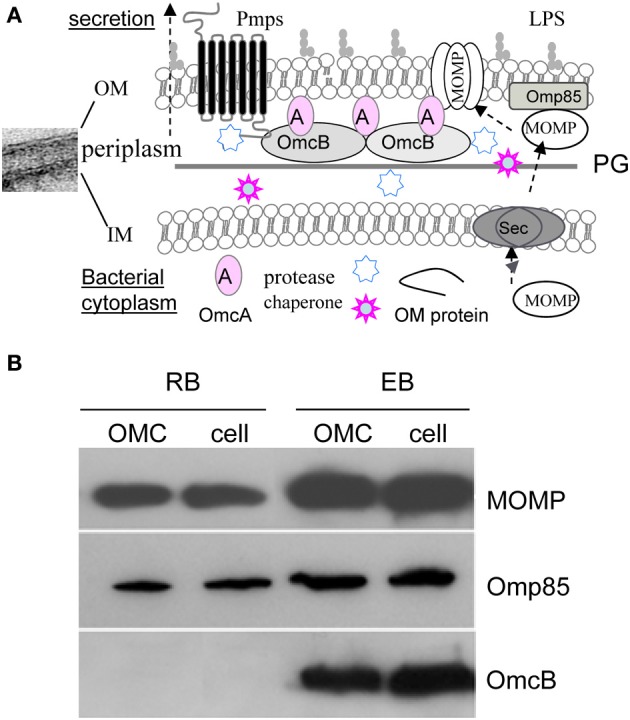
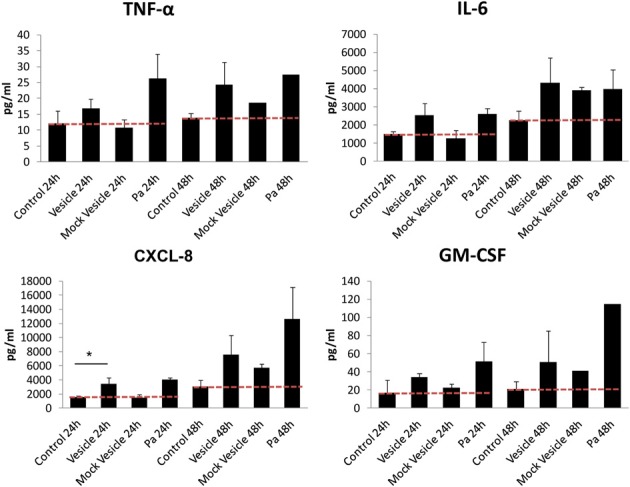
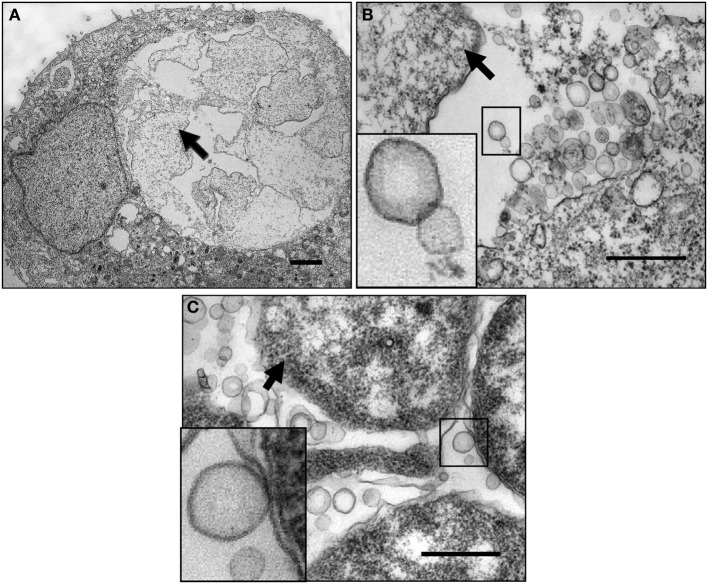
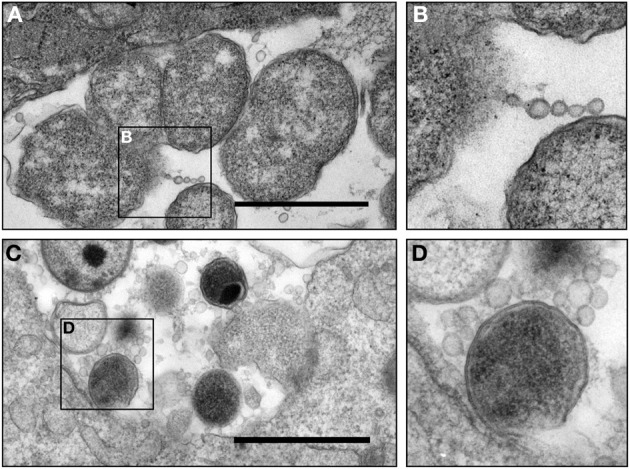
Bacteria have evolved specific adaptive responses to cope with changing environments. These adaptations include stress response phenotypes with dynamic modifications of the bacterial cell envelope and generation of membrane vesicles (MVs). The obligate intracellular bacterium, Chlamydia trachomatis, typically has a biphasic lifestyle, but can enter into an altered growth state typified by morphologically aberrant chlamydial forms, termed persistent growth forms, when induced by stress in vitro. How C. trachomatis can adapt to a persistent growth state in host epithelial cells in vivo is not well understood, but is an important question, since it extends the host-bacterial relationship in vitro and has thus been indicated as a survival mechanism in chronic chlamydial infections. Here, we review recent findings on the mechanistic aspects of bacterial adaptation to stress with a focus on how C. trachomatis remodels its envelope, produces MVs, and the potential important consequences of MV production with respect to host-pathogen interactions. Emerging data suggest that the generation of MVs may be an important mechanism for C. trachomatis intracellular survival of stress, and thus may aid in the establishment of a chronic infection in human genital epithelial cells.
细菌已经进化出特定的适应性反应来应对不断变化的环境。这些适应性包括应激反应表型,其伴随着细菌细胞壁的动态修饰以及膜泡(MVs)的产生。专性胞内菌沙眼衣原体通常具有双相生活方式,但在体外受到应激诱导时,可进入一种以形态异常的衣原体形式为特征的改变生长状态,称为持续生长形式。沙眼衣原体如何在体内宿主上皮细胞中适应持续生长状态尚不清楚,但这是一个重要问题,因为它在体外扩展了宿主与细菌的关系,因此被认为是慢性衣原体感染中的一种生存机制。在这里,我们综述了关于细菌适应应激的机制方面的最新发现,重点关注沙眼衣原体如何重塑其细胞壁、产生膜泡,以及膜泡产生对宿主 - 病原体相互作用的潜在重要影响。新出现的数据表明,膜泡的产生可能是沙眼衣原体在应激条件下胞内存活的重要机制,因此可能有助于在人类生殖上皮细胞中建立慢性感染。