Zhang Ning, Shu Hai-Yang, Huang Tingting, Zhang Qi-Lin, Li Da, Zhang Guan-Qun, Peng Xiao-Yan, Liu Chun-Feng, Luo Wei-Feng, Hu Li-Fang
Department of Neurology, Jiangsu Key Laboratory of Translational Research and Therapy for Neuro-Psycho-Diseases and The Second Affiliated Hospital of Soochow University, Soochow University, Suzhou, Jiangsu, China; Institute of Neuroscience, Soochow University, Suzhou, Jiangsu, China.
Department of Neurology, Jiangsu Key Laboratory of Translational Research and Therapy for Neuro-Psycho-Diseases and The Second Affiliated Hospital of Soochow University, Soochow University, Suzhou, Jiangsu, China.
PLoS One. 2014 Jun 24;9(6):e100286. doi: 10.1371/journal.pone.0100286. eCollection 2014.
Mounting evidence shows that urate may become a biomarker of Parkinson's disease (PD) diagnosis and prognosis and a neuroprotectant candidate for PD therapy. However, the cellular and molecular mechanisms underlying its neuroprotective actions remain poorly understood.
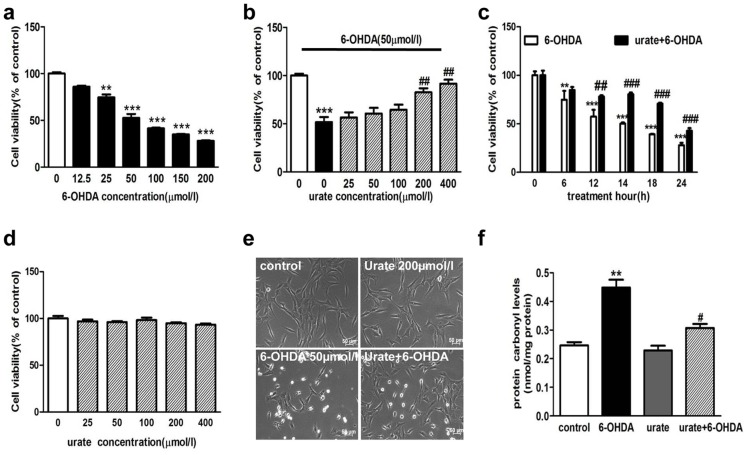
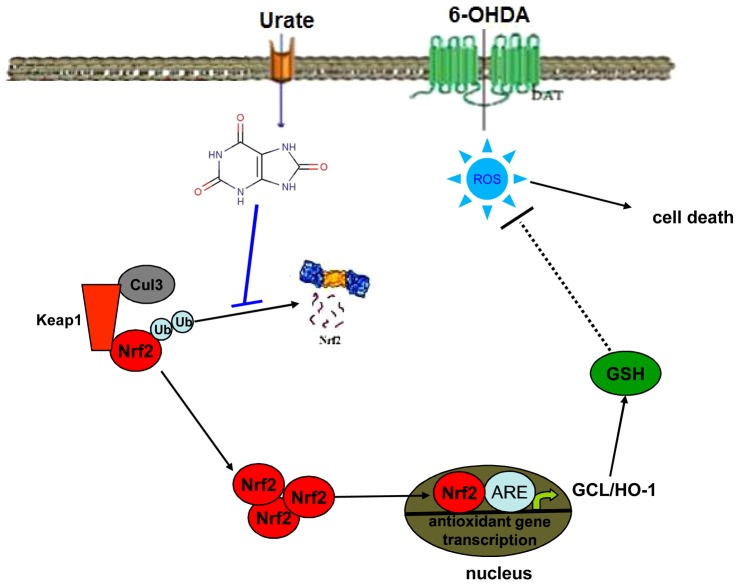
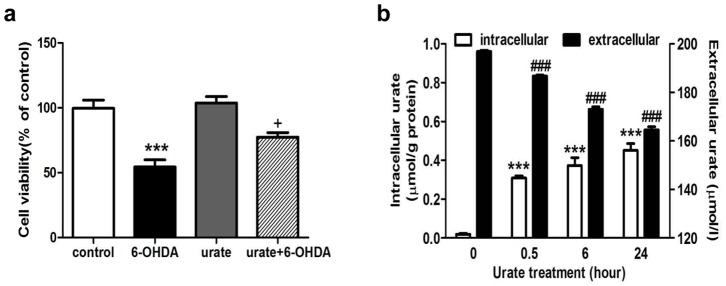
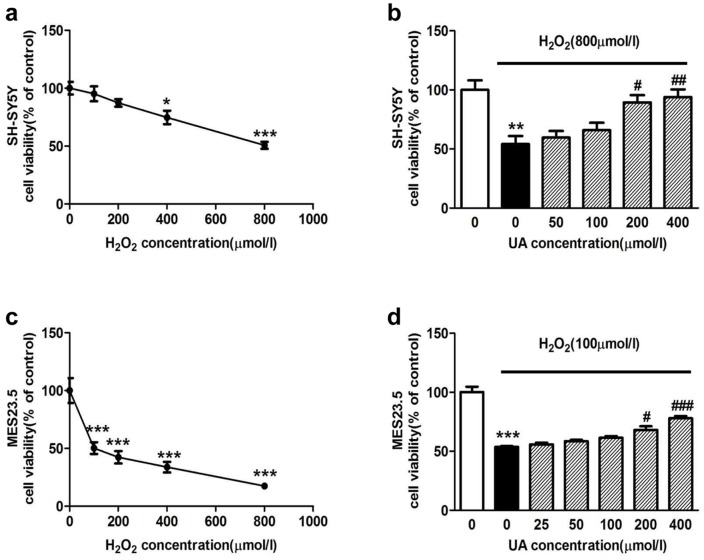
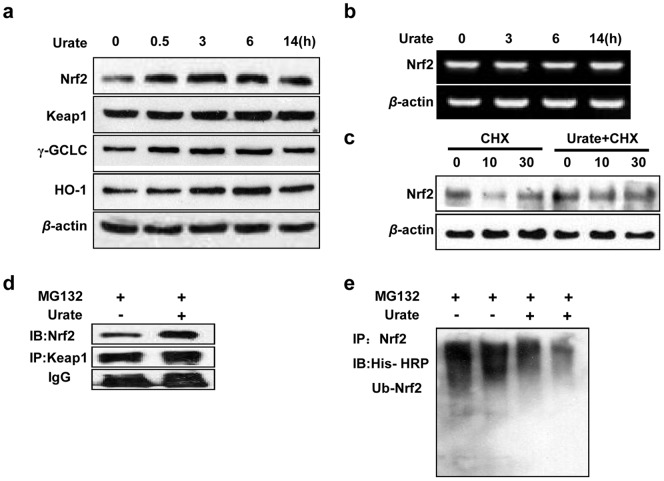
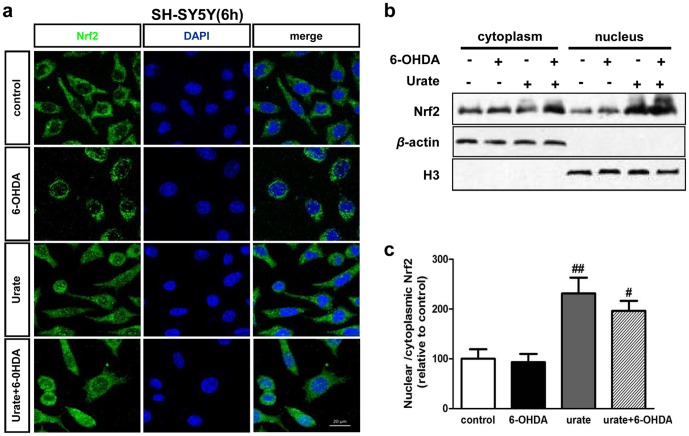
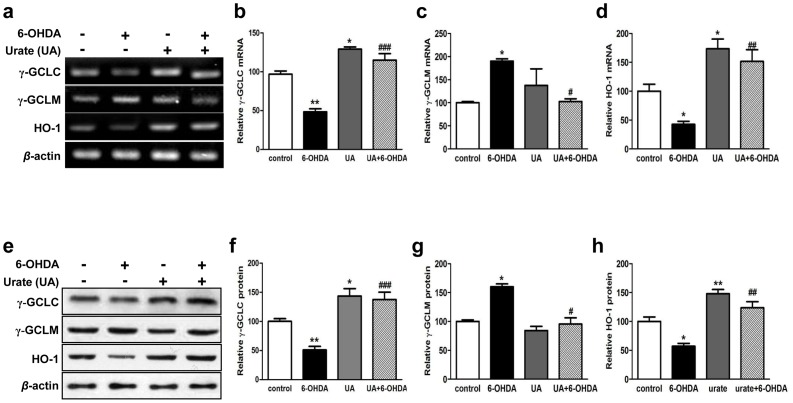
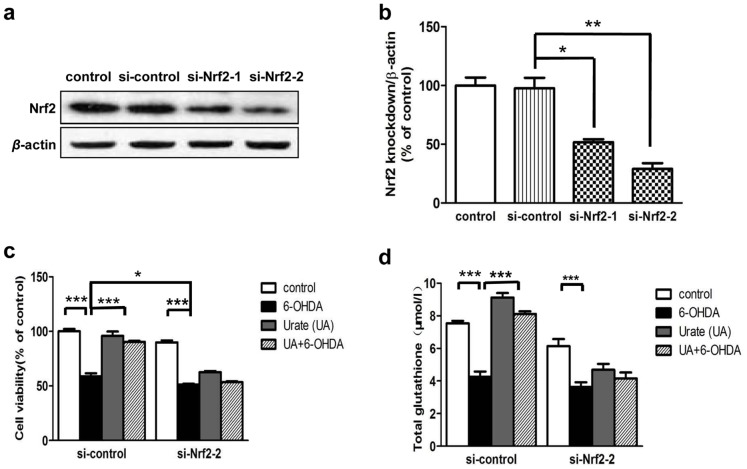
In this study, we showed that urate pretreatment protected dopaminergic cell line (SH-SY5Y and MES23.5) against 6-hydroxydopamine (6-OHDA)- and hydrogen peroxide- induced cell damage. Urate was found to be accumulated into SH-SY5Y cells after 30 min treatment. Moreover, urate induced NF-E2-related factor 2 (Nrf2) accumulation by inhibiting its ubiquitinationa and degradation, and also promoted its nuclear translocation; however, it did not modulate Nrf2 mRNA level or Kelch-like ECH-associated protein 1 (Keap1) expression. In addition, urate markedly up-regulated the transcription and protein expression of γ-glutamate-cysteine ligase catalytic subunit (γ-GCLC) and heme oxygenase-1 (HO-1), both of which are controlled by Nrf2 activity. Furthermore, Nrf2 knockdown by siRNA abolished the intracellular glutathione augmentation and the protection exerted by urate pretreatment.
Our findings demonstrated that urate treatment may result in Nrf2-targeted anti-oxidant genes transcription and expression by reducing Nrf2 ubiquitination and degradation and promoting its nuclear translocation, and thus offer neuroprotection on dopaminergic cells against oxidative stresses.
越来越多的证据表明,尿酸可能成为帕金森病(PD)诊断和预后的生物标志物以及PD治疗的神经保护剂候选物。然而,其神经保护作用的细胞和分子机制仍知之甚少。
在本研究中,我们表明尿酸预处理可保护多巴胺能细胞系(SH-SY5Y和MES23.5)免受6-羟基多巴胺(6-OHDA)和过氧化氢诱导的细胞损伤。发现尿酸在处理30分钟后在SH-SY5Y细胞中积累。此外,尿酸通过抑制其泛素化和降解诱导NF-E2相关因子2(Nrf2)积累,并促进其核转位;然而,它并未调节Nrf2 mRNA水平或类Kelch样ECH相关蛋白1(Keap1)表达。此外,尿酸显著上调γ-谷氨酸半胱氨酸连接酶催化亚基(γ-GCLC)和血红素加氧酶-1(HO-1)的转录和蛋白表达,这两者均受Nrf2活性控制。此外,通过siRNA敲低Nrf2消除了细胞内谷胱甘肽的增加以及尿酸预处理所发挥的保护作用。
我们的研究结果表明,尿酸处理可能通过减少Nrf2泛素化和降解并促进其核转位,导致Nrf2靶向的抗氧化基因转录和表达,从而为多巴胺能细胞提供针对氧化应激的神经保护。