Li Ming V, Shukla Dip, Rhodes Brian H, Lall Anjali, Shu Jingmin, Moriarity Branden S, Largaespada David A
Division of Endocrinology and Diabetes, Department of Medicine, University of Minnesota, Minneapolis, Minnesota, United States of America.
Department of Genetics, Cell Biology and Development, University of Minnesota, Minneapolis, Minnesota, United States of America.
PLoS One. 2014 Jun 24;9(6):e100948. doi: 10.1371/journal.pone.0100948. eCollection 2014.
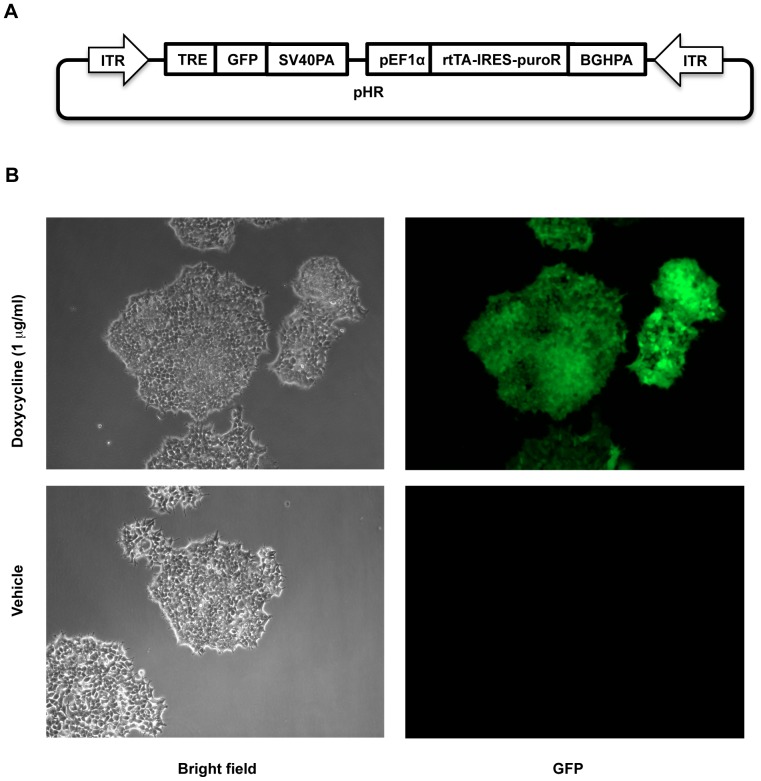
Advances in molecular and synthetic biology call for efficient assembly of multi-modular DNA constructs. We hereby present a novel modular cloning method that obviates the need for restriction endonucleases and significantly improves the efficiency in the design and construction of complex DNA molecules by standardizing all DNA elements and cloning reactions. Our system, named HomeRun Vector Assembly System (HVAS), employs a three-tiered vector series that utilizes both multisite gateway cloning and homing endonucleases, with the former building individual functional modules and the latter linking modules into the final construct. As a proof-of-principle, we first built a two-module construct that supported doxycycline-induced expression of green fluorescent protein (GFP). Further, with a three-module construct we showed quantitatively that there was minimal promoter leakage between neighbouring modules. Finally, we developed a method, in vitro Cre recombinase-mediated cassette exchange (RMCE) cloning, to regenerate a gateway destination vector from a previous multisite gateway cloning reaction, allowing access to existing DNA element libraries in conventional gateway entry clones, and simple creation of constructs ready for in vivo RMCE. We believe these methods constitute a useful addition to the standard molecular cloning techniques that could potentially support industrial scale synthesis of DNA constructs.
分子生物学和合成生物学的进展要求高效组装多模块DNA构建体。我们在此提出一种新颖的模块化克隆方法,该方法无需限制性内切酶,并通过标准化所有DNA元件和克隆反应,显著提高了复杂DNA分子设计和构建的效率。我们的系统名为HomeRun载体组装系统(HVAS),采用了三层载体系列,利用多位点Gateway克隆和归巢内切酶,前者构建单个功能模块,后者将模块连接成最终构建体。作为原理验证,我们首先构建了一个支持强力霉素诱导绿色荧光蛋白(GFP)表达的双模块构建体。此外,通过一个三模块构建体,我们定量显示相邻模块之间的启动子泄漏极少。最后,我们开发了一种方法,即体外Cre重组酶介导的盒式交换(RMCE)克隆,从前一个多位点Gateway克隆反应中再生一个Gateway目的载体,从而能够访问常规Gateway入门克隆中的现有DNA元件文库,并简单地创建用于体内RMCE的构建体。我们相信这些方法是对标准分子克隆技术的有益补充,有可能支持DNA构建体的工业规模合成。