Vazquez-Ortiz Guelaguetza, Chisholm Cristine, Xu Xiaoling, Lahusen Tyler J, Li Cuiling, Sakamuru Srilatha, Huang Ruili, Thomas Craig J, Xia Menghang, Deng Chuxia
Breast Cancer Res. 2014 Jun 24;16(3):R67. doi: 10.1186/bcr3682.
Breast cancer is a devastating disease that results in approximately 40,000 deaths each year in the USA. Current drug screening and chemopreventatitive methods are suboptimal, due in part to the poor specificity of compounds for cancer cells. Poly (ADP-ribose) polymerase 1 (PARP1) inhibitor (PARPi)-mediated therapy is a promising approach for familial breast cancers caused by mutations of breast cancer-associated gene-1 and -2 (BRCA1/2), yet drug resistance frequently occurs during the treatment. Moreover, PARPis exhibit very little effect on cancers that are proficient for DNA repair and clinical efficacy for PARPis as single-agent therapies has yet to be illustrated.
Using a quantitative high-throughput screening approach, we screened a library containing 2,816 drugs, most of which are approved for human or animal use by the Food and Drug Administration (FDA) or other countries, to identify compounds that sensitize breast cancer cells to PARPi. After initial screening, we performed further cellular and molecular analysis on lestaurtinib, which is an orally bioavailable multikinase inhibitor and has been used in clinical trials for myeloproliferative disorders and acute myelogenous leukemia.
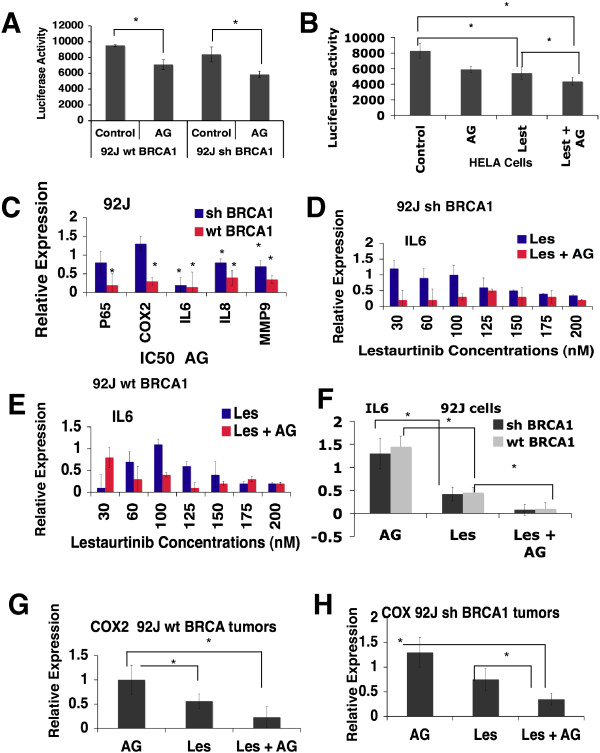
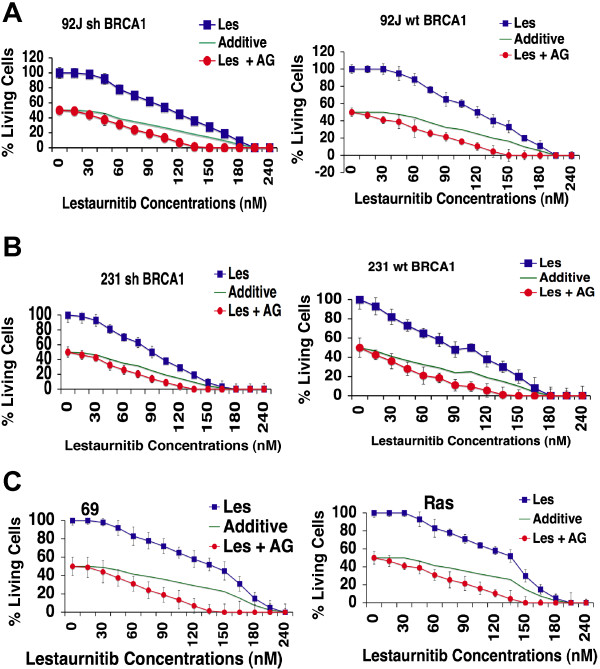
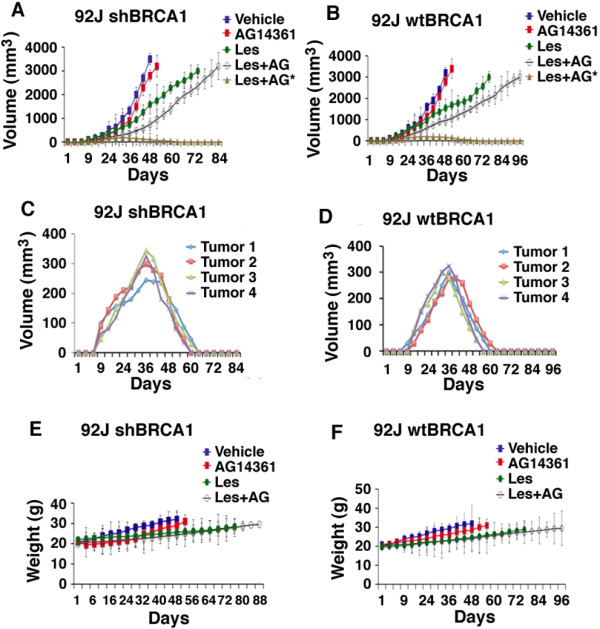
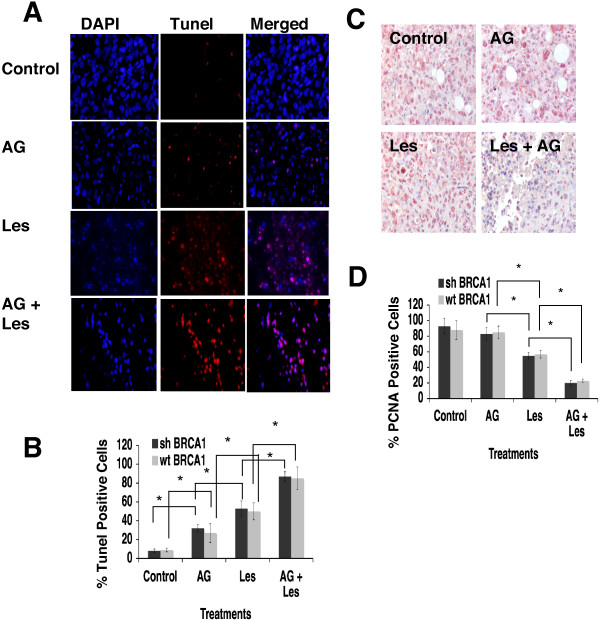
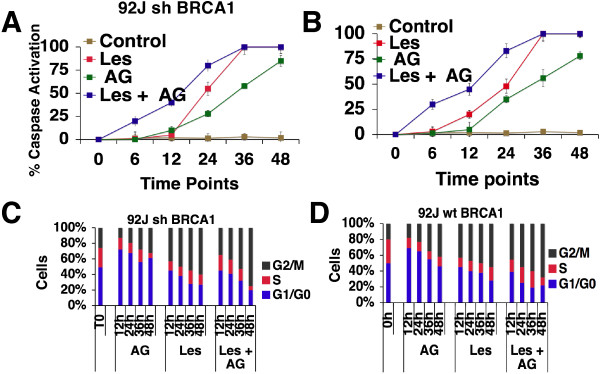
Our study indicated that lestaurtinib is highly potent against breast cancers as a mono-treatment agent. It also strongly enhanced the activity of the potent PARPi AG14361 on breast cancer cell growth both in vitro and in vivo conditions. The inhibition of cancer growth is measured by increased apoptosis and reduced cell proliferation. Consistent with this, the treatment results in activation of caspase 3/7, and accumulation of cells in the G2 phase of the cell cycle, irrespective of their BRCA1 status. Finally, we demonstrated that AG14361 inhibits NF-κB signaling, which is further enhanced by lestaurtinib treatment.
Lestaurtinib amplifies the ability of the PARP1 inhibitor AG14361 to kill BRCA1 mutant and wild-type breast cancer cells, at least in part, by inhibiting NF-κB signaling. Each of these drugs has been approved for clinical trials for several different cancers, thus, their combination treatment should be applicable for a breast cancer trial in the future.
乳腺癌是一种极具破坏性的疾病,在美国每年导致约40000人死亡。目前的药物筛选和化学预防方法并不理想,部分原因是化合物对癌细胞的特异性较差。聚(ADP-核糖)聚合酶1(PARP1)抑制剂(PARPi)介导的治疗是一种针对由乳腺癌相关基因1和2(BRCA1/2)突变引起的家族性乳腺癌的有前景的方法,但治疗期间经常出现耐药性。此外,PARPi对DNA修复功能正常的癌症几乎没有作用,且PARPi作为单药治疗的临床疗效尚未得到证实。
我们采用定量高通量筛选方法,筛选了一个包含2816种药物的文库,其中大多数已被美国食品药品监督管理局(FDA)或其他国家批准用于人类或动物,以鉴定能使乳腺癌细胞对PARPi敏感的化合物。初步筛选后,我们对来他替尼进行了进一步的细胞和分子分析,来他替尼是一种口服生物可利用的多激酶抑制剂,已用于骨髓增殖性疾病和急性髓性白血病的临床试验。
我们的研究表明,来他替尼作为单一治疗药物对乳腺癌具有高效力。它还在体外和体内条件下均强烈增强了强效PARPi AG14361对乳腺癌细胞生长的活性。通过增加凋亡和减少细胞增殖来衡量对癌症生长抑制作用。与此一致的是,无论其BRCA1状态如何,该治疗都会导致半胱天冬酶3/7的激活以及细胞在细胞周期的G2期积累。最后,我们证明AG14361抑制NF-κB信号传导,而来他替尼治疗可进一步增强该作用。
来他替尼至少部分通过抑制NF-κB信号传导增强了PARP1抑制剂AG14361杀死BRCA1突变型和野生型乳腺癌细胞的能力。这些药物中的每一种都已被批准用于几种不同癌症的临床试验,因此,它们的联合治疗在未来应该适用于乳腺癌试验。