
IgE对CD4 + T细胞、肥大细胞和巨噬细胞的作用参与了实验性腹主动脉瘤的发病机制。
IgE actions on CD4+ T cells, mast cells, and macrophages participate in the pathogenesis of experimental abdominal aortic aneurysms.
作者信息
Wang Jing, Lindholt Jes S, Sukhova Galina K, Shi Michael A, Xia Mingcan, Chen Han, Xiang Meixiang, He Aina, Wang Yi, Xiong Na, Libby Peter, Wang Jian-An, Shi Guo-Ping
机构信息
Department of Medicine, Brigham and Women's Hospital and Harvard Medical School, Boston, MA, USA.
Department of Cardiovascular and Thoracic Surgery, Elitary Research Centre of Individualized Medicine in Arterial Diseases, University Hospital of Odense, Odense, Denmark.
出版信息
EMBO Mol Med. 2014 Jul;6(7):952-69. doi: 10.15252/emmm.201303811.
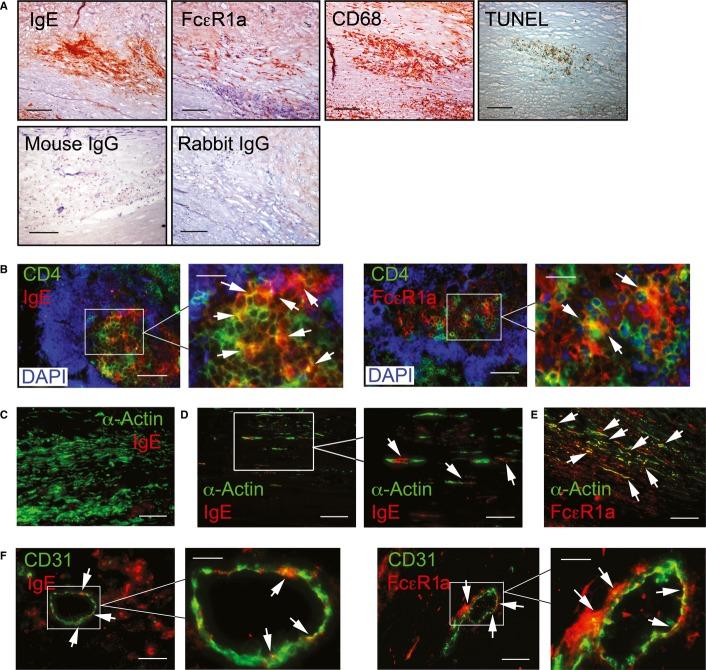
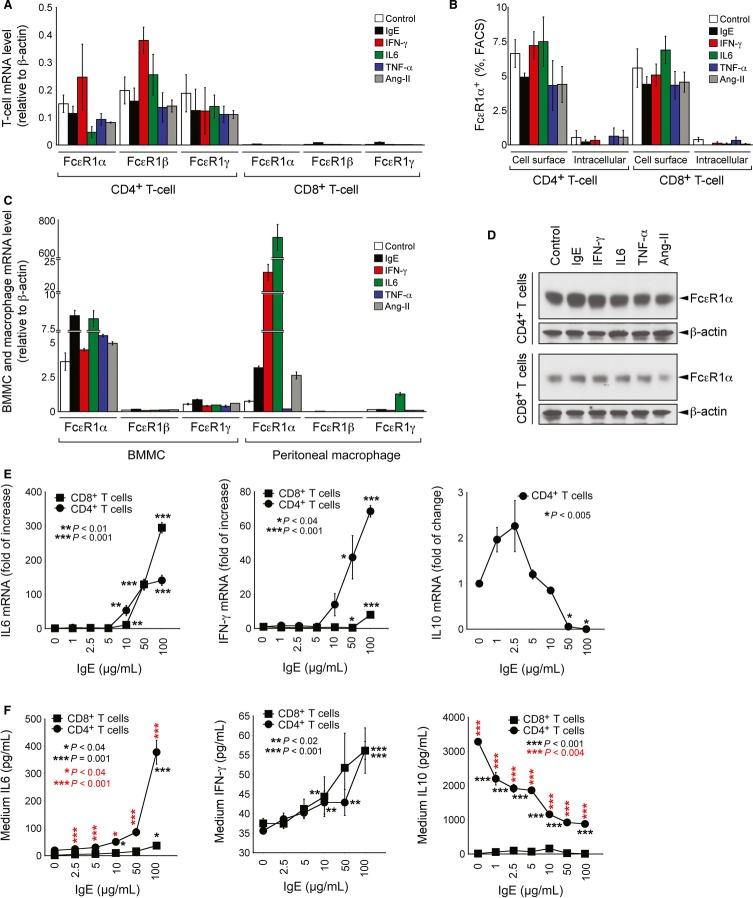
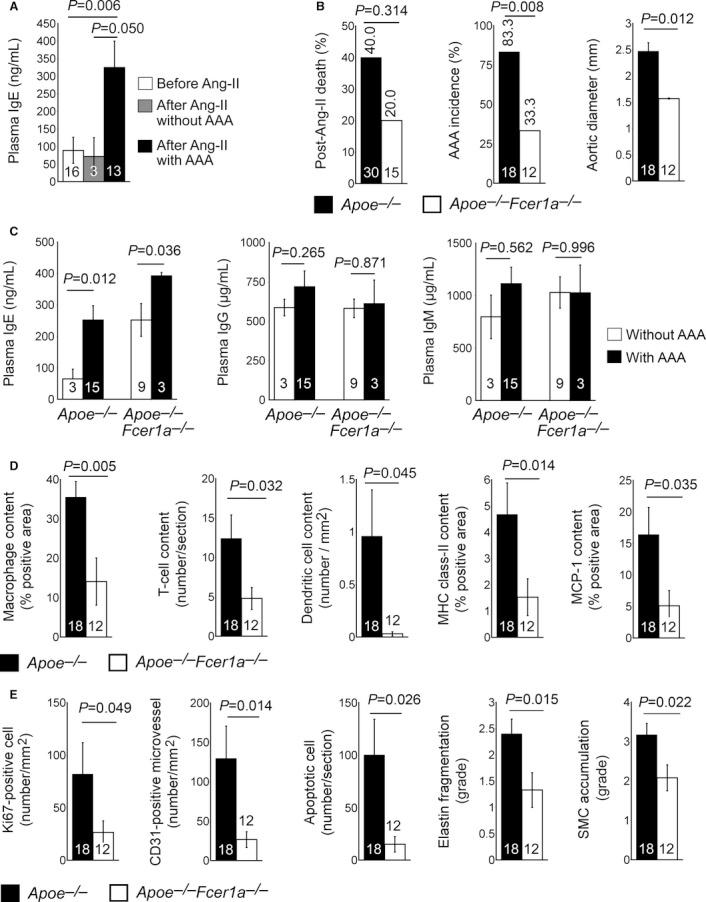
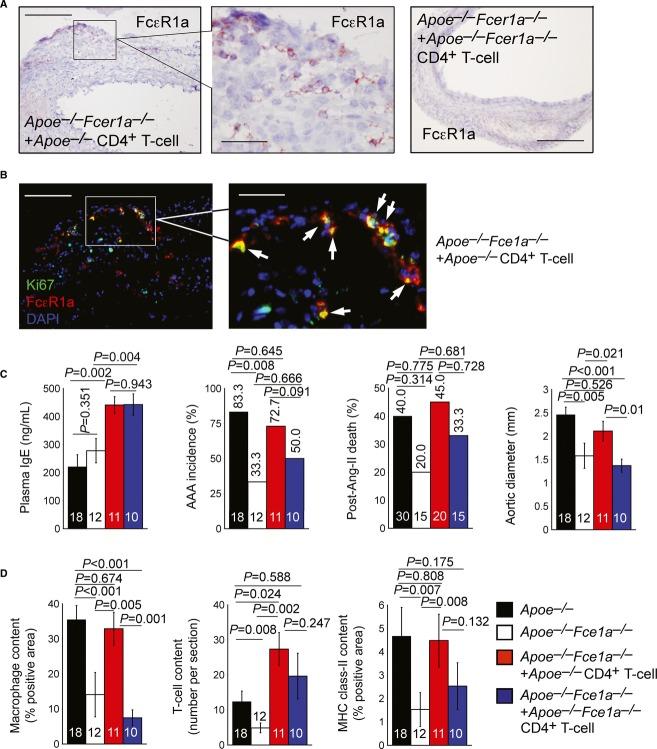
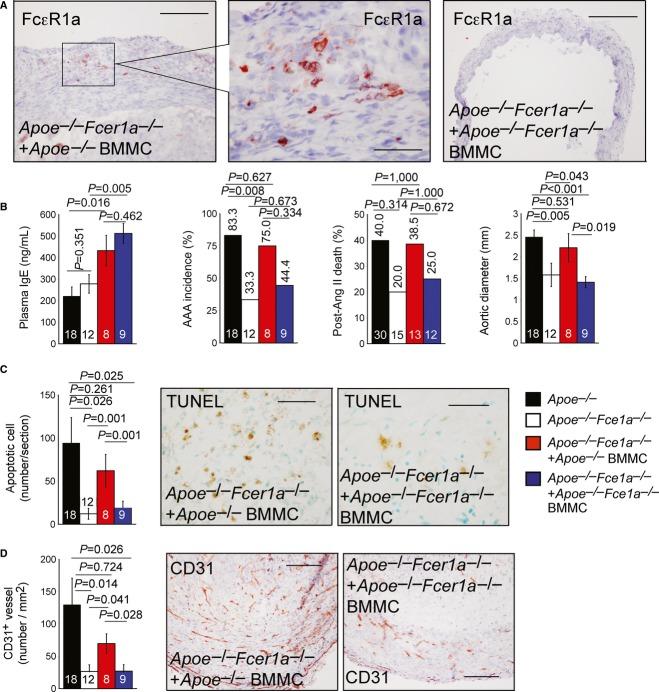
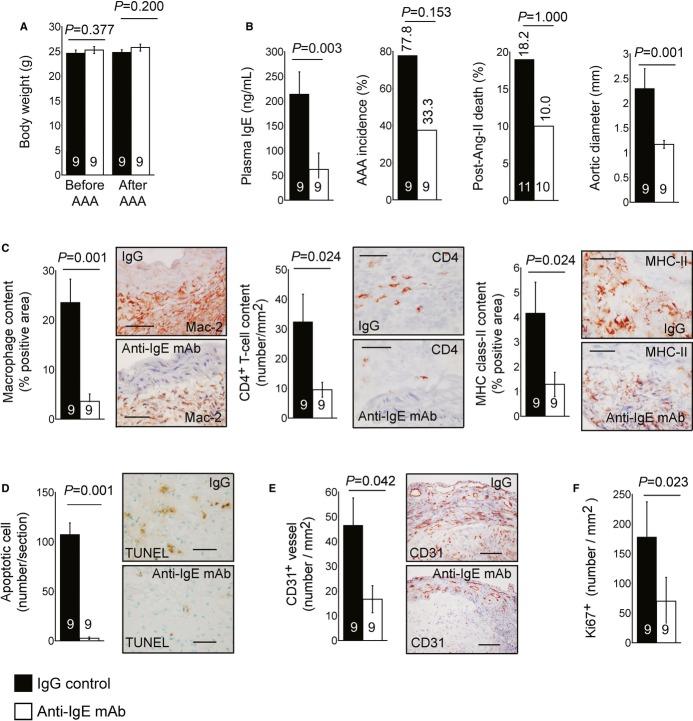
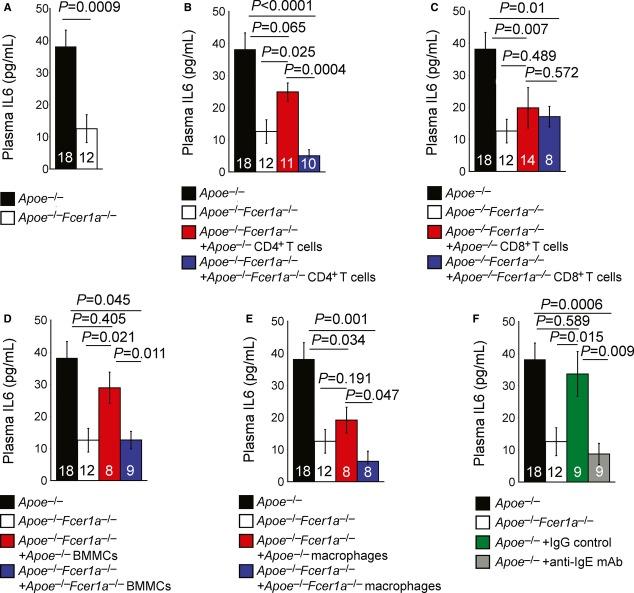
Immunoglobulin E (IgE) activates mast cells (MCs). It remains unknown whether IgE also activates other inflammatory cells, and contributes to the pathogenesis of abdominal aortic aneurysms (AAAs). This study demonstrates that CD4+ T cells express IgE receptor FcεR1, at much higher levels than do CD8+ T cells. IgE induces CD4+ T-cell production of IL6 and IFN-γ, but reduces their production of IL10. FcεR1 deficiency (Fcer1a-/-) protects apolipoprotein E-deficient (Apoe-/-) mice from angiotensin-II infusion-induced AAAs and reduces plasma IL6 levels. Adoptive transfer of CD4+ T cells (but not CD8+ T cells), MCs, and macrophages from Apoe-/- mice, but not those from Apoe-/- Fcer1a-/- mice, increases AAA size and plasma IL6 in Apoe-/- Fcer1a-/- recipient mice. Biweekly intravenous administration of an anti-IgE monoclonal antibody ablated plasma IgE and reduced AAAs in Apoe-/- mice. Patients with AAAs had significantly higher plasma IgE levels than those without AAAs. This study establishes an important role of IgE in AAA pathogenesis by activating CD4+ T cells, MCs, and macrophages and supports consideration of neutralizing plasma IgE in the therapeutics of human AAAs.
免疫球蛋白E(IgE)可激活肥大细胞(MCs)。IgE是否也能激活其他炎症细胞并参与腹主动脉瘤(AAA)的发病机制尚不清楚。本研究表明,CD4⁺T细胞表达IgE受体FcεR1,其表达水平远高于CD8⁺T细胞。IgE可诱导CD4⁺T细胞产生白细胞介素6(IL6)和干扰素-γ(IFN-γ),但会降低其白细胞介素10(IL10)的产生。FcεR1缺陷(Fcer1a⁻/⁻)可保护载脂蛋白E缺陷(Apoe⁻/⁻)小鼠免受血管紧张素II输注诱导的AAA形成,并降低血浆IL6水平。将Apoe⁻/⁻小鼠而非Apoe⁻/⁻Fcer1a⁻/⁻小鼠的CD4⁺T细胞(而非CD8⁺T细胞)、MCs和巨噬细胞过继转移到Apoe⁻/⁻Fcer1a⁻/⁻受体小鼠中,会增加AAA大小和血浆IL6水平。每两周静脉注射一次抗IgE单克隆抗体可消除血浆IgE并减少Apoe⁻/⁻小鼠的AAA形成。AAA患者的血浆IgE水平显著高于无AAA者。本研究通过激活CD4⁺T细胞、MCs和巨噬细胞确立了IgE在AAA发病机制中的重要作用,并支持在人类AAA治疗中考虑中和血浆IgE。

 Zotero 插件