Haghpanah Vahid, Malehmir Mohsen, Larijani Bagher, Ahmadian Shahin, Alimoghaddam Kamran, Heshmat Ramin, Ghavamzadeh Ardeshir, Adabi Khadijeh, Ghaffari Seyed H
Endocrinology and Metabolism Research Center, Endocrinology and Metabolism Clinical Sciences Institute, Tehran University of Medical Sciences, P.O. Box 1411413137, Tehran, Iran.
Institute of Biochemistry and Biophysics (IBB), University of Tehran, P.O. Box 13145-1384, Tehran, Iran ; Hematology, Oncology, and Bone Marrow Transplantation Research Center, Tehran University of Medical Sciences, P.O. Box 1411413137, Tehran, Iran.
J Thyroid Res. 2014;2014:218763. doi: 10.1155/2014/218763. Epub 2014 May 15.
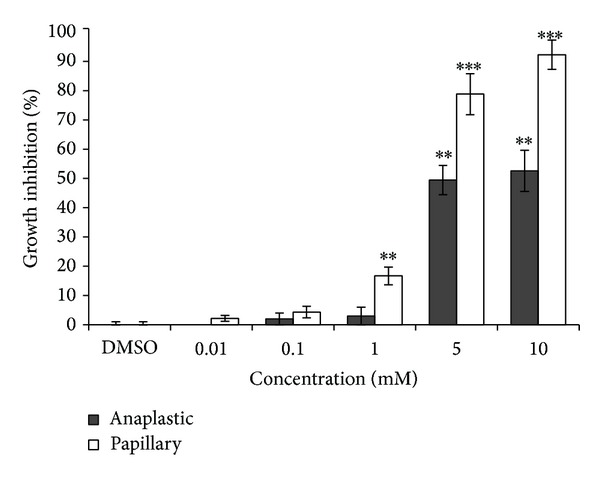
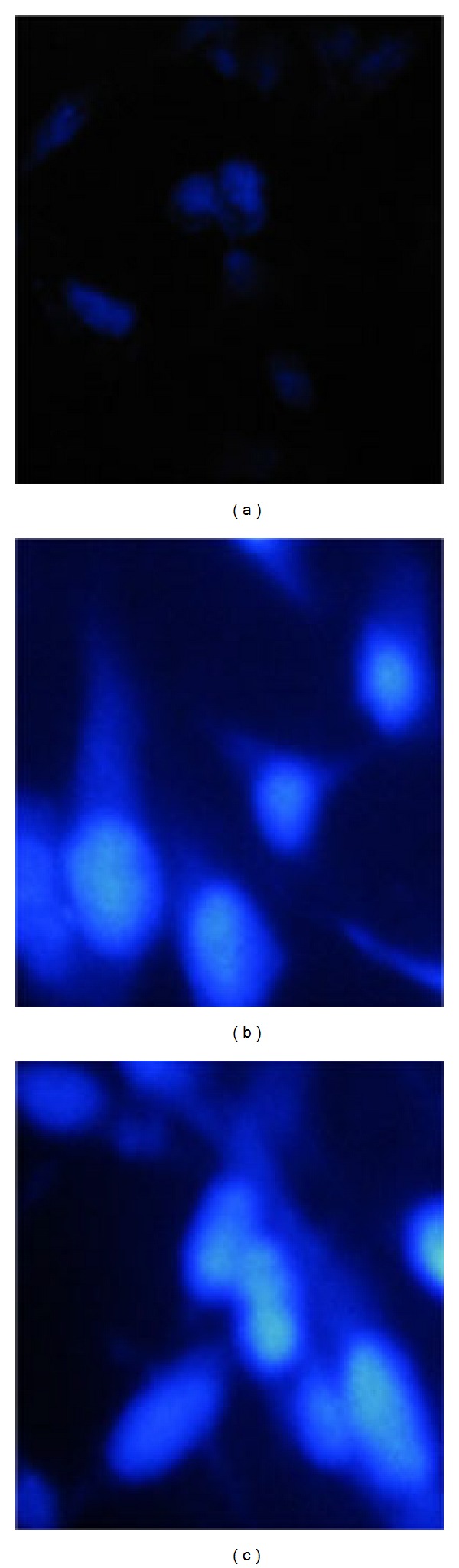
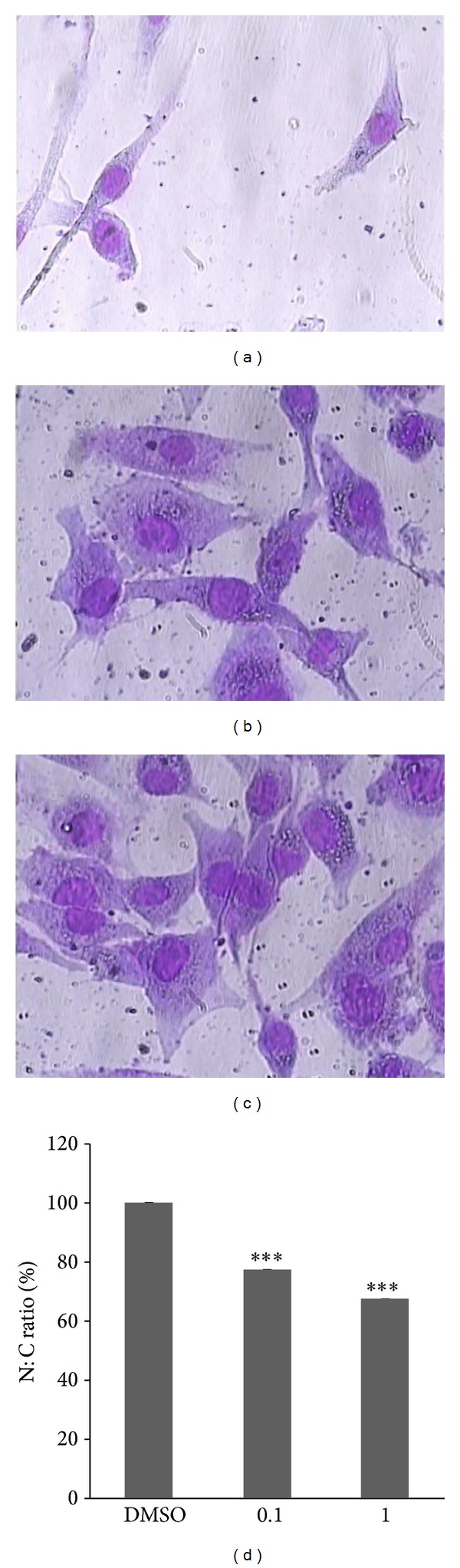
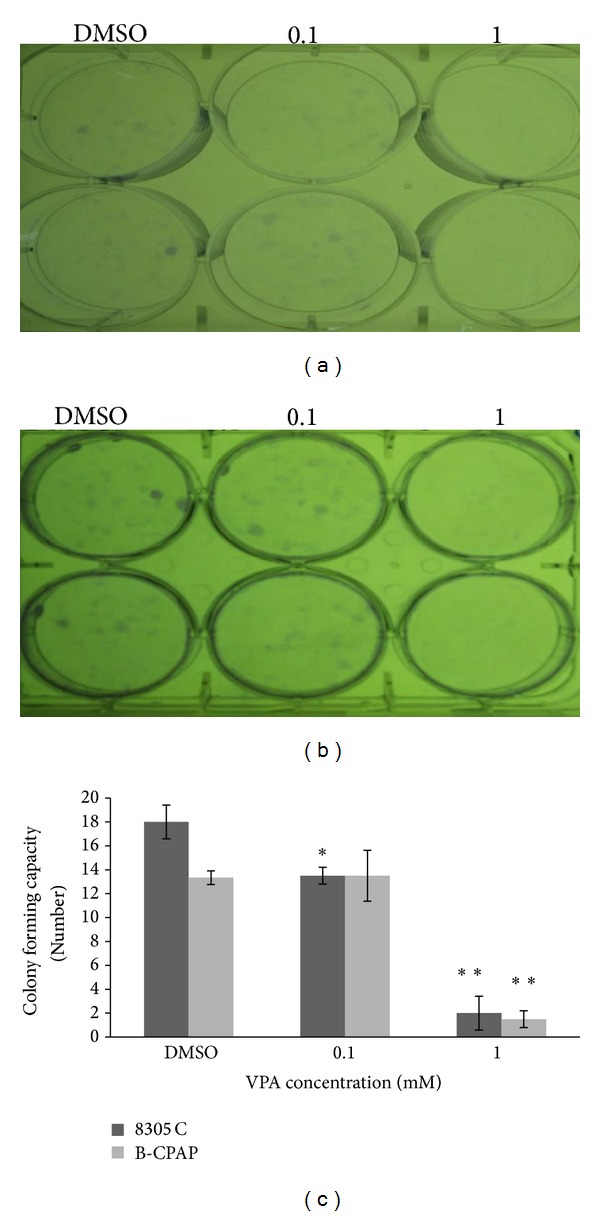
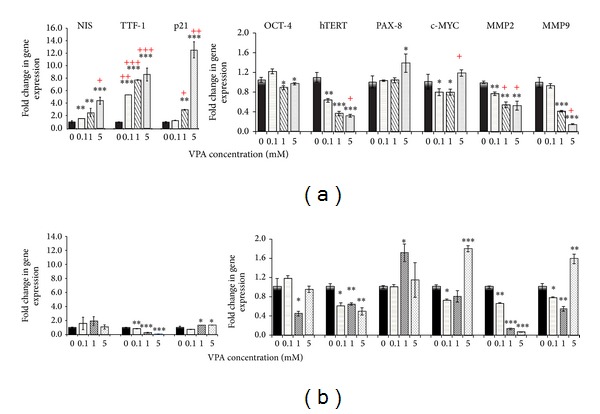
Valproic acid (VPA) has been identified as a histone deacetylase inhibitor, inducing differentiation in transformed cells. However, no study has shown the effect of VPA in the redifferentiation induction and stemness of anaplastic thyroid. The main objective of this study was to evaluate the efficacy of VPA as a differentiation therapy agent in human thyroid cancer based on its effect on stemness and differentiation process. Indications for differentiation of 8305C and B-CPAP cell lines following VPA treatment were obtained by analyzing cell proliferation rate, morphological changes, adherent-dependent colony formation, and Hoechst 33342 staining. The expressions of stemness, differentiation, and aggressiveness specific marker genes were measured by quantitative RT-PCR. VPA treatment effectively showed growth inhibition in both cell lines. The high nuclear-cytoplasmic (N : C) ratio of 8305C cells markedly decreased and treated cells became more epithelial-like. Treated cells showed stronger Hoechst 33342 fluorescence compared with control cells. The hTERT and OCT-4 reduction was paralleled with adherent-dependent colony formation decrement in both cell lines. VPA effectively induced NIS and TTF-1 in anaplastic cells, it whereas showed no clear pattern in papillary cell line. VPA treatment also resulted in the reduction of MMP-2 and MMP-9. These finding suggest that VPA could redifferentiate the anaplastic thyroid cancer cells.
丙戊酸(VPA)已被确定为一种组蛋白脱乙酰酶抑制剂,可诱导转化细胞分化。然而,尚无研究表明VPA在间变性甲状腺癌的再分化诱导和干性方面的作用。本研究的主要目的是基于VPA对干性和分化过程的影响,评估其作为人甲状腺癌分化治疗药物的疗效。通过分析细胞增殖率、形态变化、贴壁依赖性集落形成和Hoechst 33342染色,获得VPA处理后8305C和B-CPAP细胞系分化的指标。通过定量RT-PCR检测干性、分化和侵袭性特异性标志物基因的表达。VPA处理在两种细胞系中均有效显示出生长抑制作用。8305C细胞高核质比(N∶C)明显降低,处理后的细胞变得更像上皮细胞。与对照细胞相比,处理后的细胞显示出更强的Hoechst 33342荧光。两种细胞系中hTERT和OCT-4的减少与贴壁依赖性集落形成的减少平行。VPA能有效诱导间变性细胞中NIS和TTF-1的表达,而在乳头状细胞系中未显示出明显规律。VPA处理还导致MMP-2和MMP-9的减少。这些发现表明VPA可以使间变性甲状腺癌细胞再分化。