Zhang Changhe, Huang Changjun, Tian Yuan, Li Xiangcheng
Department of Liver Transplantation, The First Affiliated Hospital of Nanjing Medical University, Nanjing, Jiangsu 210029, China.
Oxid Med Cell Longev. 2014;2014:963629. doi: 10.1155/2014/963629. Epub 2014 May 21.
The polyol pathway, a bypass pathway of glucose metabolism initiated by aldose reductase (AR), has been shown to play an important role in mediating tissue ischemia/reperfusion (I/R) impairment recently. Here, we investigated how and why this pathway might affect the fatty liver following I/R.
Two opposite models were created: mice with high-fat-diet-induced liver steatosis were treated with aldose reductase inhibition (ARI) and subsequent I/R; and AR-overexpressing L02 hepatocytes were sequentially subjected to steatosis and hypoxia/reoxygenation. We next investigated (a) the hepatic injuries, including liver function, histology, and hepatocytes apoptosis/necrosis; (b) the NAD(P)(H) contents, redox status, and mitochondrial function; and (c) the flux through the caspase-dependent apoptosis pathway.
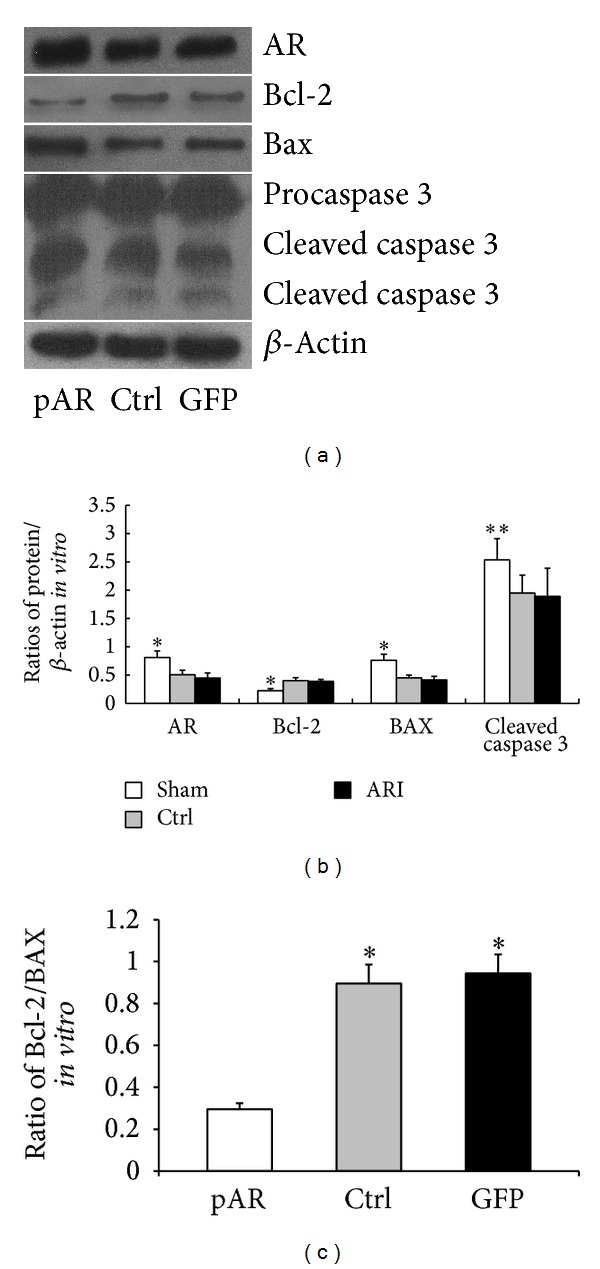
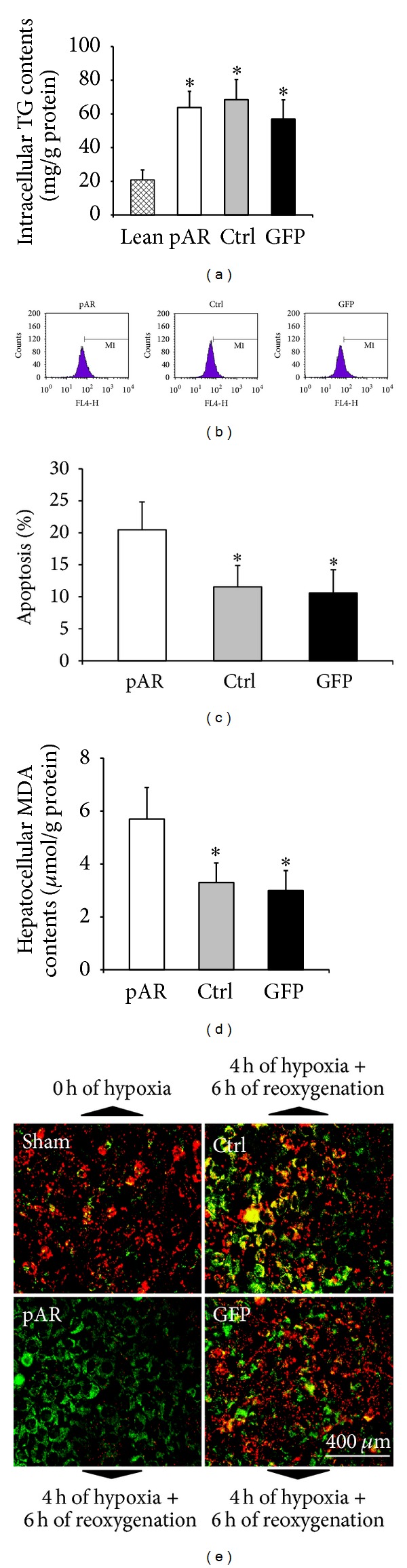
AR-inhibition in vivo markedly attenuated the I/R-induced liver injuries, maintained the homeostasis of NAD(P)(H) contents and redox status, and suppressed the caspase-dependent apoptosis pathway. Correspondingly, AR overexpression in vitro presented the opposite effects.
The flux through the polyol pathway may render steatotic liver greater vulnerability to I/R. Interventions targeting this pathway might provide a novel adjunctive approach to protect fatty liver from ischemia.
多元醇途径是由醛糖还原酶(AR)启动的葡萄糖代谢旁路途径,最近已被证明在介导组织缺血/再灌注(I/R)损伤中起重要作用。在此,我们研究了该途径如何以及为何会影响I/R后的脂肪肝。
建立了两种相反的模型:对高脂饮食诱导的肝脂肪变性小鼠进行醛糖还原酶抑制(ARI)及随后的I/R处理;对过表达AR的L02肝细胞依次进行脂肪变性和缺氧/复氧处理。接下来,我们研究了(a)肝损伤,包括肝功能、组织学以及肝细胞凋亡/坏死;(b)NAD(P)(H)含量、氧化还原状态和线粒体功能;(c)通过半胱天冬酶依赖性凋亡途径的通量。
体内AR抑制显著减轻了I/R诱导的肝损伤,维持了NAD(P)(H)含量和氧化还原状态的稳态,并抑制了半胱天冬酶依赖性凋亡途径。相应地,体外AR过表达呈现出相反的效果。
通过多元醇途径的通量可能使脂肪变性的肝脏对I/R更敏感。针对该途径的干预措施可能为保护脂肪肝免受缺血损伤提供一种新的辅助方法。