Yang Jinsong, Wu Xiaohong, Yu Haogang, Liao Xinbiao, Teng Lisong
Department of Radiation Oncology, The First Affiliated Hospital, College of Medicine, Zhejiang University, Hangzhou 310003, China.
Department of Physical Medicine & Rehabilitation, The First Affiliated Hospital, College of Medicine, Zhejiang University, Hangzhou 310003, China.
ScientificWorldJournal. 2014;2014:459549. doi: 10.1155/2014/459549. Epub 2014 May 21.
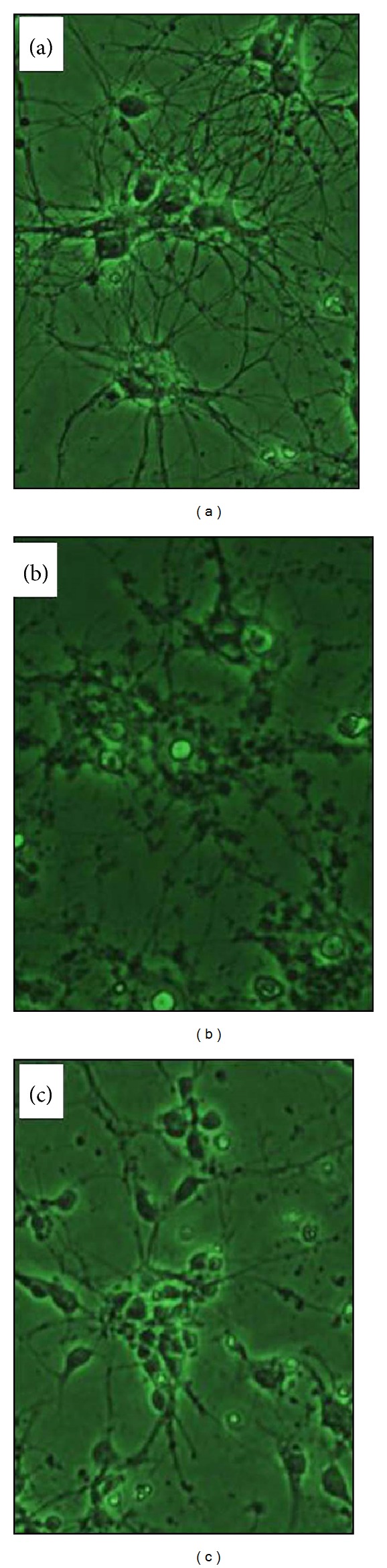
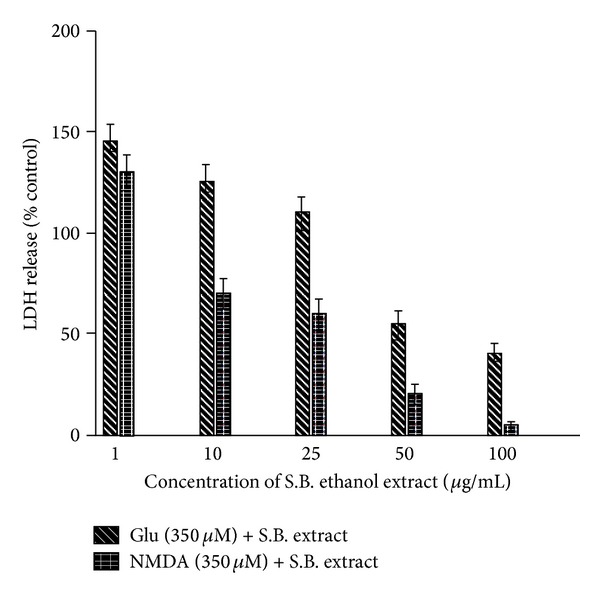
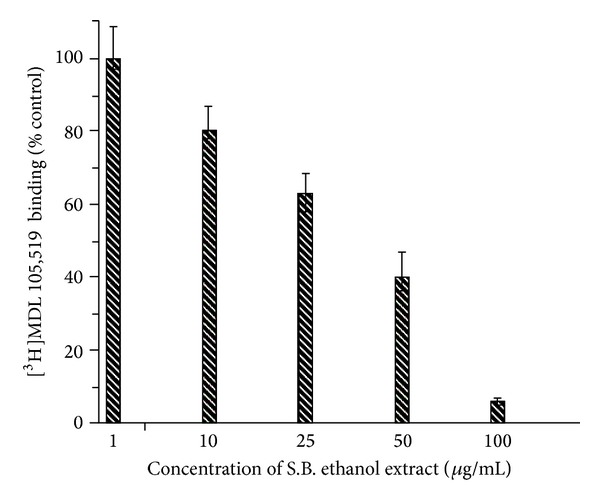
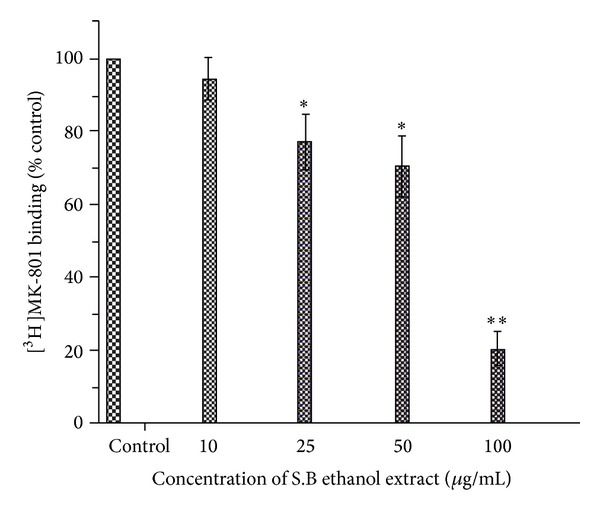
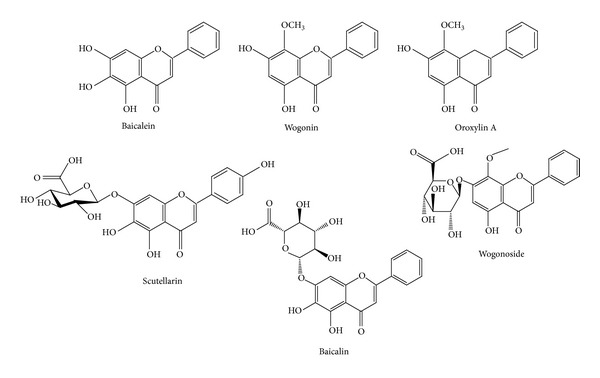
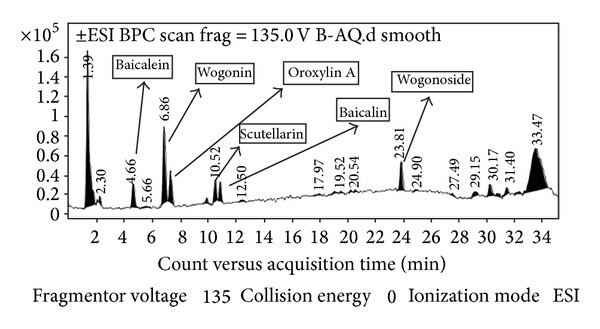
The objective of the current research work was to evaluate the neuroprotective effect of the ethanol extract of Scutellaria baicalensis (S.B.) on the excitotoxic neuronal cell death in primary rat cortical cell cultures. The inhibitory effects of the extract were qualitatively and quantitatively estimated by phase-contrast microscopy and lactate dehydrogenase (LDH) assays. The extract exhibited a potent and dose-dependent inhibition of the glutamate-induced excitotoxicity in the culture media. Further, using radioligand binding assays, it was observed that the inhibitory effect of the extract was more potent and selective for the N-methyl-D-aspartate (NMDA) receptor-mediated toxicity. The S.B. ethanol extract competed with [(3)H] MDL 105,519 for the specific binding to the NMDA receptor glycine site with 50% inhibition occurring at 35.1 μg/mL. Further, NMDA receptor inactivation by the S.B. ethanol extract was concluded from the decreasing binding capability of [(3)H]MK-801 in the presence of the extract. Thus, S.B. extract exhibited neuroprotection against excitotoxic cell death, and this neuroprotection was mediated through the inhibition of NMDA receptor function by interacting with the glycine binding site of the NMDA receptor. Phytochemical analysis of the bioactive extract revealed the presence of six phytochemical constituents including baicalein, baicalin, wogonin, wogonoside, scutellarin, and Oroxylin A.
当前研究工作的目的是评估黄芩乙醇提取物对原代大鼠皮层细胞培养物中兴奋性毒性神经元细胞死亡的神经保护作用。通过相差显微镜和乳酸脱氢酶(LDH)测定法对提取物的抑制作用进行定性和定量评估。该提取物在培养基中对谷氨酸诱导的兴奋性毒性表现出强效且剂量依赖性的抑制作用。此外,使用放射性配体结合测定法观察到,该提取物对N-甲基-D-天冬氨酸(NMDA)受体介导的毒性的抑制作用更强且更具选择性。黄芩乙醇提取物与[(3)H] MDL 105,519竞争与NMDA受体甘氨酸位点的特异性结合,在35.1μg/mL时出现50%的抑制。此外,从提取物存在时[(3)H]MK-801结合能力的降低得出黄芩乙醇提取物使NMDA受体失活的结论。因此,黄芩提取物对兴奋性毒性细胞死亡表现出神经保护作用,这种神经保护作用是通过与NMDA受体的甘氨酸结合位点相互作用来抑制NMDA受体功能介导的。对生物活性提取物的植物化学分析显示存在六种植物化学成分,包括黄芩素、黄芩苷、汉黄芩素、汉黄芩苷、野黄芩苷和木犀草素。