Chihara Takahiro, Kitabayashi Aki, Morimoto Michie, Takeuchi Ken-ichi, Masuyama Kaoru, Tonoki Ayako, Davis Ronald L, Wang Jing W, Miura Masayuki
Department of Genetics, Graduate School of Pharmaceutical Sciences, The University of Tokyo, Hongo, Bunkyo-ku, Tokyo, Japan; PRESTO, Japan Science and Technology Agency (JST), Gobancho, Chiyoda-ku, Tokyo, Japan; CREST, Japan Science and Technology Agency (JST), Gobancho, Chiyoda-ku, Tokyo, Japan.
Department of Genetics, Graduate School of Pharmaceutical Sciences, The University of Tokyo, Hongo, Bunkyo-ku, Tokyo, Japan.
PLoS Genet. 2014 Jun 26;10(6):e1004437. doi: 10.1371/journal.pgen.1004437. eCollection 2014 Jun.
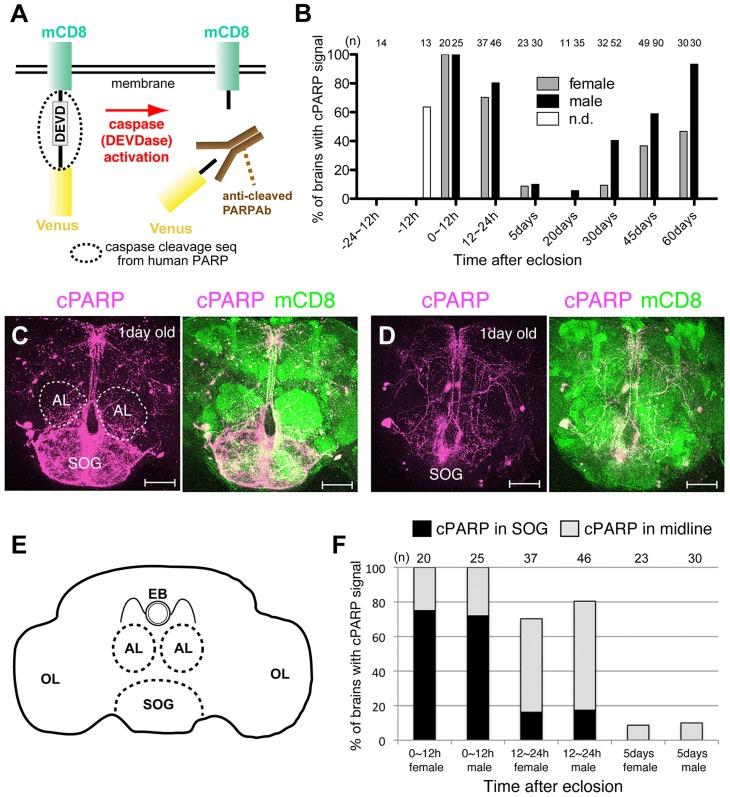
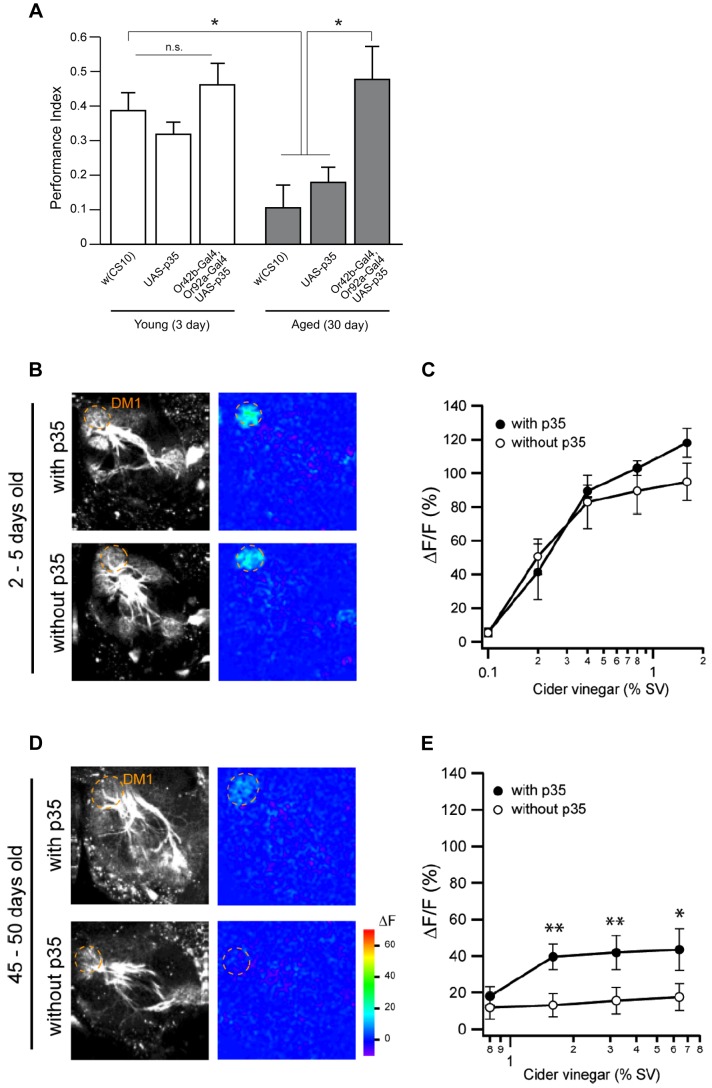
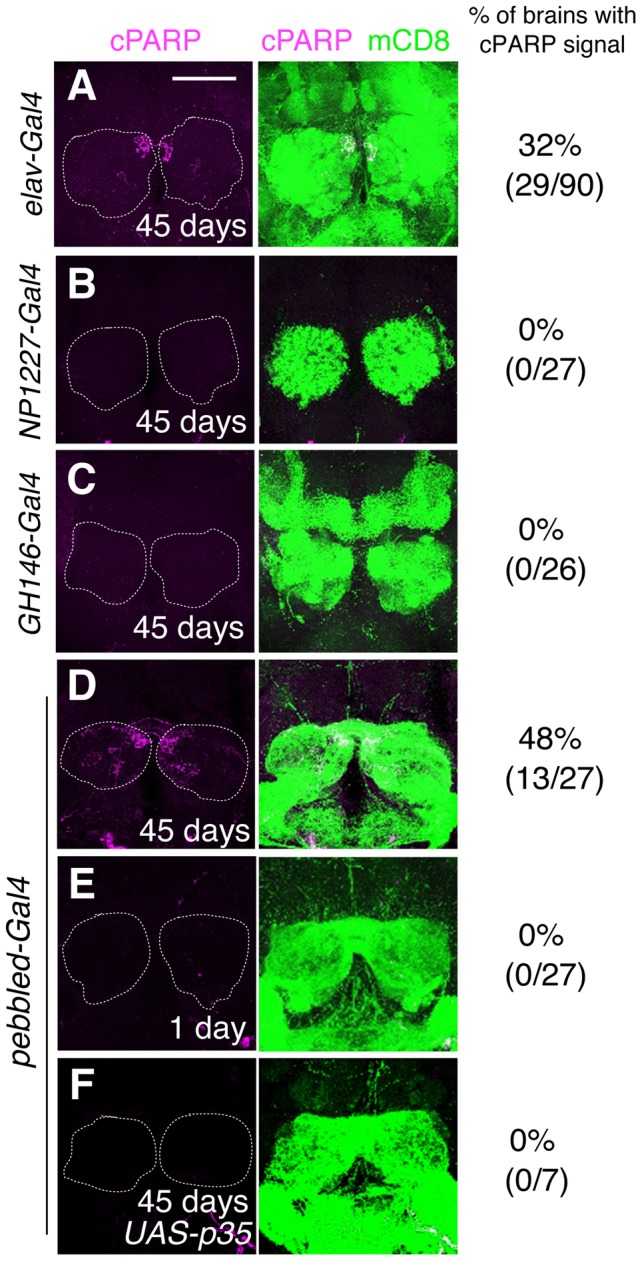
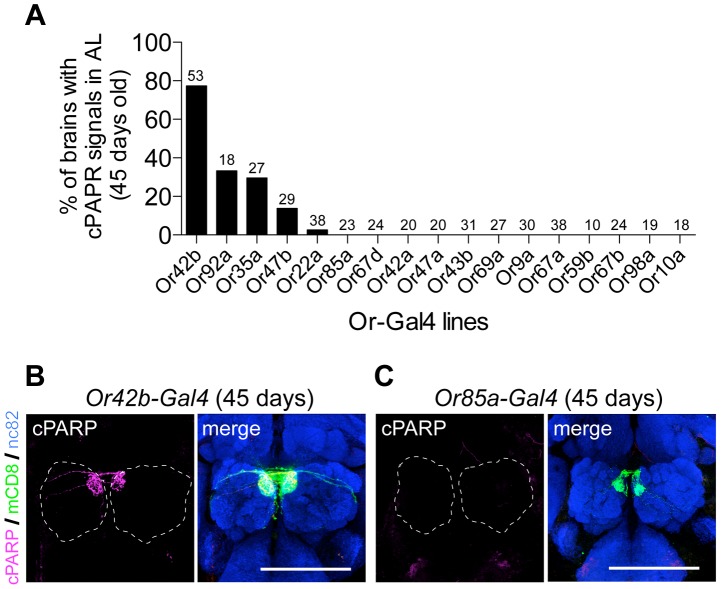
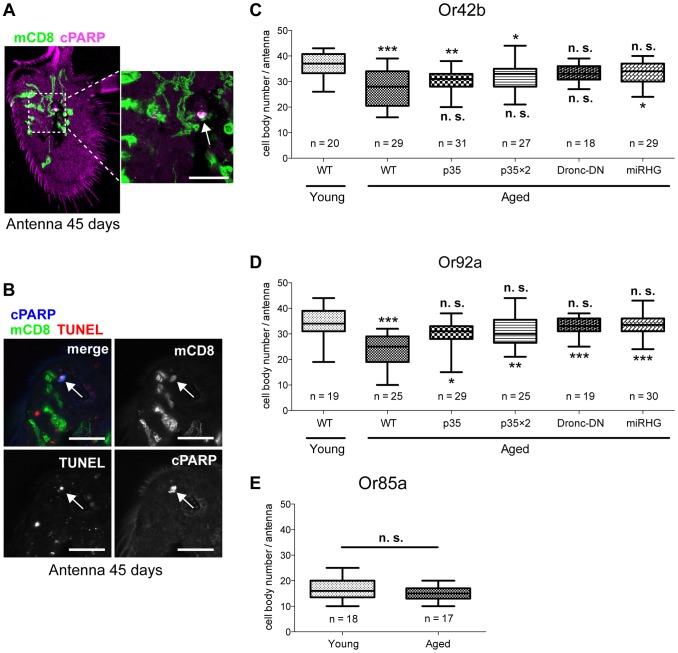
Sensory and cognitive performance decline with age. Neural dysfunction caused by nerve death in senile dementia and neurodegenerative disease has been intensively studied; however, functional changes in neural circuits during the normal aging process are not well understood. Caspases are key regulators of cell death, a hallmark of age-related neurodegeneration. Using a genetic probe for caspase-3-like activity (DEVDase activity), we have mapped age-dependent neuronal changes in the adult brain throughout the lifespan of Drosophila. Spatio-temporally restricted caspase activation was observed in the antennal lobe and ellipsoid body, brain structures required for olfaction and visual place memory, respectively. We also found that caspase was activated in an age-dependent manner in specific subsets of Drosophila olfactory receptor neurons (ORNs), Or42b and Or92a neurons. These neurons are essential for mediating innate attraction to food-related odors. Furthermore, age-induced impairments of neural transmission and attraction behavior could be reversed by specific inhibition of caspase in these ORNs, indicating that caspase activation in Or42b and Or92a neurons is responsible for altering animal behavior during normal aging.
感觉和认知能力会随着年龄的增长而下降。老年痴呆症和神经退行性疾病中神经死亡导致的神经功能障碍已得到深入研究;然而,正常衰老过程中神经回路的功能变化尚不清楚。半胱天冬酶是细胞死亡的关键调节因子,是与年龄相关的神经退行性变的一个标志。我们使用一种针对半胱天冬酶-3样活性(DEVDase活性)的基因探针,在果蝇的整个生命周期中绘制了成年大脑中与年龄相关的神经元变化图谱。在触角叶和椭球体中分别观察到时空受限的半胱天冬酶激活,触角叶和椭球体分别是嗅觉和视觉空间记忆所需的脑结构。我们还发现,在果蝇嗅觉受体神经元(ORN)的特定亚群,即Or42b和Or92a神经元中,半胱天冬酶以年龄依赖的方式被激活。这些神经元对于介导对与食物相关气味的先天吸引力至关重要。此外,通过特异性抑制这些ORN中的半胱天冬酶,可以逆转年龄诱导的神经传递和吸引行为损伤,这表明Or42b和Or92a神经元中的半胱天冬酶激活是导致正常衰老过程中动物行为改变的原因。