Max Planck Institute for Biology of Ageing, Köln, Germany; Institute of Healthy Ageing, and GEE, University College London, London, UK.
Department of Structural and Molecular Biology, London, UK; The Bernal Institute, University of Limerick, Limerick, Ireland.
Neurobiol Aging. 2018 Jun;66:149-157. doi: 10.1016/j.neurobiolaging.2018.02.027. Epub 2018 Mar 6.
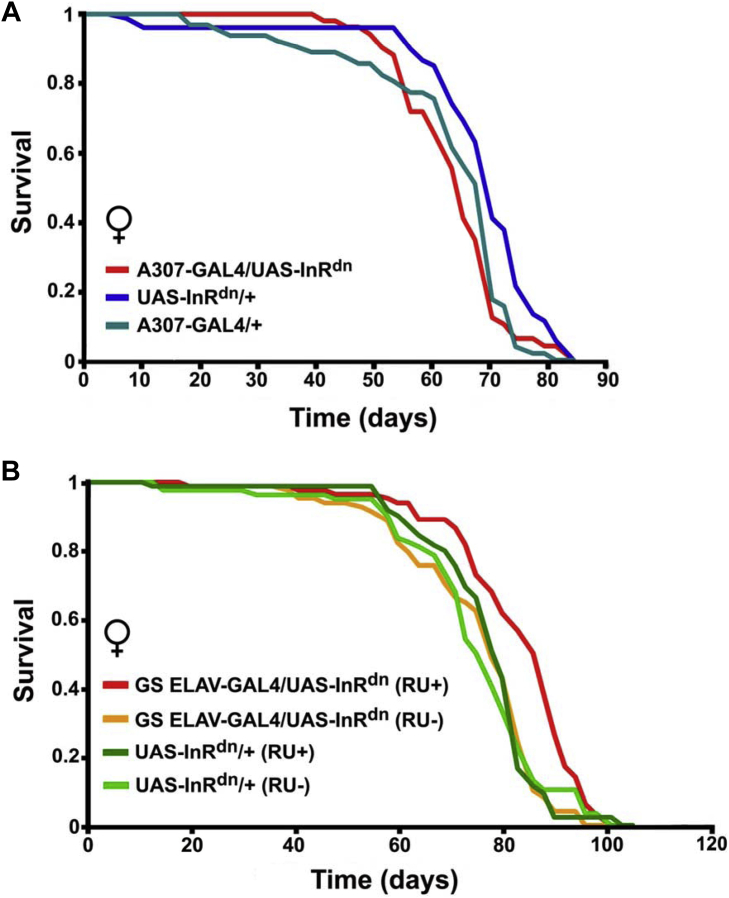
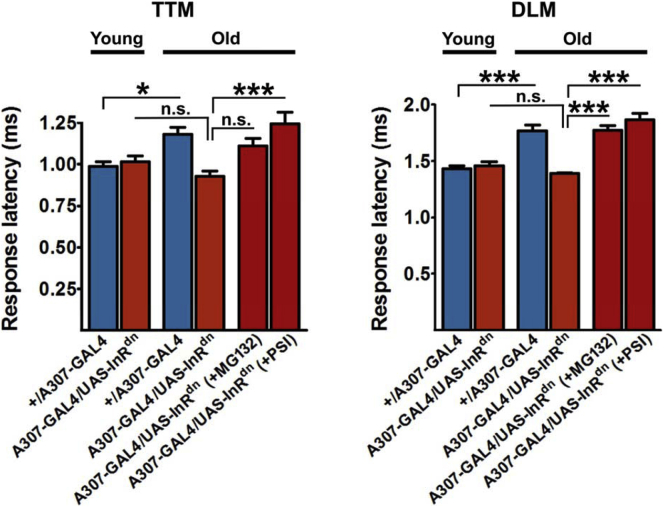
The insulin family of growth factors plays an important role in development and function of the nervous system. Reduced insulin and insulin-growth-factor signaling (IIS), however, can improve symptoms of neurodegenerative diseases in laboratory model organisms and protect against age-associated decline in neuronal function. Recently, we showed that chronic, moderately lowered IIS rescues age-related decline in neurotransmission through the Drosophila giant fiber escape response circuit. Here, we expand our initial findings by demonstrating that reduced functional output in the giant fiber system of aging flies can be prevented by increasing proteasomal activity within the circuit. Manipulations of IIS in neurons can also affect longevity, underscoring the relevance of the nervous system for aging.
胰岛素家族生长因子在神经系统的发育和功能中发挥着重要作用。然而,降低胰岛素和胰岛素生长因子信号(IIS)可以改善实验室模型生物中神经退行性疾病的症状,并防止与年龄相关的神经元功能下降。最近,我们发现慢性、适度降低 IIS 通过拯救果蝇的巨大纤维逃逸反应回路,可以挽救与年龄相关的神经传递下降。在这里,我们通过证明在回路中增加蛋白酶体活性可以防止衰老果蝇中巨大纤维系统的功能输出减少,扩展了我们最初的发现。神经元中 IIS 的操纵也会影响寿命,这突显了神经系统对衰老的相关性。