Onchocerciasis Chemotherapy Research Centre, Hohoe, Ghana.
Onchocerciasis Chemotherapy Research Centre, Hohoe, Ghana; University of Ghana Medical School, Department of Microbiology, Accra, Ghana.
PLoS Negl Trop Dis. 2014 Jun 26;8(6):e2953. doi: 10.1371/journal.pntd.0002953. eCollection 2014 Jun.
Control of onchocerciasis as a public health problem in Africa relies on annual mass ivermectin distribution. New tools are needed to achieve elimination of infection. This study determined in a small number of Onchocerca volvulus infected individuals whether moxidectin, a veterinary anthelminthic, is safe enough to administer it in a future large study to further characterize moxidectin's safety and efficacy. Effects on the parasite were also assessed.
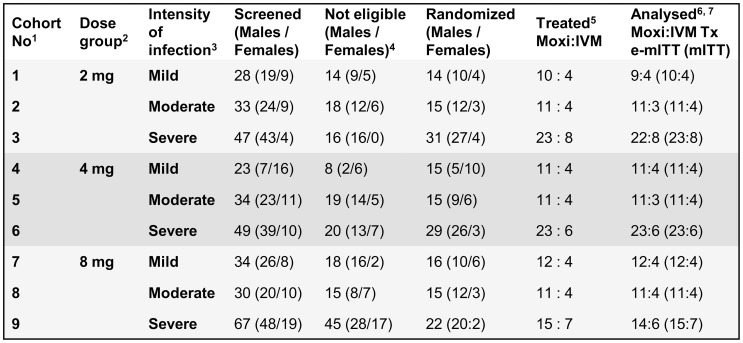
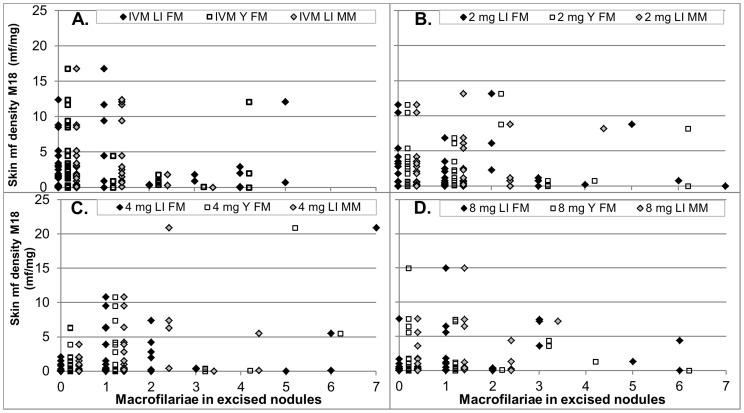
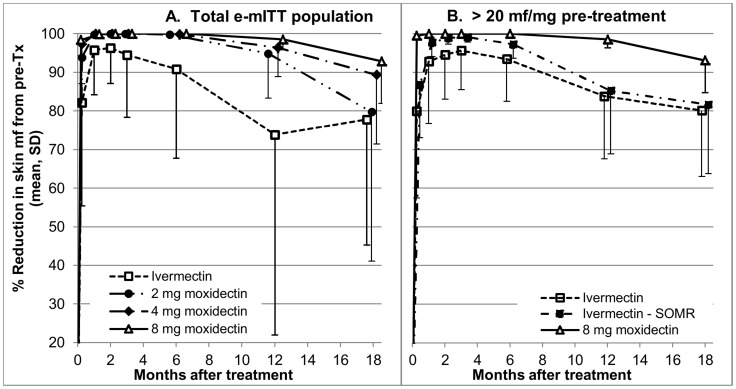
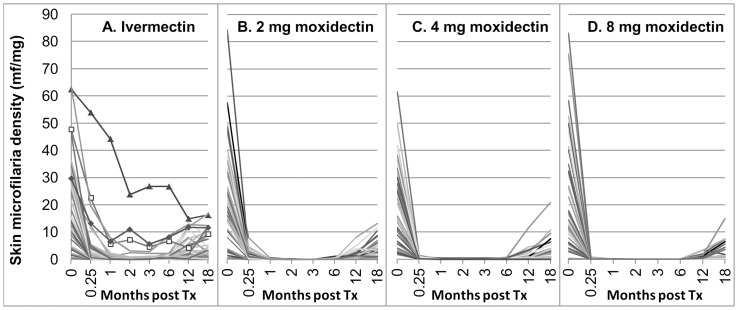
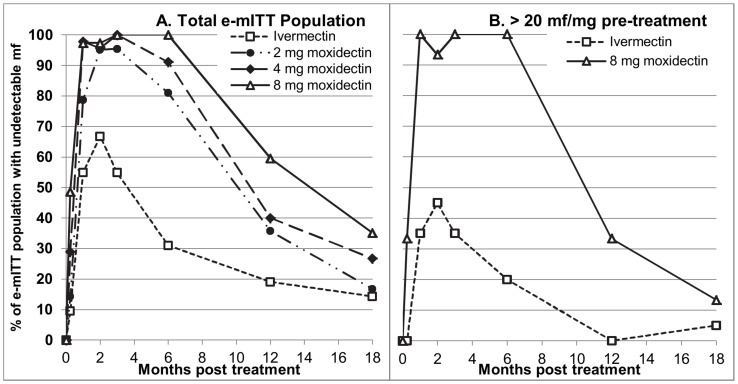
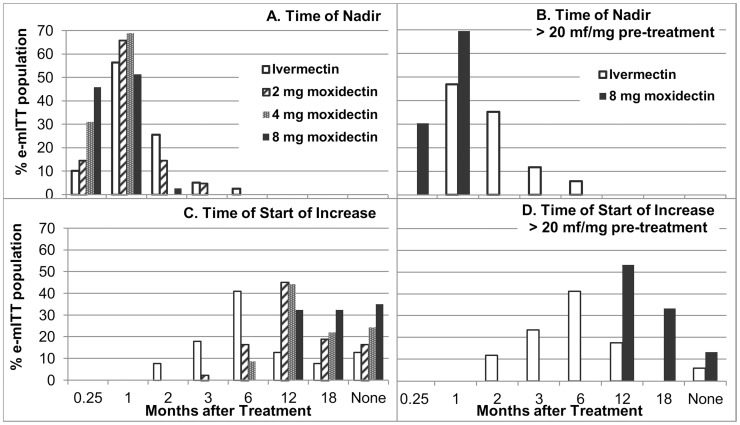
METHODOLOGY/PRINCIPAL FINDINGS: Men and women from a forest area in South-eastern Ghana without ivermectin mass distribution received a single oral dose of 2 mg (N = 44), 4 mg (N = 45) or 8 mg (N = 38) moxidectin or 150 µg/kg ivermectin (N = 45) with 18 months follow up. All ivermectin and 97%-100% of moxidectin treated participants had Mazzotti reactions. Statistically significantly higher percentages of participants treated with 8 mg moxidectin than participants treated with ivermectin experienced pruritus (87% vs. 56%), rash (63% vs. 42%), increased pulse rate (61% vs. 36%) and decreased mean arterial pressure upon 2 minutes standing still after ≥5 minutes supine relative to pre-treatment (61% vs. 27%). These reactions resolved without treatment. In the 8 mg moxidectin and ivermectin arms, the mean±SD number of microfilariae/mg skin were 22.9±21.1 and 21.2±16.4 pre-treatment and 0.0±0.0 and 1.1±4.2 at nadir reached 1 and 3 months after treatment, respectively. At 6 months, values were 0.0±0.0 and 1.6±4.5, at 12 months 0.4±0.9 and 3.4±4.4 and at 18 months 1.8±3.3 and 4.0±4.8, respectively, in the 8 mg moxidectin and ivermectin arm. The reduction from pre-treatment values was significantly higher after 8 mg moxidectin than after ivermectin treatment throughout follow up (p<0.01).
CONCLUSIONS/SIGNIFICANCE: The 8 mg dose of moxidectin was safe enough to initiate the large study. Provided its results confirm those from this study, availability of moxidectin to control programmes could help them achieve onchocerciasis elimination objectives.
ClinicalTrials.gov NCT00300768.
在非洲,控制盘尾丝虫病这一公共卫生问题依赖于每年进行大规模伊维菌素分发。需要新的工具来实现感染的消除。本研究旨在一小部分感染旋盘尾丝虫的个体中确定莫昔克丁(一种兽用驱虫药)是否足够安全,可以在未来的大型研究中使用,以进一步描述莫昔克丁的安全性和疗效。同时还评估了该药对寄生虫的影响。
方法/主要发现:来自加纳东南部森林地区的男性和女性(未进行伊维菌素大规模分发)接受单次口服 2 毫克(N=44)、4 毫克(N=45)或 8 毫克(N=38)莫昔克丁或 150µg/kg 伊维菌素(N=45)治疗,并进行了 18 个月的随访。所有接受伊维菌素和 97%-100%莫昔克丁治疗的参与者均出现了 Mazzotti 反应。接受 8 毫克莫昔克丁治疗的参与者比接受伊维菌素治疗的参与者更常出现瘙痒(87% vs. 56%)、皮疹(63% vs. 42%)、脉搏加快(61% vs. 36%)和在 2 分钟仰卧后 2 分钟站立时平均动脉压下降(61% vs. 27%)。这些反应无需治疗即可解决。在 8 毫克莫昔克丁和伊维菌素组中,治疗前平均每毫克皮肤微丝蚴数分别为 22.9±21.1 和 21.2±16.4,治疗后 1 个月和 3 个月的最低点分别为 0.0±0.0 和 1.1±4.2。治疗后 6 个月时,8 毫克莫昔克丁和伊维菌素组的数值分别为 0.0±0.0 和 1.6±4.5,12 个月时为 0.4±0.9 和 3.4±4.4,18 个月时为 1.8±3.3 和 4.0±4.8。整个随访期间,8 毫克莫昔克丁治疗后的微丝蚴数从治疗前的下降幅度明显高于伊维菌素治疗(p<0.01)。
结论/意义:8 毫克莫昔克丁的剂量足够安全,可以启动大型研究。如果其结果证实与本研究结果一致,那么莫昔克丁的供应可以帮助控制项目实现盘尾丝虫病消除目标。
ClinicalTrials.gov NCT00300768。