Liu Zhenyu, Wei Wenjuan, Bai Lijun, Dai Ruwei, You Youbo, Chen Shangjie, Tian Jie
Key Laboratory of Molecular Imaging and Functional Imaging, Institute of Automation, Chinese Academy of Sciences, Beijing, China.
Department of Acupuncture and Massage, Bao'an Hospital, Southern Medical University, Shenzhen, China.
PLoS One. 2014 Jun 26;9(6):e99335. doi: 10.1371/journal.pone.0099335. eCollection 2014.
To investigate the different responses to acupuncture in MCI patients and age-matched healthy subjects reflected by the Regional Homogeneity (ReHo) indices.
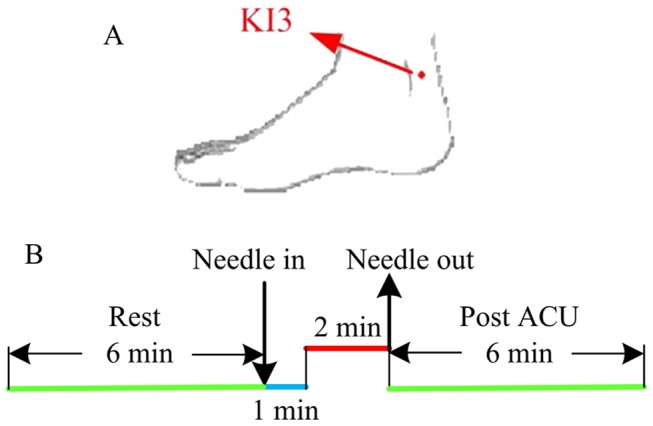
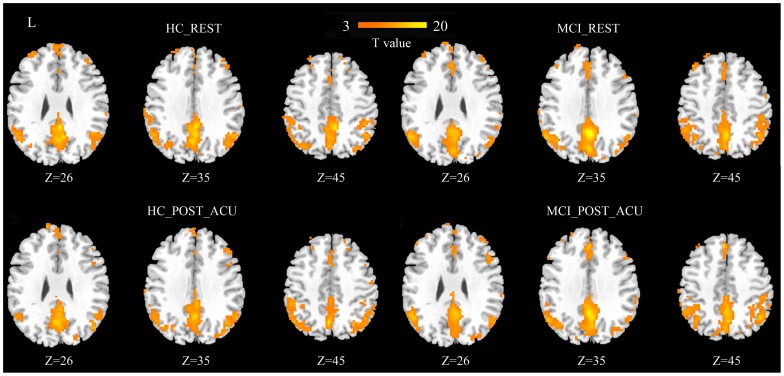
The experiment was performed at the acupoint KI3 in 12 MCI patients and 12 healthy controls, respectively. A novel non-repeated event-related (NRER) fMRI design paradigm was applied to separately detect neural activities related to different stages of acupuncture (pre-acupuncture resting state, needling manipulation and post-acupuncture resting state). ReHo values were calculated for MCI patients and healthy controls in pre- and post-acupuncture resting state. Then, a two-way ANCOVA with repeated measures with post-hoc two sample t-tests was performed to explore the different responses to acupuncture in the two groups.
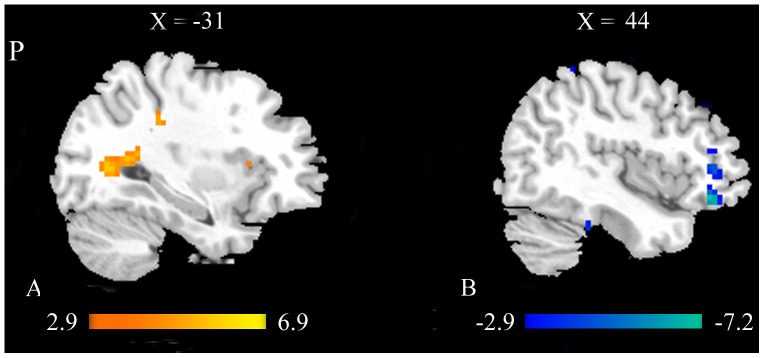
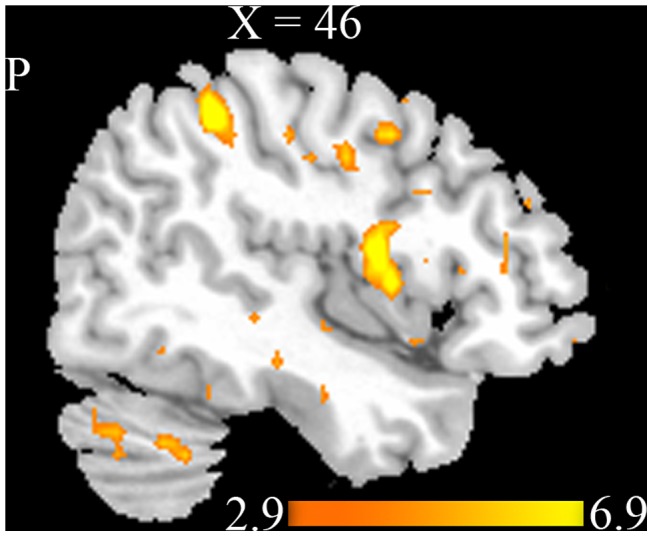
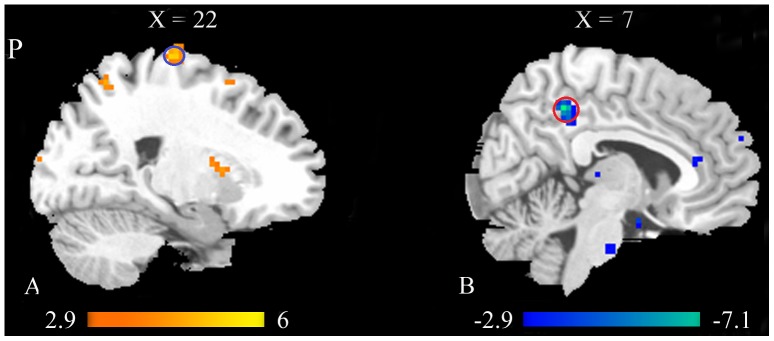
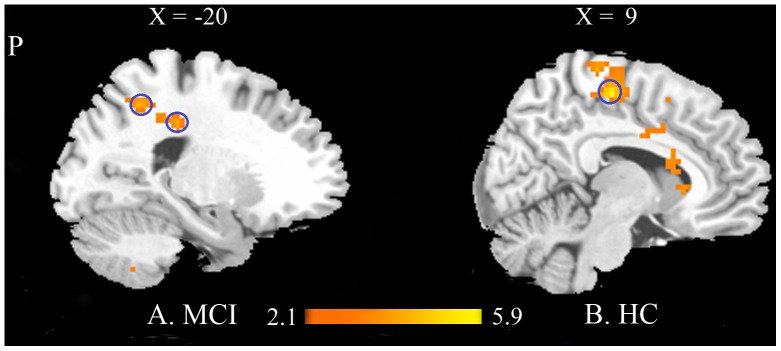
The ANCOVA revealed a significant main effect of group, but no significant main effect of acupuncture and interactions between group and acupuncture. During the pre-acupuncture resting state, ReHo values increased in the precentral gyrus (PCG), superior frontal gyrus (SFG), and insula (INS) and decreased mainly in middle temporal gyrus (MTG), parahippocampal (PHIP) and cingulate cortex in MCI patients compared with healthy controls. Furthermore, we found that the regions including precuneus (PCUN), and cingulate cortex showed increased ReHo values for MCI patients following acupuncture. For healthy controls, the medial frontal gyrus, PCG, anterior cingulate cortex (ACC) and INS showed enhanced ReHo values following acupuncture. During the post-acupuncture resting state, MCI patients showed increased ReHo values mainly in the MTG, superior parietal lobule (SPL), middle frontal gyrus (MFG), supramarginal (SMG), and PCG, and decreased ReHo values mainly in the frontal regions, PHIP, and posterior cingulated cortex (PCC) compared to healthy controls.
Though we found some ReHo changes between MCI patients and healthy controls, the two-way ANCOVA results showed no significant effects after multiple corrections. Further study is needed to reveal the real acupuncture effects on MCI patients.
通过局部一致性(ReHo)指数研究轻度认知障碍(MCI)患者和年龄匹配的健康受试者对针刺的不同反应。
分别在12例MCI患者和12例健康对照者的双侧三阴交穴进行实验。采用一种新颖的非重复事件相关(NRER)功能磁共振成像(fMRI)设计范式,分别检测与针刺不同阶段(针刺前静息态、针刺手法操作和针刺后静息态)相关的神经活动。计算MCI患者和健康对照者针刺前、后静息态的ReHo值。然后,进行重复测量的双向协方差分析(ANCOVA)及事后两组样本t检验,以探究两组对针刺的不同反应。
ANCOVA显示组间存在显著的主效应,但针刺无显著主效应,且组间与针刺之间无交互作用。在针刺前静息态,与健康对照相比,MCI患者中央前回(PCG)、额上回(SFG)和脑岛(INS)的ReHo值升高,而主要在颞中回(MTG)、海马旁回(PHIP)和扣带回皮质降低。此外,我们发现针刺后,MCI患者包括楔前叶(PCUN)和扣带回皮质的区域ReHo值升高。对于健康对照,针刺后内侧额回、PCG、前扣带回皮质(ACC)和INS的ReHo值增强。在针刺后静息态,与健康对照相比,MCI患者主要在MTG、顶上小叶(SPL)、额中回(MFG)、缘上回(SMG)和PCG的ReHo值升高,而主要在额叶区域、PHIP和后扣带回皮质(PCC)的ReHo值降低。
虽然我们发现MCI患者和健康对照之间存在一些ReHo变化,但双向ANCOVA结果显示多次校正后无显著效应。需要进一步研究以揭示针刺对MCI患者的真正影响。