Nie Junsheng, Stevens Thomas, Song Yougui, King John W, Zhang Rui, Ji Shunchuan, Gong Lisha, Cares Danielle
MOE Key Laboratory of Western China's Environmental Systems, Collaborative Innovation Centre for Arid Environments and Climate Change, Lanzhou University, Lanzhou 73000, China.
1] Centre for Quaternary Research, Department of Geography, Royal Holloway University of London, Egham, Surrey, TW20 0EX, UK [2].
Sci Rep. 2014 Jun 27;4:5474. doi: 10.1038/srep05474.
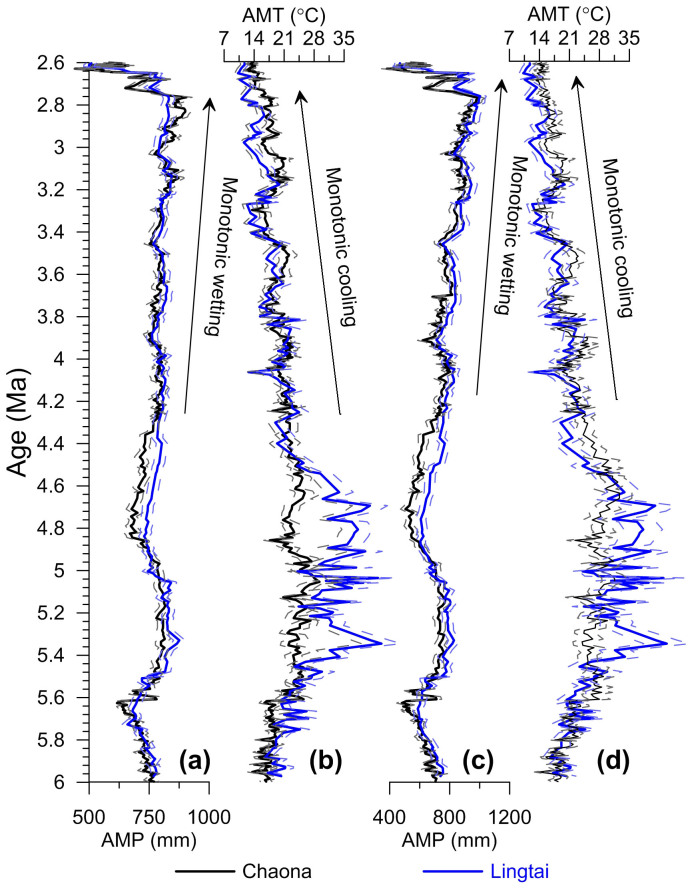
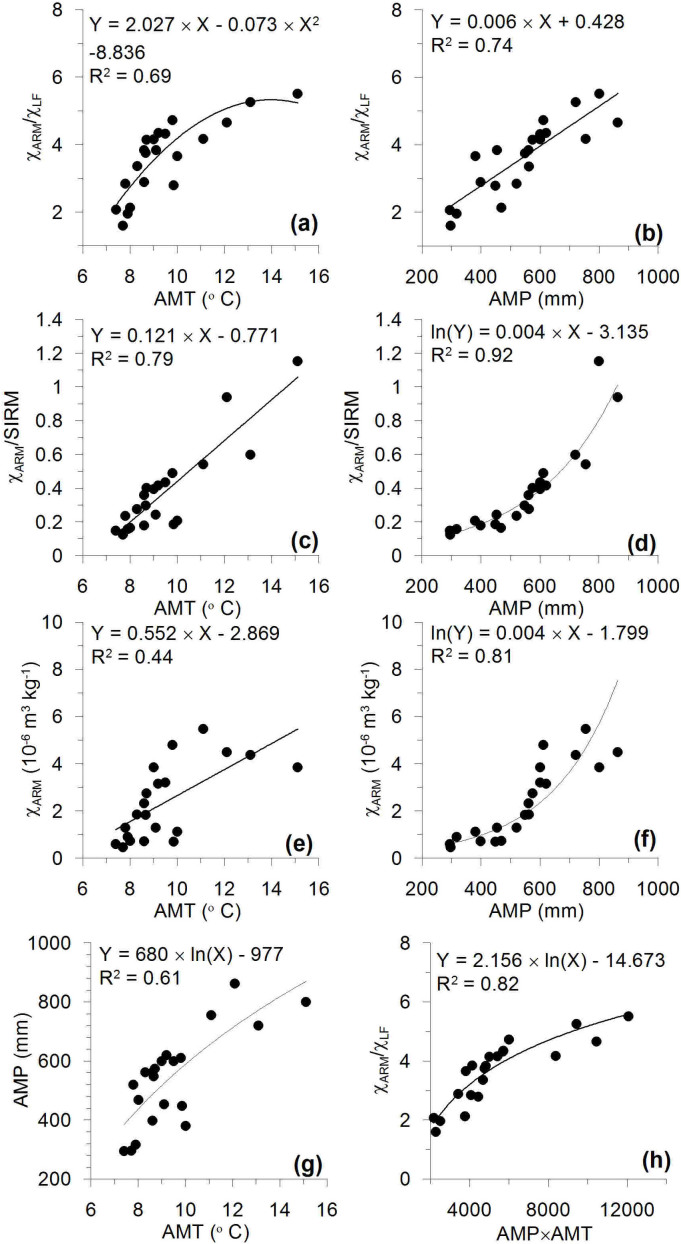
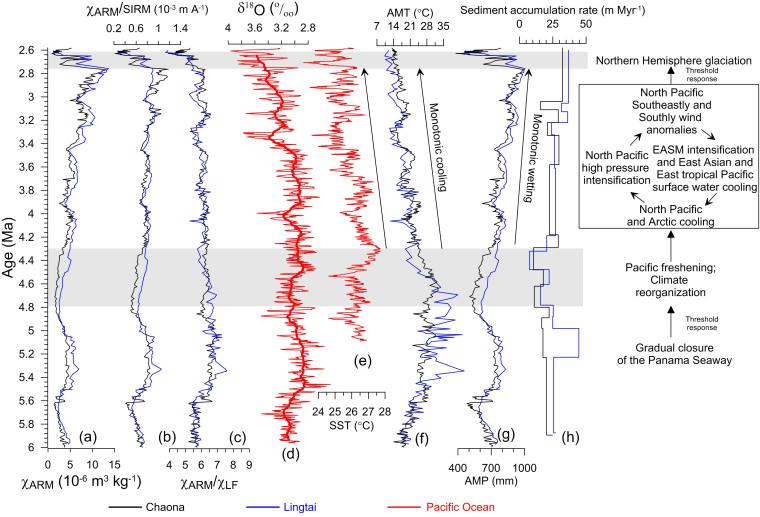
The monsoon is a fundamental component of Earth's climate. The Pliocene warm period is characterized by long-term global cooling yet concurrent monsoon dynamics are poorly known. Here we present the first fully quantified and calibrated reconstructions of separate Pliocene air temperature and East Asian summer monsoon precipitation histories on the Chinese Loess Plateau through joint analysis of loess/red clay magnetic parameters with different sensitivities to air temperature and precipitation. East Asian summer monsoon precipitation shows an intensified trend, paradoxically at the same time that climate cooled. We propose a hitherto unrecognized feedback where persistently intensified East Asian summer monsoon during the late Pliocene, triggered by the gradual closure of the Panama Seaway, reinforced late Pliocene Pacific freshening, sea-ice development and ice volume increase, culminating in initiation of the extensive Northern Hemisphere glaciations of the Quaternary Ice Age. This feedback mechanism represents a fundamental reinterpretation of the origin of the Quaternary glaciations and the impact of the monsoon.
季风是地球气候的一个基本组成部分。上新世暖期的特征是长期全球变冷,但同期的季风动态却鲜为人知。在此,我们通过对黄土/红粘土中对气温和降水敏感度不同的磁性参数进行联合分析,首次对中国黄土高原上新世气温和东亚夏季风降水历史进行了全面量化和校准的重建。东亚夏季风降水呈增强趋势,这与气候变冷的情况相悖。我们提出了一种迄今未被认识到的反馈机制,即上新世晚期巴拿马海峡逐渐关闭引发东亚夏季风持续增强,进而加强了上新世晚期太平洋海水变淡、海冰发展和冰量增加,最终导致第四纪冰期北半球广泛冰川作用的开始。这种反馈机制代表了对第四纪冰川作用起源和季风影响的一种根本性重新解释。