Tsujiura Masahiro, Mazack Virginia, Sudol Marius, Kaspar Hanna G, Nash John, Carey David J, Gogoi Radhika
Weis Center for Research, Geisinger Medical Center, Danville, Pennsylvania, United States of America.
Weis Center for Research, Geisinger Medical Center, Danville, Pennsylvania, United States of America; Icahn School of Medicine at Mount Sinai, New York, New York, United States of America.
PLoS One. 2014 Jun 27;9(6):e100974. doi: 10.1371/journal.pone.0100974. eCollection 2014.
Yes-associated protein (YAP) is a transcriptional co-activator and regulates cell proliferation and apoptosis. We investigated the clinical and biological significance of YAP in endometrial cancer (EMCA).
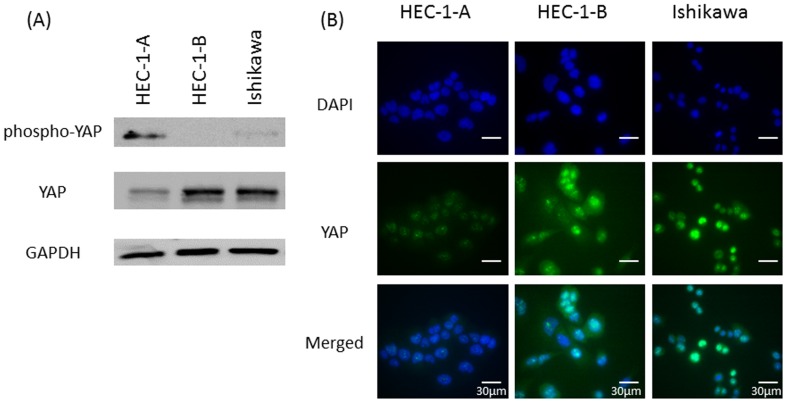
YAP expression in 150 primary tumor tissues from patients with EMCA was evaluated by immunohistochemistry and its association with clinicopathological data was assessed. The biological functions of YAP were determined in EMCA cell lines through knockdown/overexpression of YAP. The role of YAP in modulating radiation sensitivity was also investigated in EMCA cells.
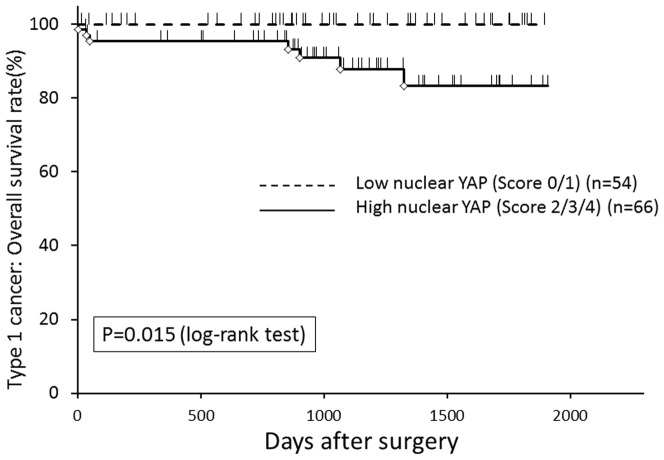
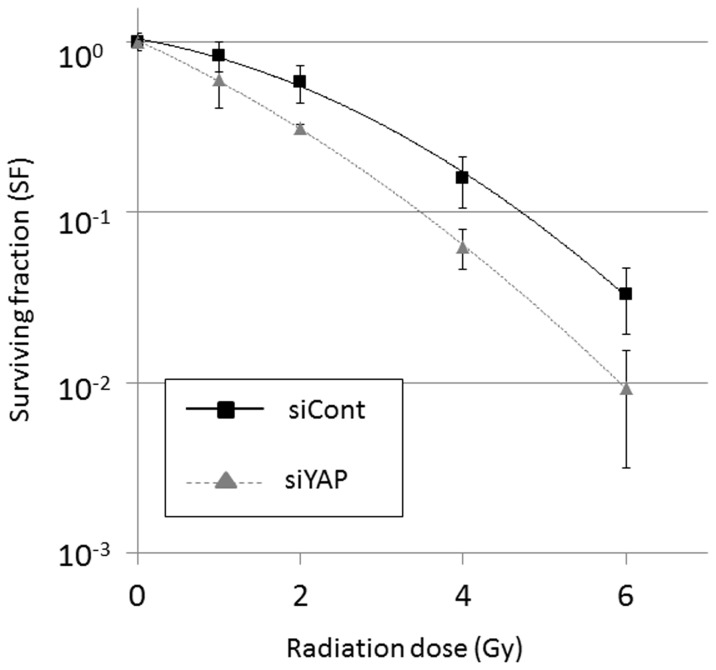
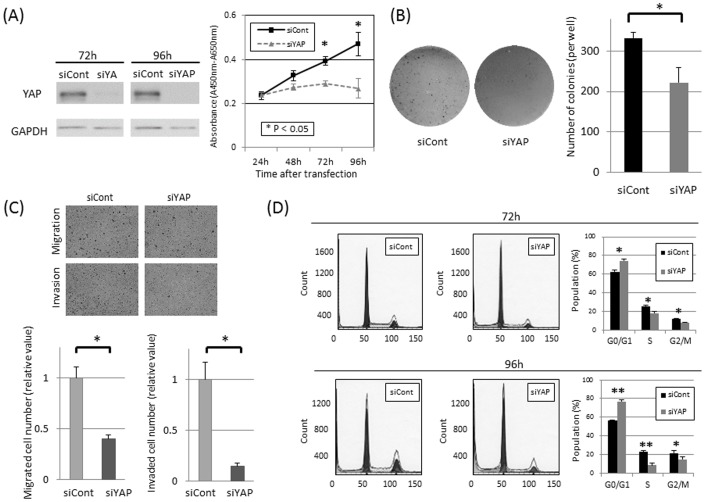
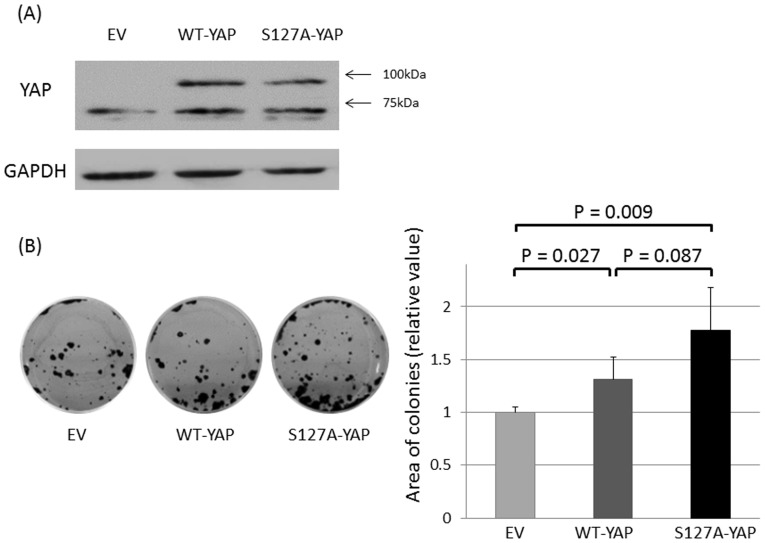
Increased nuclear YAP expression was significantly associated with higher grade, stage, lympho-vascular space invasion, postoperative recurrence/metastasis and overall survival in estrogen mediated EMCA, called type 1 cancer (p = 0.019, = 0.028, = 0.0008, = 0.046 and = 0.015, respectively). In multivariate analysis, nuclear YAP expression was confirmed as an independent prognostic factor for overall survival in type 1 EMCA. YAP knockdown by siRNA resulted in a significant decrease in cell proliferation (p<0.05), anchorage-dependent growth (p = 0.015) and migration/invasion (p<0.05), and a significant increase in the number of cells in G0/G1 phase (p = 0.002). Conversely, YAP overexpression promoted cell proliferation. Clonogenic assay demonstrated enhanced radiosensitivity by approximately 36% in YAP inhibited cells.
Since YAP functions as a transcriptional co-activator, its differential localization in the nucleus of cancer cells and subsequent impact on cell proliferation could have important consequences with respect to its role as an oncogene in EMCA. Nuclear YAP expression could be useful as a prognostic indicator or therapeutic target and predict radiation sensitivity in patients with EMCA.
Yes相关蛋白(YAP)是一种转录共激活因子,可调节细胞增殖和凋亡。我们研究了YAP在子宫内膜癌(EMCA)中的临床和生物学意义。
通过免疫组织化学评估150例EMCA患者原发肿瘤组织中YAP的表达,并评估其与临床病理数据的相关性。通过YAP的敲低/过表达在EMCA细胞系中确定YAP的生物学功能。还在EMCA细胞中研究了YAP在调节放射敏感性中的作用。
在雌激素介导的EMCA(称为1型癌症)中,细胞核YAP表达增加与更高的分级、分期、淋巴血管间隙浸润、术后复发/转移和总生存期显著相关(分别为p = 0.019、= 0.028、= 0.0008、= 0.046和= 0.015)。在多变量分析中,细胞核YAP表达被确认为1型EMCA总生存期的独立预后因素。通过小干扰RNA敲低YAP导致细胞增殖显著降低(p<0.05)、贴壁依赖性生长(p = 0.015)和迁移/侵袭(p<0.05),并且G0/G1期细胞数量显著增加(p = 0.002)。相反,YAP过表达促进细胞增殖。克隆形成试验表明,YAP抑制的细胞放射敏感性增强约36%。
由于YAP作为转录共激活因子发挥作用,其在癌细胞核中的不同定位以及随后对细胞增殖的影响可能对其在EMCA中作为癌基因的作用产生重要影响。细胞核YAP表达可作为预后指标或治疗靶点,并预测EMCA患者的放射敏感性。