Baldo Juliana V, Katseff Shira, Dronkers Nina F
VA Northern California Health Care System.
VA Northern California Health Care System ; University of California, Berkeley.
Aphasiology. 2012;26(3-4):338-354. doi: 10.1080/02687038.2011.602391.
A deficit in the ability to repeat auditory-verbal information is common among individuals with aphasia. The neural basis of this deficit has traditionally been attributed to the disconnection of left posterior and anterior language regions via damage to a white matter pathway, the arcuate fasciculus. However, a number of lesion and imaging studies have called this notion into question.
The goal of this study was to identify the neural correlates of repetition and a related process, auditory-verbal short-term memory (AVSTM). Both repetition and AVSTM involve common elements such as auditory and phonological analysis and translation to speech output processes. Based on previous studies, we predicted that both repetition and AVSTM would be most dependent on posterior language regions in left temporo-parietal cortex.
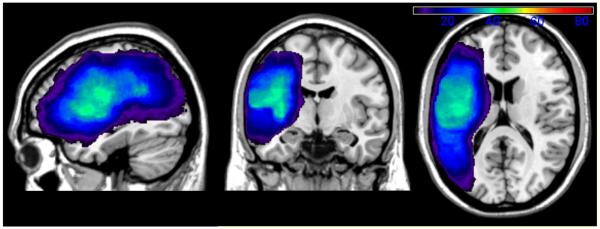
METHODS & PROCEDURES: We tested 84 individuals with left hemisphere lesions due to stroke on an experimental battery of repetition and AVSTM tasks. Participants were tested on word, pseudoword, and number-word repetition, as well as digit and word span tasks. Brain correlates of these processes were identified using a statistical, lesion analysis approach known as voxel-based lesion symptom mapping (VLSM). VLSM allows for a voxel-by-voxel analysis of brain areas most critical to performance on a given task, including both grey and white matter regions.
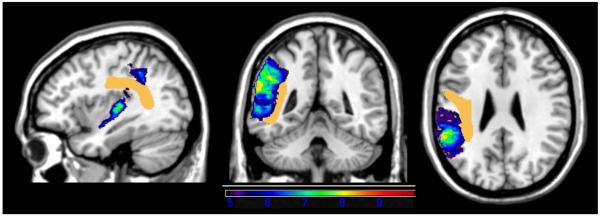
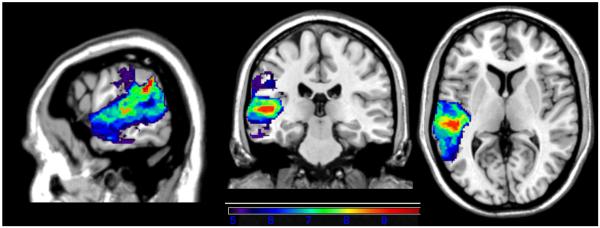
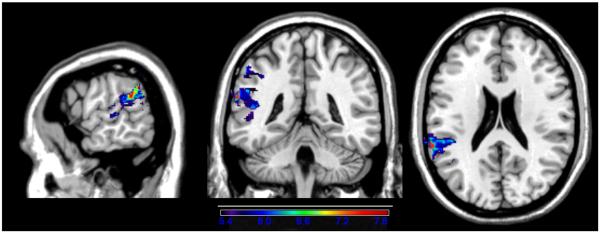
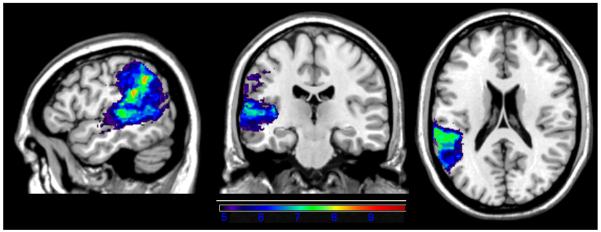
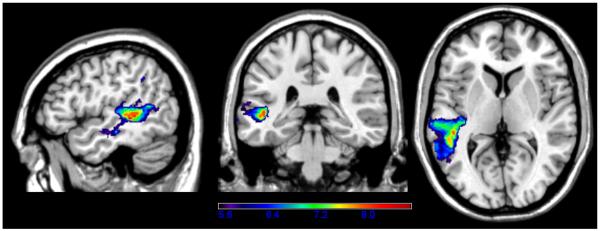
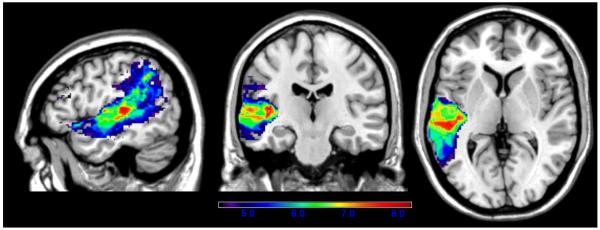
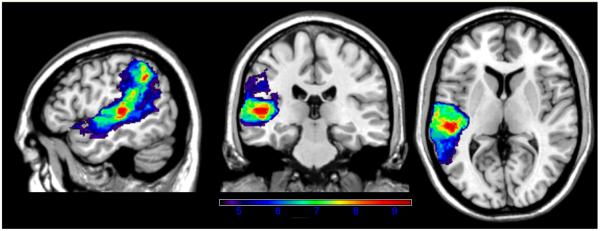
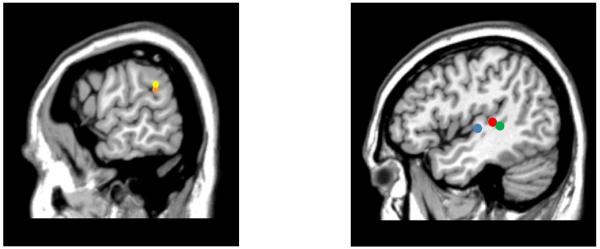
OUTCOMES & RESULTS: The VLSM analyses showed that left posterior temporo-parietal cortex, not the arcuate fasciculus, was most critical for repetition as well as for AVSTM. The location of maximal foci, defined as the voxels with the highest values, varied somewhat among measures: Word and pseudoword repetition had maximal foci in the left posterior superior temporal gyrus, on the border with inferior parietal cortex, while word and digit span, as well as number-word repetition, were centered on the border between the middle temporal and superior temporal gyri and the underlying white matter.
Findings from the current study show that 1) repetition is most critically mediated by cortical regions in left posterior temporo-parietal cortex; 2) repetition and AVSTM are mediated by partially overlapping networks; and 3) repetition and AVSTM deficits can be observed in different types of aphasia, depending on the site and extent of the brain injury. These data have implications for the prognosis of chronic repetition and AVSTM deficits in individuals with aphasia when lesions involve critical regions in left temporo-parietal cortex.
在失语症患者中,重复听觉言语信息的能力缺陷很常见。传统上,这种缺陷的神经基础被归因于通过白质通路——弓状束受损,导致左侧后部和前部语言区域之间的联系中断。然而,一些病变和影像学研究对这一观点提出了质疑。
本研究的目的是确定重复及相关过程——听觉言语短期记忆(AVSTM)的神经关联。重复和AVSTM都涉及诸如听觉和语音分析以及转化为言语输出过程等共同要素。基于先前的研究,我们预测重复和AVSTM都将最依赖于左侧颞顶叶皮质的后部语言区域。
我们对84名因中风导致左侧半球病变的个体进行了一系列重复和AVSTM任务的实验测试。参与者接受了单词、假词和数字词重复测试,以及数字和单词广度任务。使用一种称为基于体素的病变症状映射(VLSM)的统计性病变分析方法来确定这些过程的脑关联。VLSM允许对给定任务表现最关键的脑区进行逐个体素分析,包括灰质和白质区域。
VLSM分析表明,左侧颞顶叶皮质后部而非弓状束,对重复以及AVSTM最为关键。最大病灶的位置,定义为具有最高值的体素,在不同测量中略有不同:单词和假词重复的最大病灶位于左侧颞上回后部,与顶下皮质交界处,而单词和数字广度以及数字词重复则集中在颞中回和颞上回之间的边界以及深层白质上。
当前研究结果表明:1)重复最关键地由左侧颞顶叶皮质后部的皮质区域介导;2)重复和AVSTM由部分重叠网络介导;3)根据脑损伤的部位和程度,在不同类型的失语症中可观察到重复和AVSTM缺陷。当病变累及左侧颞顶叶皮质的关键区域时,这些数据对失语症患者慢性重复和AVSTM缺陷的预后具有启示意义。