Department of Chemistry and Biochemistry, California State University Dominguez Hills, Carson, CA, USA.
Department of Clinical and Molecular Pharmacology, Beckman Research Institute of City of Hope National Medical Center, Duarte, CA, USA.
Breast Cancer (Dove Med Press). 2014 May 23;6:73-80. doi: 10.2147/BCTT.S61281. eCollection 2014.
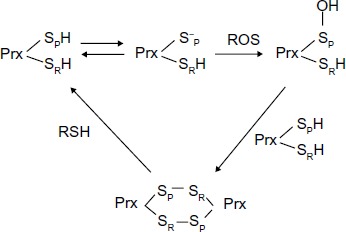
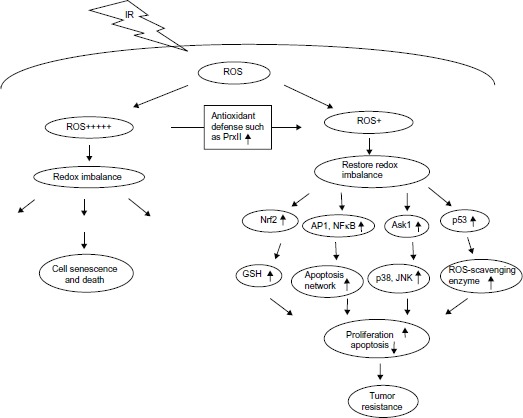
Peroxiredoxin (Prx)II belongs to a family of redox-active proteins that use redox-sensitive cysteine in the active site to reduce peroxides. PrxII is induced by various oxidative stimuli and plays an important protective role against oxidative radical damage by reactive oxygen species. PrxII expression levels are correlated with resistance to radiation therapy or certain anti-cancer drugs in radioresistant breast cancer cells, glioblastomas, and head and neck cancer cells as well as in tissue isolated from head and neck patients who do not respond to radiation therapy. Small interfering RNA (siRNA) that inhibits the PrxII gene expression has been shown to partially reverse the radioresistant phenotype in radiation resistant breast cancer cells and sensitizes glioma cells to oxidative stress, highlighting the potential clinical importance of PrxII in radiation resistance in cancer. This article focuses on the role that PrxII may play in chemoresistant breast cancer cells.
过氧化物酶(Prx)II 属于一类具有氧化还原活性的蛋白质家族,其在活性位点使用氧化还原敏感的半胱氨酸来还原过氧化物。PrxII 可被多种氧化刺激诱导,并通过活性氧(ROS)发挥重要的保护作用,防止氧化自由基损伤。在耐辐射的乳腺癌细胞、神经胶质瘤和头颈部癌细胞以及对放射治疗无反应的头颈部患者组织中,PrxII 的表达水平与对放射治疗或某些抗癌药物的耐药性相关。已显示抑制 PrxII 基因表达的小干扰 RNA(siRNA)可部分逆转耐辐射乳腺癌细胞的辐射耐药表型,并使神经胶质瘤细胞对氧化应激敏感,突出了 PrxII 在癌症辐射耐药性中的潜在临床重要性。本文重点介绍 PrxII 在耐药性乳腺癌细胞中可能发挥的作用。