Cheng Tsung-Lin, Lai Chao-Han, Jiang Shinn-Jong, Hung Jui-Hsiang, Liu Shi-Kai, Chang Bi-Ing, Shi Guey-Yueh, Wu Hua-Lin
Department of Physiology, College of Medicine, Kaohsiung Medical University, Kaohsiung 807, Taiwan.
Cardiovascular Research Center, National Cheng Kung University, Tainan 701, Taiwan.
ScientificWorldJournal. 2014;2014:902987. doi: 10.1155/2014/902987. Epub 2014 May 28.
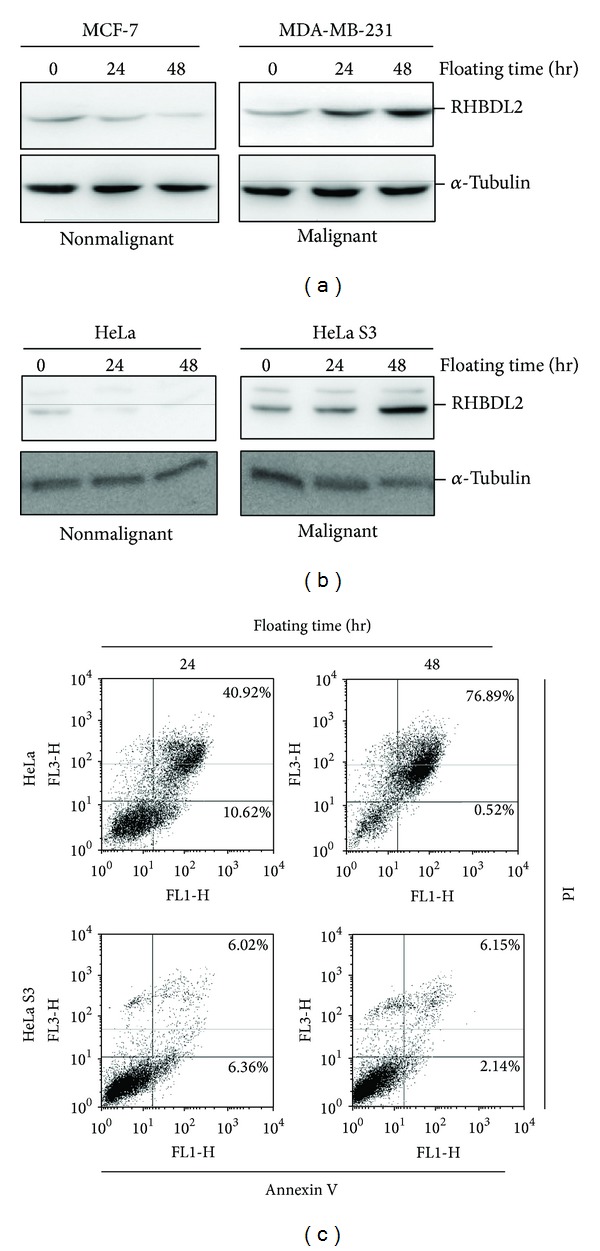
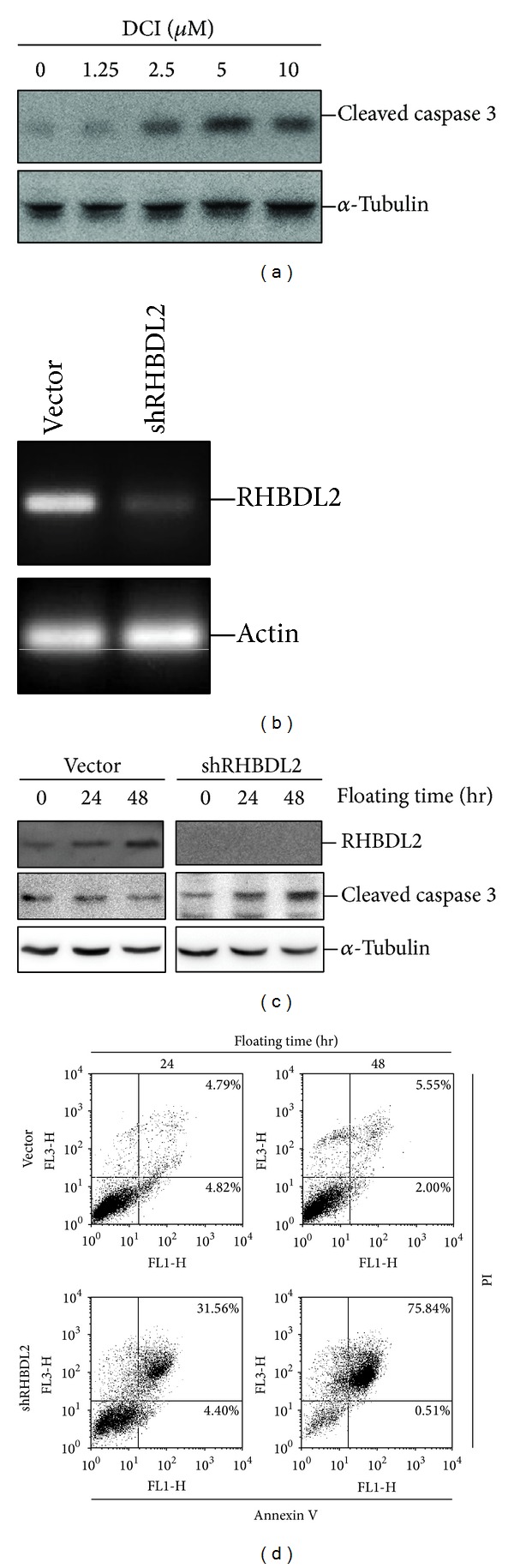
Anoikis resistance allows metastatic tumor cells to survive in a homeless environment. Activation of epithelial growth factor receptor (EGFR) signaling is one of the key mechanisms for metastatic tumor cells to resist anoikis, yet the regulation mechanisms of homeless-triggered EGFR activation in metastatic tumor cells remain unclear. Rhomboid-like-2 (RHBDL2), an evolutionally conserved intramembrane serine protease, can cleave the EGF ligand and thus trigger EGFR activation. Herein, we demonstrated that RHBDL2 overexpression in human epithelial cells resulted in promotion of cell proliferation, reduction of cell adhesion, and suppression of anoikis. During long-term suspension cultures, increased RHBDL2 was only detected in aggressive tumor cell lines. Treatment with the rhomboid protease inhibitor or RHBDL2 shRNA increased cleaved caspase 3, a marker of apoptosis. Finally, inhibition of EGFR activation increased the cleaved caspase 3 and attenuated the detachment-induced focal adhesion kinase phosphorylation. Taken together, these findings provide evidence for the first time that RHBDL2 is a critical molecule in anoikis resistance of malignant epithelial cells, possibly through the EGFR-mediated signaling. Our study demonstrates RHBDL2 as a new therapeutic target for cancer metastasis.
失巢凋亡抗性使转移性肿瘤细胞能够在无附着的环境中存活。上皮生长因子受体(EGFR)信号通路的激活是转移性肿瘤细胞抵抗失巢凋亡的关键机制之一,然而,转移性肿瘤细胞中由无附着触发的EGFR激活的调控机制仍不清楚。类菱形蛋白酶-2(RHBDL2)是一种进化上保守的膜内丝氨酸蛋白酶,可切割表皮生长因子(EGF)配体,从而触发EGFR激活。在此,我们证明在人上皮细胞中过表达RHBDL2会促进细胞增殖、减少细胞黏附并抑制失巢凋亡。在长期悬浮培养过程中,仅在侵袭性肿瘤细胞系中检测到RHBDL2表达增加。用类菱形蛋白酶抑制剂或RHBDL2短发夹RNA(shRNA)处理会增加凋亡标志物——裂解的半胱天冬酶-3。最后,抑制EGFR激活会增加裂解的半胱天冬酶-3,并减弱由细胞脱离诱导的粘着斑激酶磷酸化。综上所述,这些发现首次证明RHBDL2可能通过EGFR介导的信号通路,是恶性上皮细胞失巢凋亡抗性中的关键分子。我们的研究表明RHBDL2是癌症转移的一个新的治疗靶点。