Zhang Ran, Wan Xiao-jian, Zhang Xu, Kang Qiu-xiang, Bian Jin-jun, Yu Gui-fang, Wang Jia-feng, Zhu Ke-ming
Department of Anesthesiology and Intensive Care Medicine, Changhai Hospital, the Second Military Medical University, Shanghai, China.
Department of Anesthesiology, the Third People's Hospital, Shanghai Jiaotong University, Shanghai, China.
PLoS One. 2014 Jun 30;9(6):e101215. doi: 10.1371/journal.pone.0101215. eCollection 2014.
Endothelium-derived molecules may be predictive to organ injury. Heat shock protein (HSP) A12B is mainly located in endothelial cells, which can be detected in the plasma of septic patients. Whether it is correlated with prognosis of sepsis remains unclear.
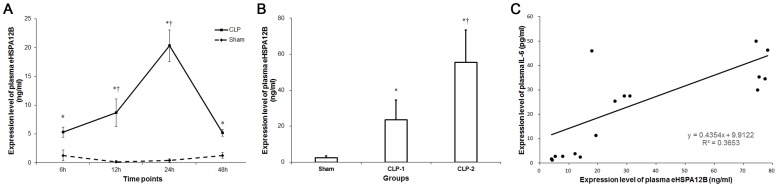
Extracellular HSPA12B (eHSPA12B) was determined in plasma of septic mice at 6 h, 12 h, 24 h and 48 h after cecal ligation and puncture (CLP). It was also detected in plasma of patients with severe sepsis, sepsis, systemic inflammatory response syndrome and healthy volunteers. The predictive value for prognosis of severe sepsis was assessed by receiver operating curve (ROC) and Cox regression analyses.
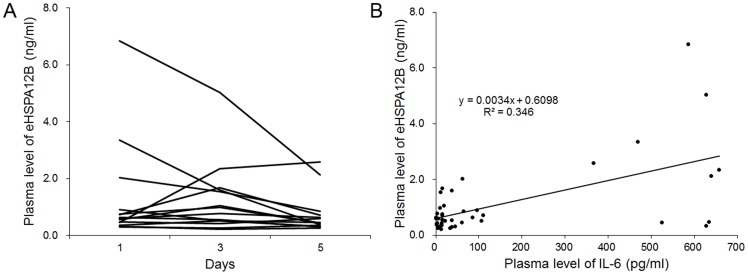
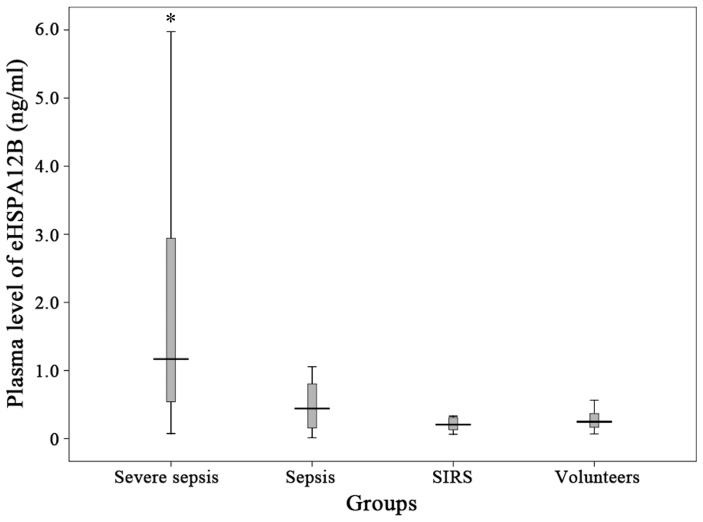
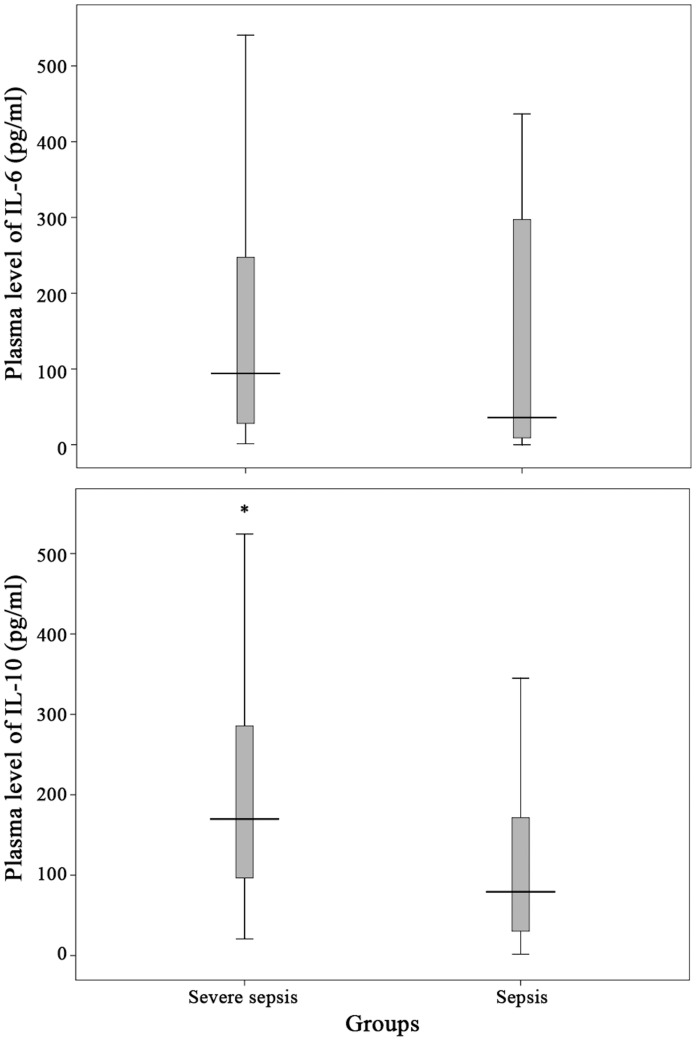
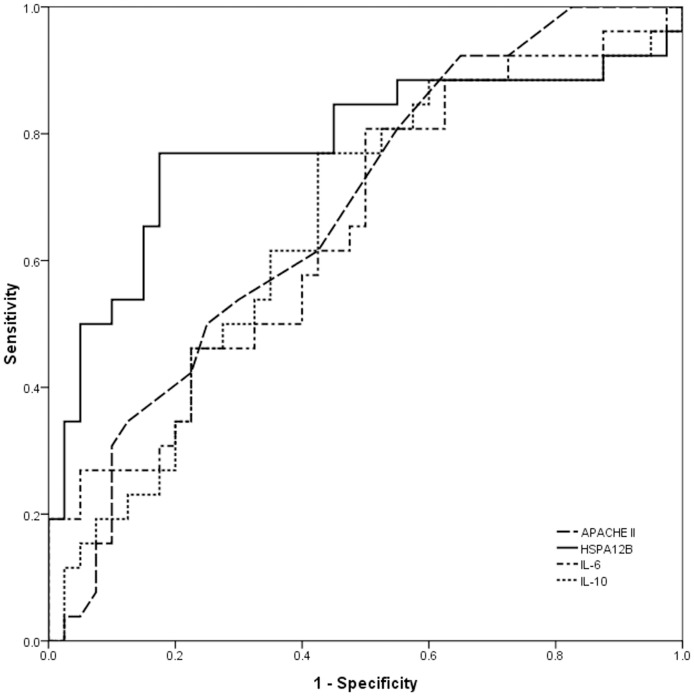
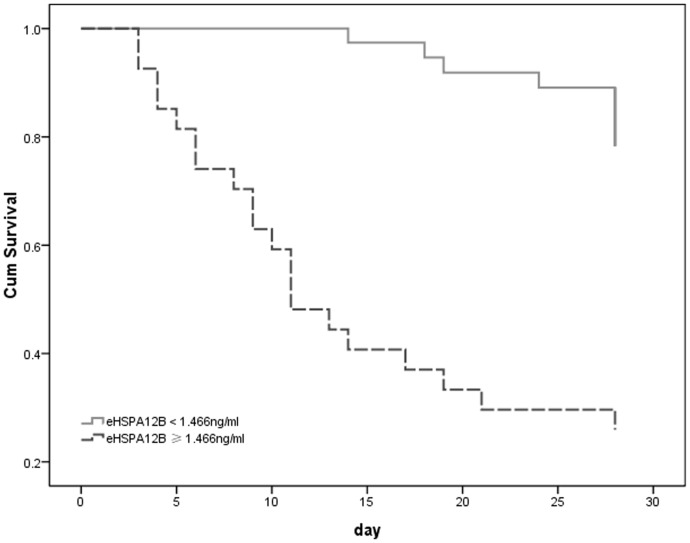
eHSPA12B was elevated in plasma of CLP mice at 6 h and peaked at 24 h after surgery. A total of 118 subjects were included in the clinical section, including 66 patients with severe sepsis, 21 patients with sepsis, 16 patients with SIRS and 15 volunteers. Plasma eHSPA12B was significantly higher in patients with severe sepsis than in patients with sepsis, SIRS and volunteers. The level of eHSPA12B was also higher in non-survivals than survivals with severe sepsis. The area under the curve (AUC) of eHSPA12B in predicting death among patients with severe sepsis was 0.782 (0.654-0.909) in ROC analysis, much higher than that of IL-6 and IL-10. Cox regression analysis showed that cardiovascular diseases, IL-6 and eHSPA12B were risk factors for mortality in patients with severe sepsis. Survival curve demonstrated a strikingly significant difference between 28-day survival rates of patients with an eHSPA12B lower or not lower than 1.466 ng/ml.
Plasma eHSPA12B is elevated in both septic mice and patients. It may be a good predictor for poor outcome in patients with severe sepsis.
内皮细胞衍生分子可能对器官损伤具有预测作用。热休克蛋白(HSP)A12B主要位于内皮细胞中,在脓毒症患者血浆中可检测到。其是否与脓毒症预后相关尚不清楚。
在盲肠结扎穿孔(CLP)术后6小时、12小时、24小时和48小时测定脓毒症小鼠血浆中的细胞外HSPA12B(eHSPA12B)。还在严重脓毒症患者、脓毒症患者、全身炎症反应综合征患者和健康志愿者的血浆中进行了检测。通过受试者工作特征曲线(ROC)和Cox回归分析评估其对严重脓毒症预后的预测价值。
CLP小鼠血浆中的eHSPA12B在术后6小时升高,并在术后24小时达到峰值。临床研究共纳入118名受试者,包括66例严重脓毒症患者、21例脓毒症患者、16例全身炎症反应综合征患者和15名志愿者。严重脓毒症患者血浆中的eHSPA12B显著高于脓毒症患者、全身炎症反应综合征患者和志愿者。严重脓毒症患者中,非存活者的eHSPA12B水平也高于存活者。ROC分析显示,eHSPA12B预测严重脓毒症患者死亡的曲线下面积(AUC)为0.782(0.654 - 0.909),远高于白细胞介素-6(IL-6)和白细胞介素-10。Cox回归分析表明,心血管疾病、IL-6和eHSPA12B是严重脓毒症患者死亡的危险因素。生存曲线显示,eHSPA12B低于或不低于1.466 ng/ml的患者28天生存率存在显著差异。
脓毒症小鼠和患者的血浆eHSPA12B均升高。它可能是严重脓毒症患者不良预后的良好预测指标。