Alosaimi Fahad D, Al-Sultan Omar A, Alghamdi Qusay A, Almohaimeed Ibrahim K, Alqannas Sulaiman I
Psychiatry Department #55, King Khalid University Hospital, King Saud University, PO Box 7805, Riyadh 11472, Kingdom of Saudi Arabia. Tel. +966 (11) 4671226. Fax. +966 (11) 4672571. E-mail:
Neurosciences (Riyadh). 2014 Jul;19(3):203-9.
To evaluate the gender-specific difference in the prevalence of depression and anxiety and the help-seeking behavior among gastroenterology outpatients.
A cross-sectional study was carried out in gastroenterology clinics in 4 hospitals in Riyadh, Saudi Arabia between February and September 2013. A self-administrated questionnaire was developed and administered to patients. The Patient Health Questionnaire (PHQ-9) and Generalized Anxiety Disorder (GAD-7) questionnaires were used to identify depression and anxiety.
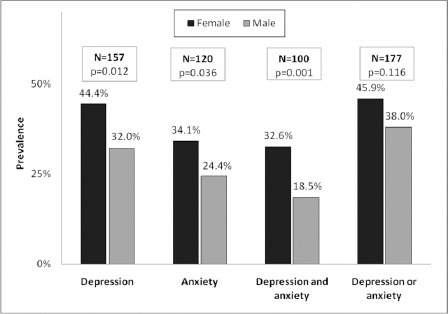
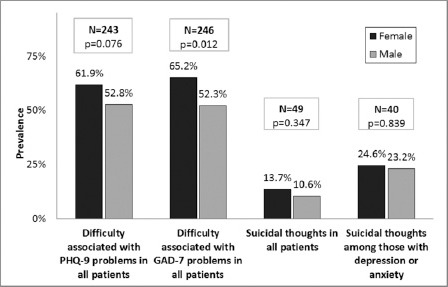
A total of 438 patients completed the study questionnaire; 135 (31%) females, and 303 (69%) males. Compared with males, females had more depression symptoms (44% versus 32%, p=0.012), anxiety symptoms (34% versus 24%, p=0.036), anxiety-associated difficulty (65% versus 52%, p=0.012), but similar suicidal thoughts (14% versus 11%, p=0.347). Females had similar gastrointestinal complaints but longer duration of symptoms. In both females and males, the most common first interventions were using medications (63% versus 69%), and undergoing endoscopy (19% versus 15%), while very few patients initially used herbs or Islamic incantation Roquia (7% versus 8%). Compared with males, females were more likely to subsequently seek help at private clinics (23% versus 14%, p=0.014), or with a Quran therapist (11% versus 5%, p=0.012).
There are clear gender-specific differences in depression and anxiety symptoms and associated perceived difficulty, but modest differences in help-seeking behavior. Female patients at the gastroenterology clinic may deserve more psychological attention to diagnose depression and anxiety and to alleviate their impact.
评估胃肠病门诊患者中抑郁症和焦虑症患病率的性别差异以及求助行为。
2013年2月至9月在沙特阿拉伯利雅得的4家医院的胃肠病诊所开展了一项横断面研究。自行设计了一份问卷并对患者进行调查。采用患者健康问卷(PHQ - 9)和广泛性焦虑障碍问卷(GAD - 7)来识别抑郁症和焦虑症。
共有438名患者完成了研究问卷;其中女性135名(31%),男性303名(69%)。与男性相比,女性有更多的抑郁症状(44%对32%,p = 0.012)、焦虑症状(34%对24%,p = 0.036)、与焦虑相关的困扰(65%对52%,p = 0.012),但自杀念头相似(14%对11%,p = 0.347)。女性有相似的胃肠道不适,但症状持续时间更长。在女性和男性中,最常见的首要干预措施都是使用药物(63%对69%)和接受内镜检查(19%对15%),而最初很少有患者使用草药或伊斯兰咒语“鲁基亚”(7%对8%)。与男性相比,女性更有可能随后在私人诊所寻求帮助(23%对14%,p = 0.014),或向古兰经治疗师求助(11%对5%,p = 0.012)。
抑郁症和焦虑症症状及相关感知困扰存在明显的性别差异,但求助行为差异不大。胃肠病诊所的女性患者可能更值得给予更多心理关注,以诊断抑郁症和焦虑症并减轻其影响。