Swanson David, Zhang Yufeng, King Marisa
Department of Biology, University of South Dakota, Vermillion, South Dakota, United States of America.
PLoS One. 2014 Jul 3;9(7):e101577. doi: 10.1371/journal.pone.0101577. eCollection 2014.
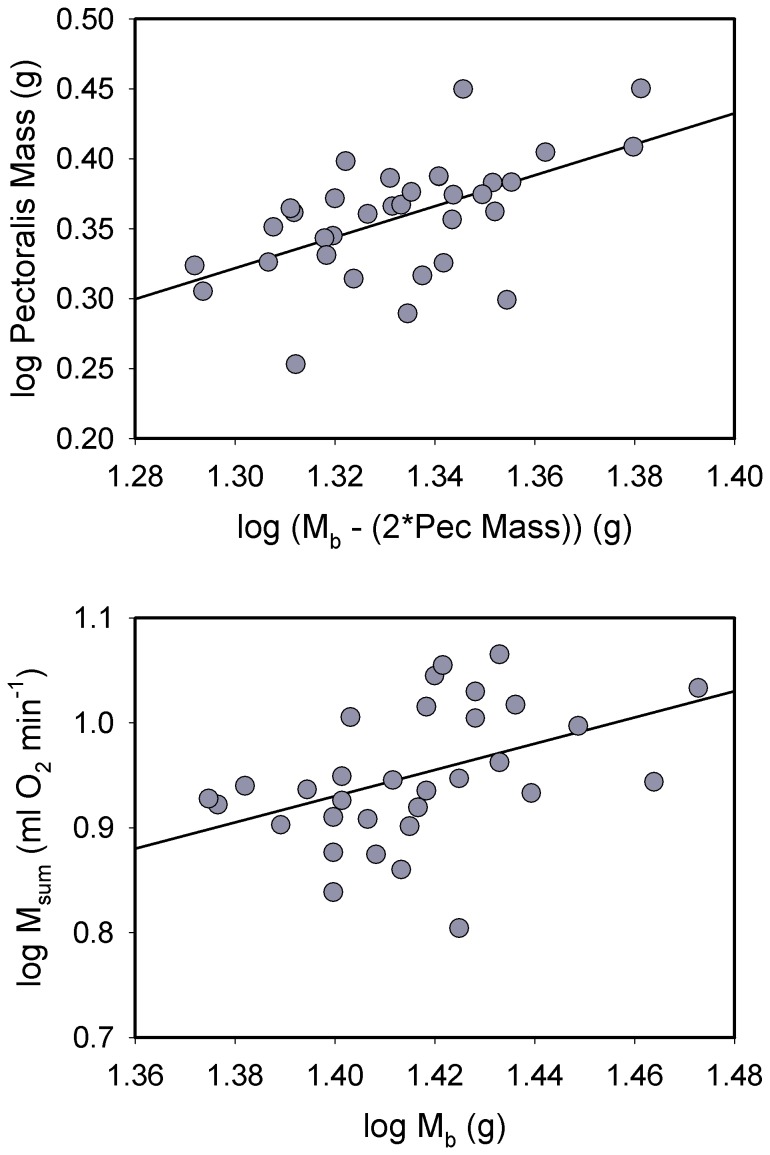
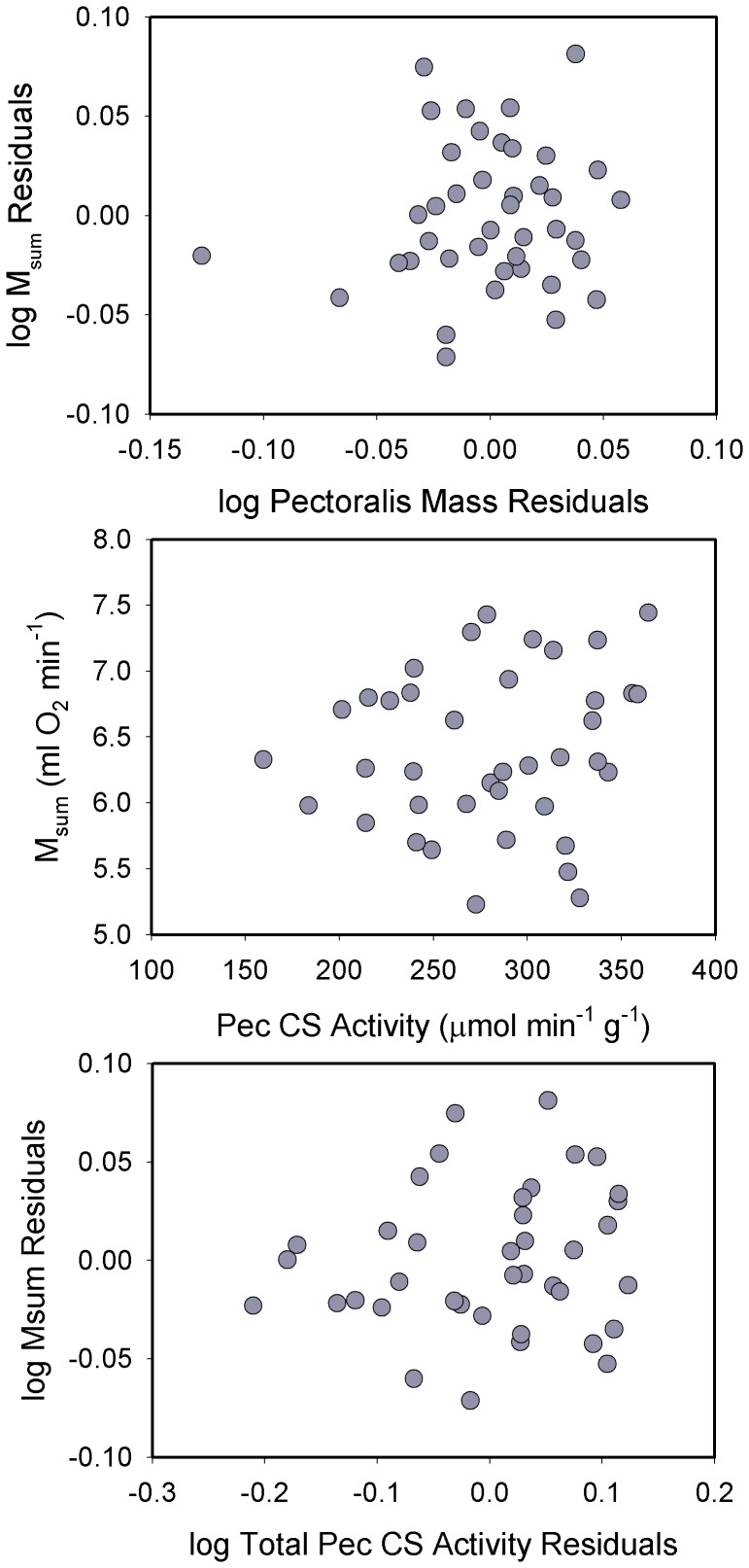
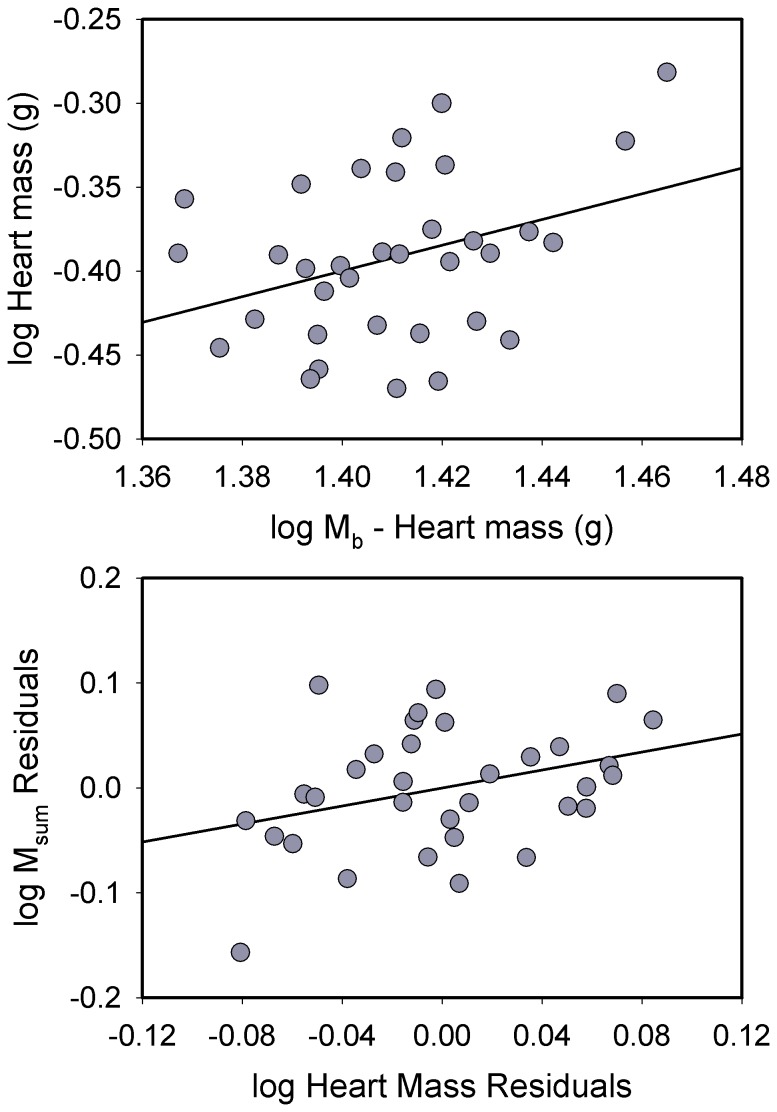
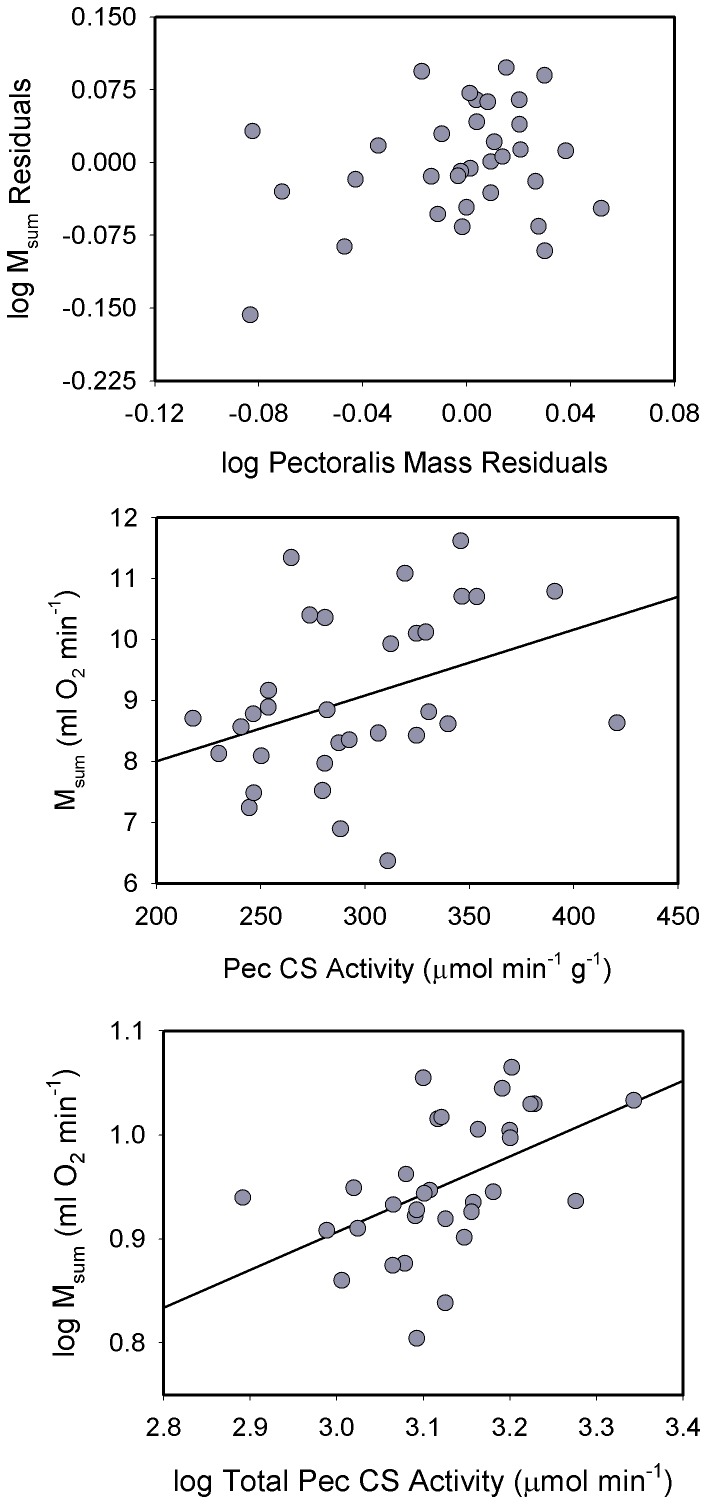
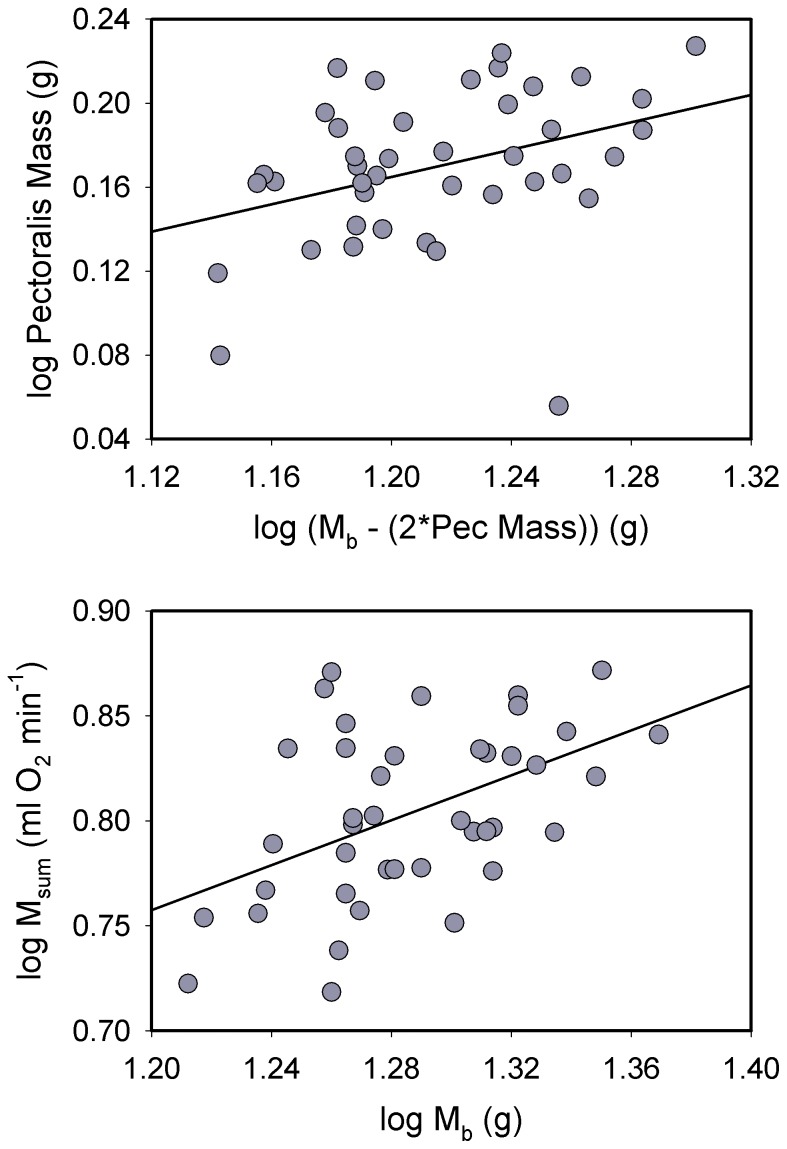
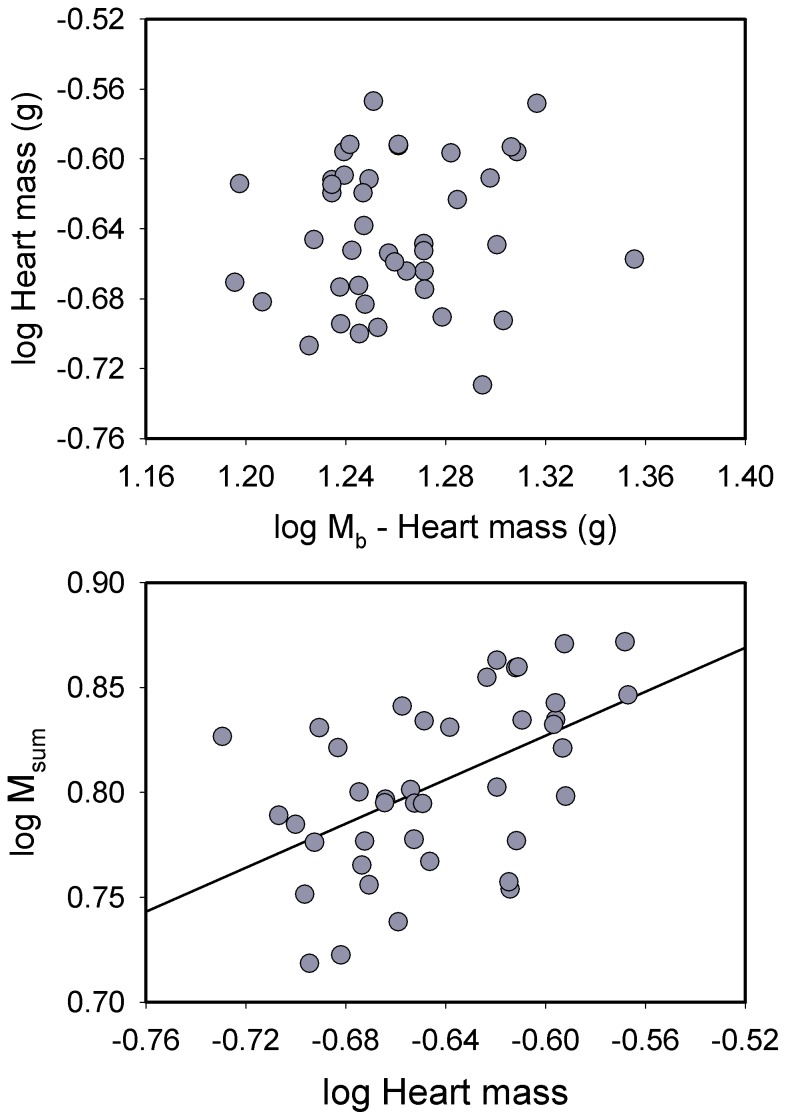
Flexible metabolic phenotypes allow animals to adjust physiology to better fit ecological or environmental demands, thereby influencing fitness. Summit metabolic rate (Msum = maximal thermogenic capacity) is one such flexible trait. Skeletal muscle and heart masses and myocyte metabolic intensity are potential drivers of Msum flexibility in birds. We examined correlations of skeletal muscle and heart masses and pectoralis muscle citrate synthase (CS) activity (an indicator of cellular metabolic intensity) with Msum in house sparrows (Passer domesticus) and dark-eyed juncos (Junco hyemalis) to determine whether these traits are associated with Msum variation. Pectoralis mass was positively correlated with Msum for both species, but no significant correlation remained for either species after accounting for body mass (Mb) variation. Combined flight and leg muscle masses were also not significantly correlated with Msum for either species. In contrast, heart mass was significantly positively correlated with Msum for juncos and nearly so (P = 0.054) for sparrows. Mass-specific and total pectoralis CS activities were significantly positively correlated with Msum for sparrows, but not for juncos. Thus, myocyte metabolic intensity influences Msum variation in house sparrows, although the stronger correlation of total (r = 0.495) than mass-specific (r = 0.378) CS activity with Msum suggests that both pectoralis mass and metabolic intensity impact Msum. In contrast, neither skeletal muscle masses nor pectoralis metabolic intensity varied with Msum in juncos. However, heart mass was associated with Msum variation in both species. These data suggest that drivers of metabolic flexibility are not uniform among bird species.
灵活的代谢表型使动物能够调节生理机能,以更好地适应生态或环境需求,从而影响其适应性。最高代谢率(Msum = 最大产热能力)就是这样一种灵活的特征。骨骼肌和心脏质量以及心肌细胞代谢强度是鸟类Msum灵活性的潜在驱动因素。我们研究了家麻雀(Passer domesticus)和暗眼灯草鹀(Junco hyemalis)的骨骼肌和心脏质量以及胸肌柠檬酸合酶(CS)活性(细胞代谢强度的指标)与Msum之间的相关性,以确定这些特征是否与Msum的变化相关。两种鸟类的胸肌质量均与Msum呈正相关,但在考虑体重(Mb)变化后,两种鸟类均未发现显著相关性。两种鸟类的飞行肌和腿部肌肉质量总和与Msum也均无显著相关性。相比之下,灯草鹀的心脏质量与Msum显著正相关,麻雀的心脏质量与Msum几乎呈正相关(P = 0.054)。麻雀的胸肌质量特异性和总CS活性均与Msum显著正相关,而灯草鹀则不然。因此,心肌细胞代谢强度影响家麻雀的Msum变化,尽管总CS活性(r = 0.495)比质量特异性CS活性(r = 0.378)与Msum的相关性更强,这表明胸肌质量和代谢强度均对Msum有影响。相比之下,灯草鹀的骨骼肌质量和胸肌代谢强度均不随Msum变化。然而,两种鸟类的心脏质量均与Msum变化相关。这些数据表明,代谢灵活性的驱动因素在鸟类物种之间并不统一。