Swanson D L, Agin T J, Zhang Y, Oboikovitz P, DuBay S
Department of Biology, University of South Dakota, Vermillion, SD 57069, USA.
Department of Ecology and Evolutionary Biology, University of Michigan, Ann Arbor, MI, USA.
Integr Org Biol. 2020 Nov 5;2(1):obaa039. doi: 10.1093/iob/obaa039. eCollection 2020.
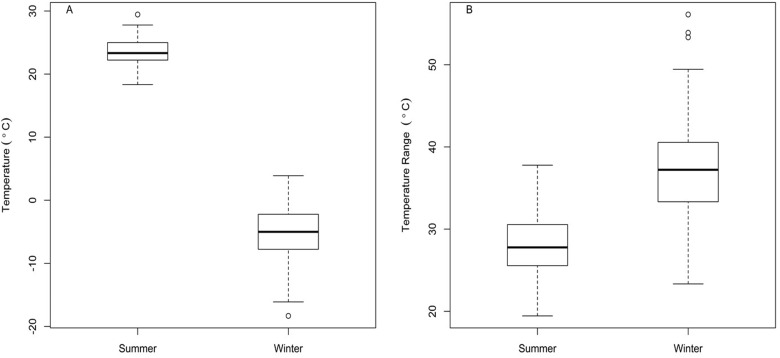
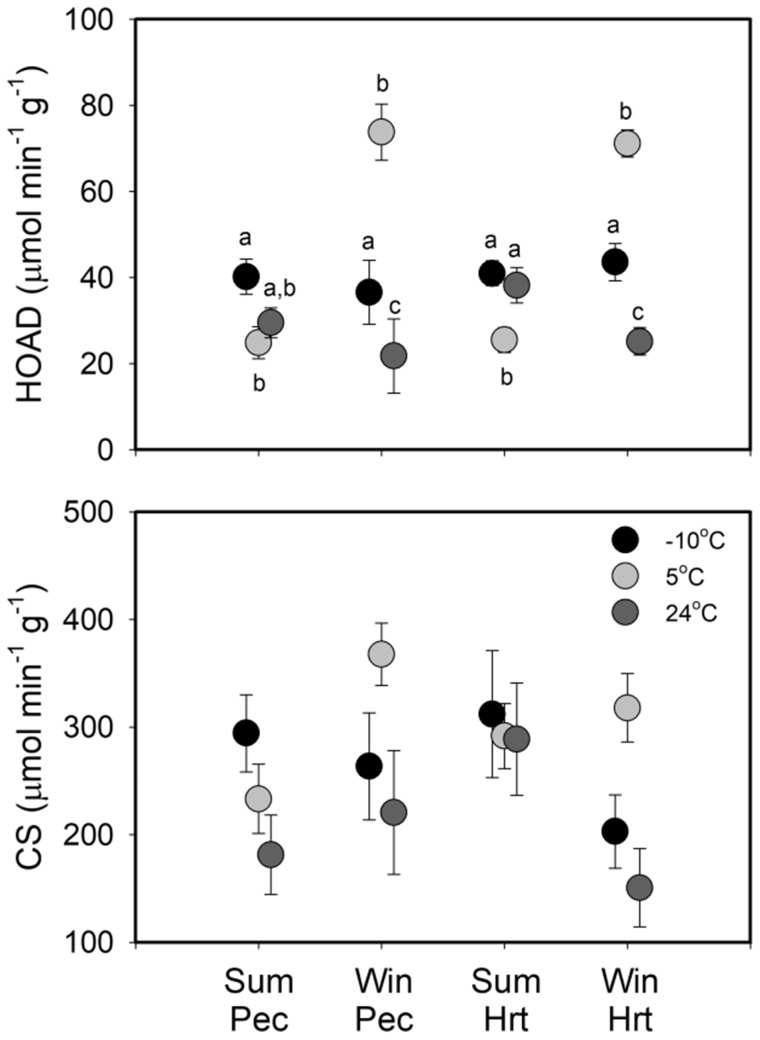
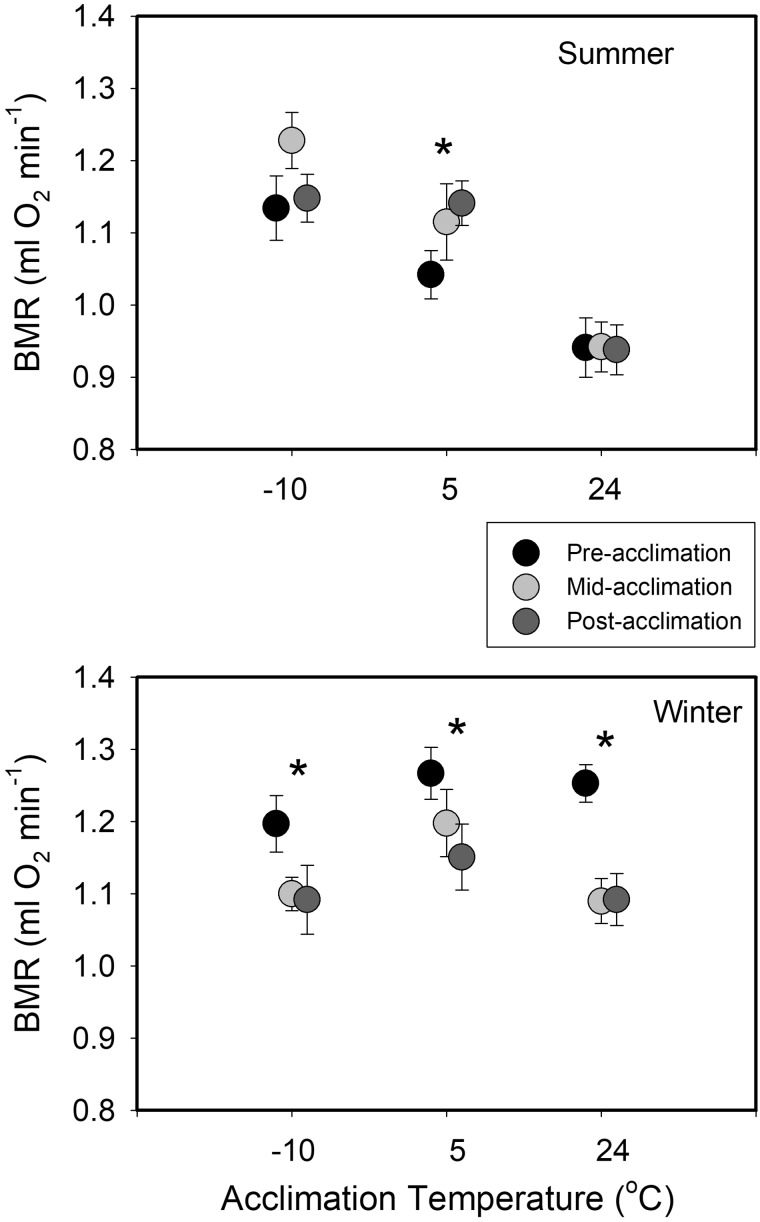
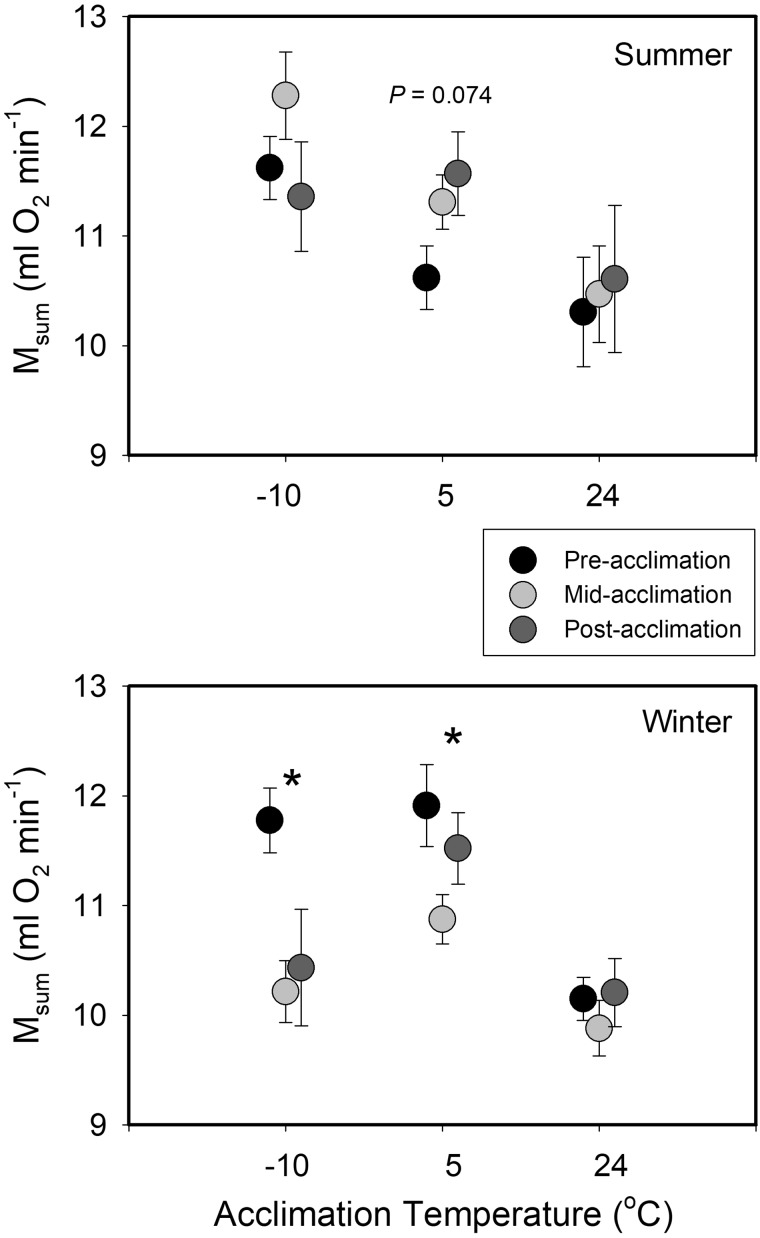
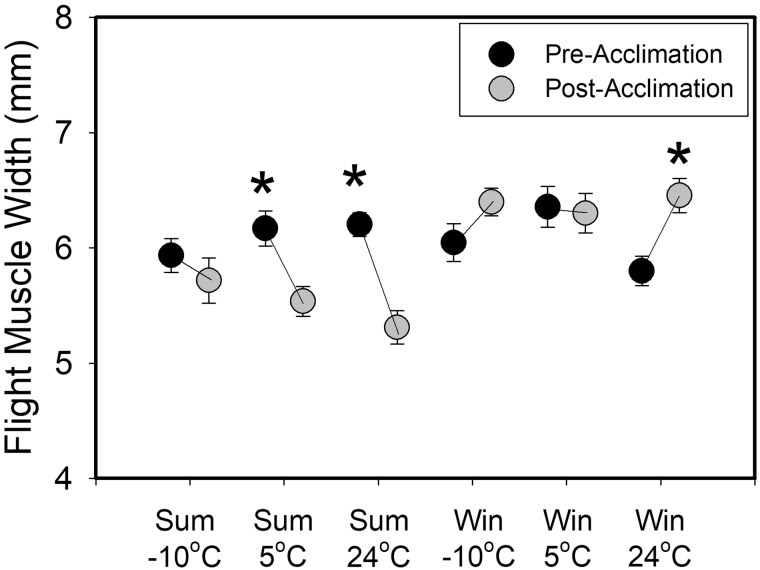
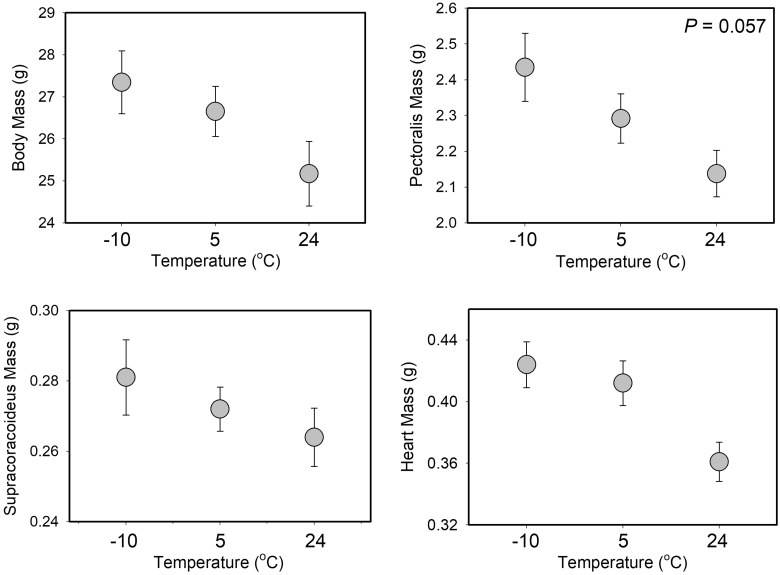
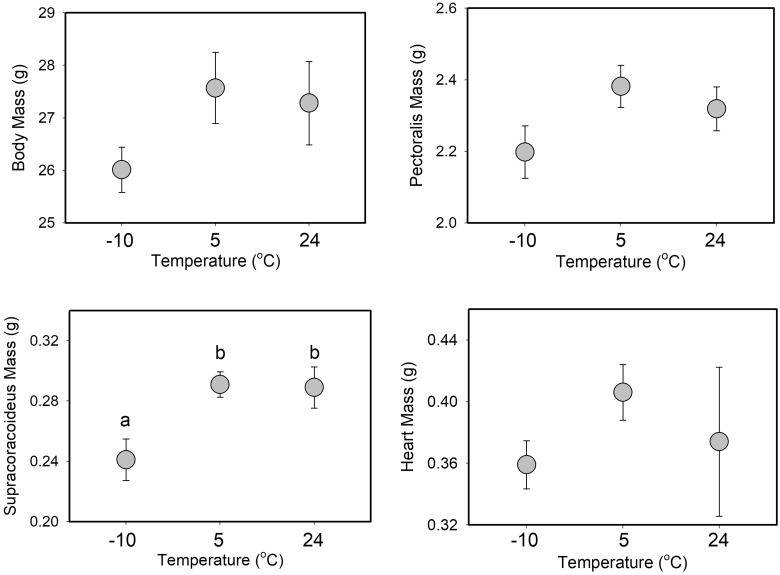
The climatic variability hypothesis (CVH) posits that more flexible phenotypes should provide a fitness advantage for organisms experiencing more variable climates. While typically applied across geographically separated populations, whether this principle applies across seasons or other conditions (e.g., open vs. sheltered habitats) which differ in climatic variability remains essentially unstudied. In north-temperate climates, climatic variability in winter usually exceeds that in summer, so extending the CVH to within-population seasonal variation predicts that winter phenotypes should be more flexible than summer phenotypes. We tested this prediction of the within-season extension of the CVH by acclimating summer and winter-collected house sparrows () to 24, 5, and -10°C and measuring basal metabolic rate (BMR) and summit metabolic rate (M = maximum cold-induced metabolic rate) before and after acclimation (Accl). To examine mechanistic bases for metabolic variation, we measured flight muscle and heart masses and citrate synthase and β-hydroxyacyl coA-dehydrogenase activities. BMR and M were higher for cold-acclimated than for warm-acclimated birds, and BMR was higher in winter than in summer birds. Contrary to our hypothesis of greater responses to cold Accl in winter birds, metabolic rates generally decreased over the Accl period for winter birds at all temperatures but increased at cold temperatures for summer birds. Flight muscle and heart masses were not significantly correlated with season or Accl treatment, except for supracoracoideus mass, which was lower at -10°C in winter, but flight muscle and heart masses were positively correlated with BMR and flight muscle mass was positively correlated with M. Catabolic enzyme activities were not clearly related to metabolic variation. Thus, our data suggest that predictions of the CVH may not be relevant when extended to seasonal temperature variability at the within-population scale. Indeed, these data suggest that metabolic rates are more prominently upregulated in summer than in winter in response to cold. Metabolic rates tended to decrease during Accl at all temperatures in winter, suggesting that initial metabolic rates at capture (higher in winter) influence metabolic Accl for captive birds.
气候变异性假说(CVH)假定,对于经历气候更具变异性的生物而言,更具灵活性的表型应具有适应性优势。虽然该假说通常应用于地理上隔离的种群,但这一原理是否适用于气候变异性不同的季节或其他条件(例如,开阔栖息地与遮蔽栖息地),基本上仍未得到研究。在北温带气候中,冬季的气候变异性通常超过夏季,因此将CVH扩展到种群内的季节变化预测,冬季表型应比夏季表型更具灵活性。我们通过将夏季和冬季采集的家麻雀(Passer domesticus)分别适应24℃、5℃和 -10℃,并在适应前后测量基础代谢率(BMR)和最高代谢率(M = 最大冷诱导代谢率),来检验CVH在季节内扩展的这一预测。为了探究代谢变化的机制基础,我们测量了飞行肌和心脏质量以及柠檬酸合酶和β - 羟酰基辅酶A脱氢酶的活性。冷适应的鸟类比暖适应的鸟类BMR和M更高,并且冬季鸟类的BMR高于夏季鸟类。与我们关于冬季鸟类对冷适应反应更大的假设相反,在所有温度下,冬季鸟类的代谢率在适应期内总体上下降,而夏季鸟类在低温下代谢率增加。飞行肌和心脏质量与季节或适应处理没有显著相关性,但胸小肌质量在冬季 -10℃时较低除外,不过飞行肌和心脏质量与BMR呈正相关,飞行肌质量与M呈正相关。分解代谢酶活性与代谢变化没有明显关系。因此,我们的数据表明,当CVH扩展到种群内尺度的季节温度变异性时,其预测可能并不适用。实际上,这些数据表明,响应寒冷时,夏季的代谢率比冬季更显著地上调。冬季在所有温度下适应期间代谢率往往下降,这表明捕获时的初始代谢率(冬季更高)会影响圈养鸟类的代谢适应。