Lempp Charlotte, Spitzbarth Ingo, Puff Christina, Cana Armend, Kegler Kristel, Techangamsuwan Somporn, Baumgärtner Wolfgang, Seehusen Frauke
Department of Pathology, University of Veterinary Medicine, Bünteweg 17, Hannover D-30559, Germany.
Department of Pathology, Faculty of Veterinary Science, Chulalongkorn University, Bangkok 10330, Thailand.
Viruses. 2014 Jul 2;6(7):2571-601. doi: 10.3390/v6072571.
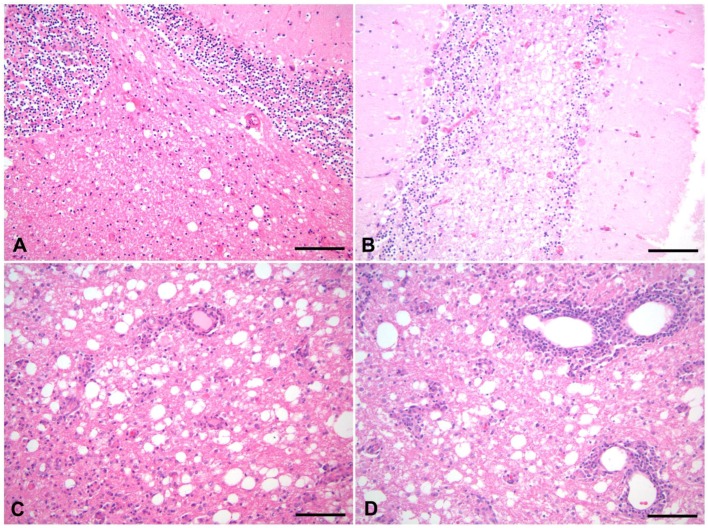
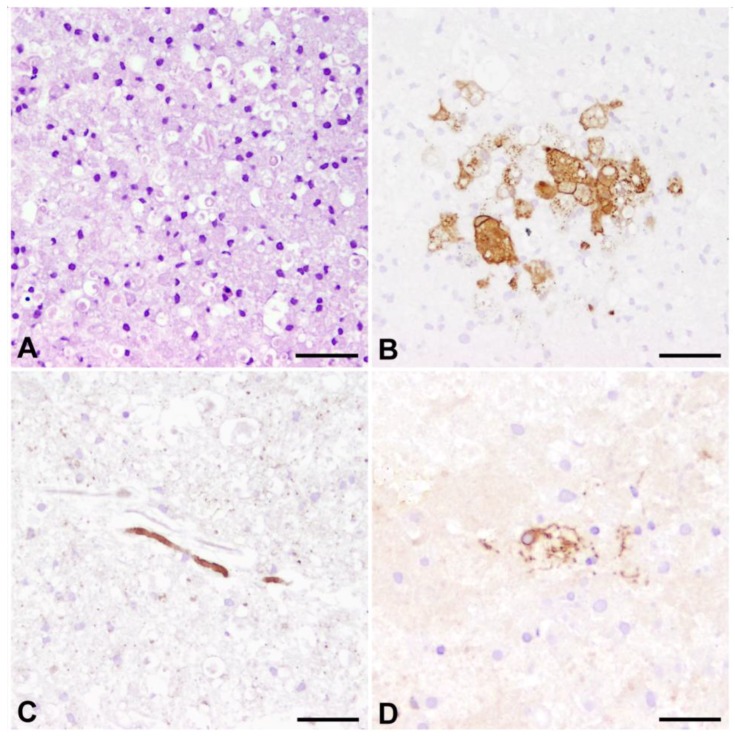
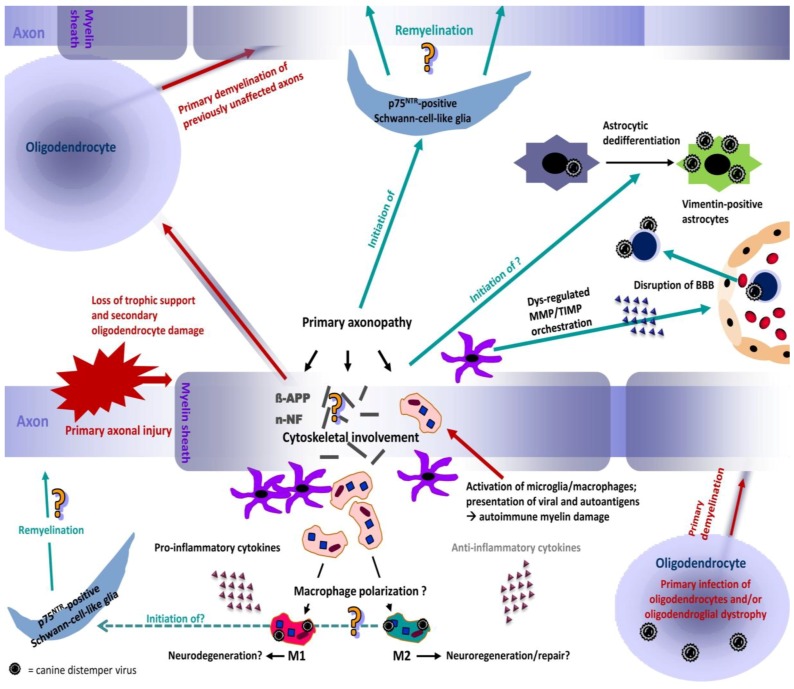
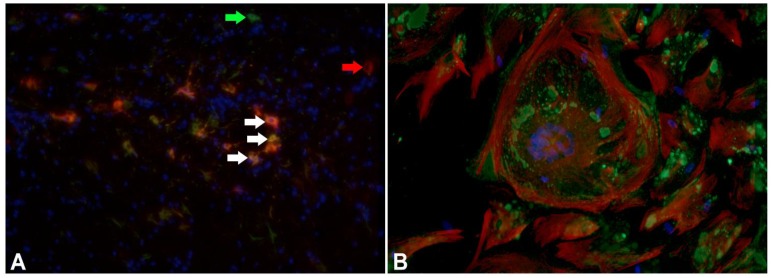
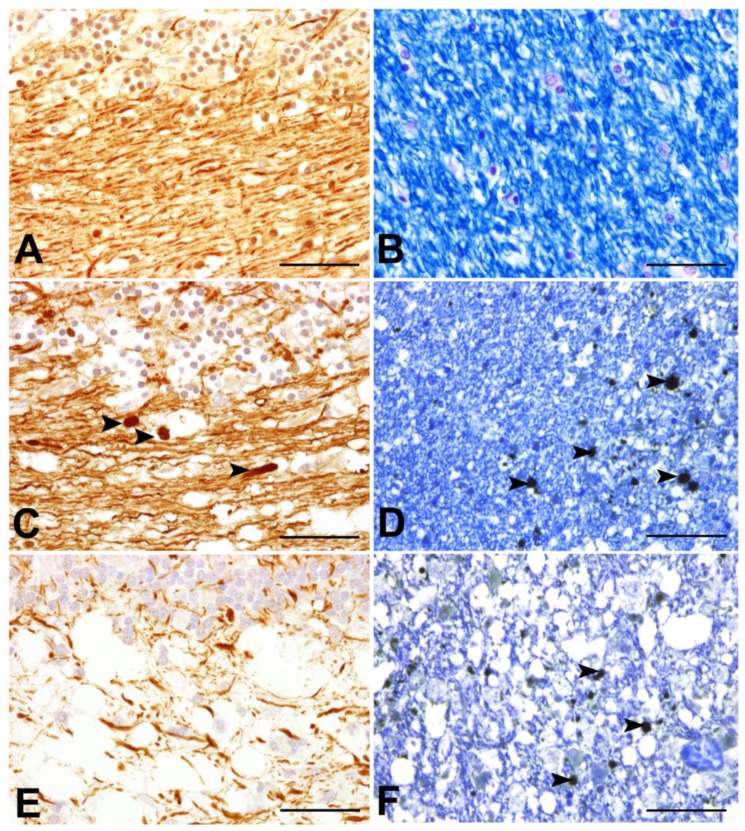
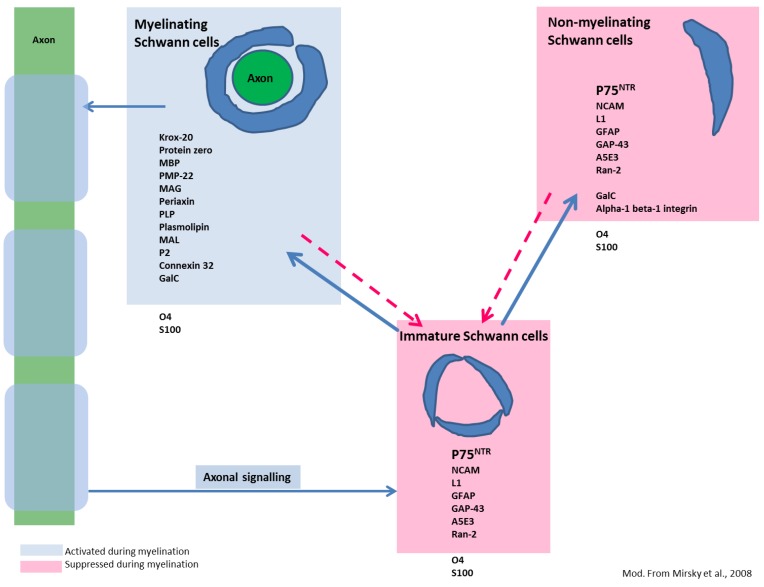
Canine distemper virus (CDV) is a member of the genus morbillivirus, which is known to cause a variety of disorders in dogs including demyelinating leukoencephalitis (CDV-DL). In recent years, substantial progress in understanding the pathogenetic mechanisms of CDV-DL has been made. In vivo and in vitro investigations provided new insights into its pathogenesis with special emphasis on axon-myelin-glia interaction, potential endogenous mechanisms of regeneration, and astroglial plasticity. CDV-DL is characterized by lesions with a variable degree of demyelination and mononuclear inflammation accompanied by a dysregulated orchestration of cytokines as well as matrix metalloproteinases and their inhibitors. Despite decades of research, several new aspects of the neuropathogenesis of CDV-DL have been described only recently. Early axonal damage seems to represent an initial and progressive lesion in CDV-DL, which interestingly precedes demyelination. Axonopathy may, thus, function as a potential trigger for subsequent disturbed axon-myelin-glia interactions. In particular, the detection of early axonal damage suggests that demyelination is at least in part a secondary event in CDV-DL, thus challenging the dogma of CDV as a purely primary demyelinating disease. Another unexpected finding refers to the appearance of p75 neurotrophin (NTR)-positive bipolar cells during CDV-DL. As p75NTR is a prototype marker for immature Schwann cells, this finding suggests that Schwann cell remyelination might represent a so far underestimated endogenous mechanism of regeneration, though this hypothesis still remains to be proven. Although it is well known that astrocytes represent the major target of CDV infection in CDV-DL, the detection of infected vimentin-positive astrocytes in chronic lesions indicates a crucial role of this cell population in nervous distemper. While glial fibrillary acidic protein represents the characteristic intermediate filament of mature astrocytes, expression of vimentin is generally restricted to immature or reactive astrocytes. Thus, vimentin-positive astrocytes might constitute an important cell population for CDV persistence and spread, as well as lesion progression. In vitro models, such as dissociated glial cell cultures, as well as organotypic brain slice cultures have contributed to a better insight into mechanisms of infection and certain morphological and molecular aspects of CDV-DL. Summarized, recent in vivo and in vitro studies revealed remarkable new aspects of nervous distemper. These new perceptions substantially improved our understanding of the pathogenesis of CDV-DL and might represent new starting points to develop novel treatment strategies.
犬瘟热病毒(CDV)是麻疹病毒属的成员,已知可在犬类中引发多种病症,包括脱髓鞘性白质脑炎(CDV-DL)。近年来,在理解CDV-DL的发病机制方面取得了重大进展。体内和体外研究为其发病机制提供了新的见解,特别强调了轴突-髓鞘-神经胶质细胞相互作用、潜在的内源性再生机制以及星形胶质细胞可塑性。CDV-DL的特征是具有不同程度脱髓鞘和单核炎症的病变,伴有细胞因子以及基质金属蛋白酶及其抑制剂的失调。尽管经过了数十年的研究,但CDV-DL神经发病机制的几个新方面直到最近才被描述。早期轴突损伤似乎是CDV-DL中的初始和进行性病变,有趣的是,它先于脱髓鞘出现。因此,轴突病可能是随后轴突-髓鞘-神经胶质细胞相互作用紊乱的潜在触发因素。特别是,早期轴突损伤的检测表明,脱髓鞘至少在部分程度上是CDV-DL中的继发性事件,从而挑战了CDV作为纯粹原发性脱髓鞘疾病的教条。另一个意外发现是在CDV-DL期间出现了p75神经营养因子(NTR)阳性双极细胞。由于p75NTR是未成熟雪旺细胞的原型标志物,这一发现表明雪旺细胞再髓鞘化可能是一种迄今为止被低估的内源性再生机制,尽管这一假设仍有待证实。虽然众所周知星形胶质细胞是CDV-DL中CDV感染的主要靶标,但在慢性病变中检测到感染的波形蛋白阳性星形胶质细胞表明该细胞群体在神经瘟热中起关键作用。虽然胶质纤维酸性蛋白是成熟星形胶质细胞的特征性中间丝,但波形蛋白的表达通常仅限于未成熟或反应性星形胶质细胞。因此,波形蛋白阳性星形胶质细胞可能是CDV持续存在和传播以及病变进展的重要细胞群体。体外模型,如解离的胶质细胞培养物以及器官型脑片培养物,有助于更好地洞察感染机制以及CDV-DL的某些形态和分子方面。总之,最近的体内和体外研究揭示了神经瘟热的显著新方面。这些新认识极大地提高了我们对CDV-DL发病机制的理解,并可能代表开发新治疗策略的新起点。