Paiva-Lima Patricia, Bakhle Y S, Francischi Janetti Nogueira
Pain Res Manag. 2014 Nov-Dec;19(6):e172-8. doi: 10.1155/2014/346105. Epub 2014 Jul 3.
Rho-kinases (ROCKs), a family of small GTP-dependent enzymes, are involved in a range of pain models, and their inhibition typically leads to antinociceptive effects.
To study the effects of inhibiting ROCKs using two known inhibitors, Y27632 and HA1077 (fasudil), administered locally, on nociception and paw edema in rats.
A range of doses of Y27632 or HA1077 (2.5 μg to 1000 μg) were injected locally into rat paws alone or in combination with carrageenan, a known proinflammatory stimulus. Nociceptive responses to mechanical stimuli and increased paw volume, reflecting edema formation, were measured at 2 h and 3 h, using a Randall-Selitto apparatus and a hydroplethysmometer, respectively.
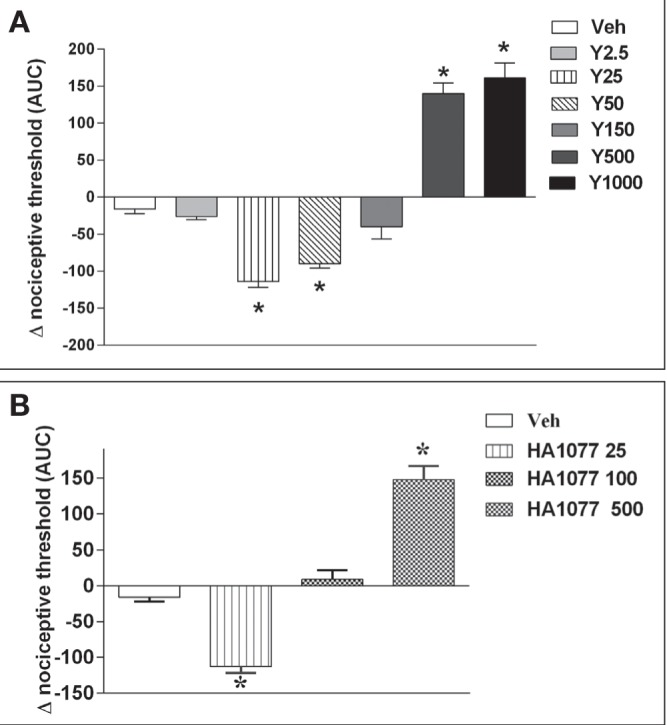
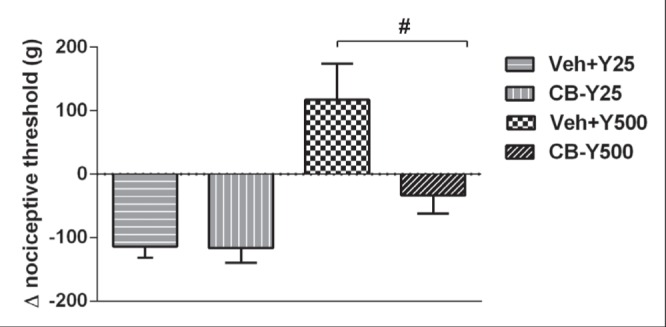
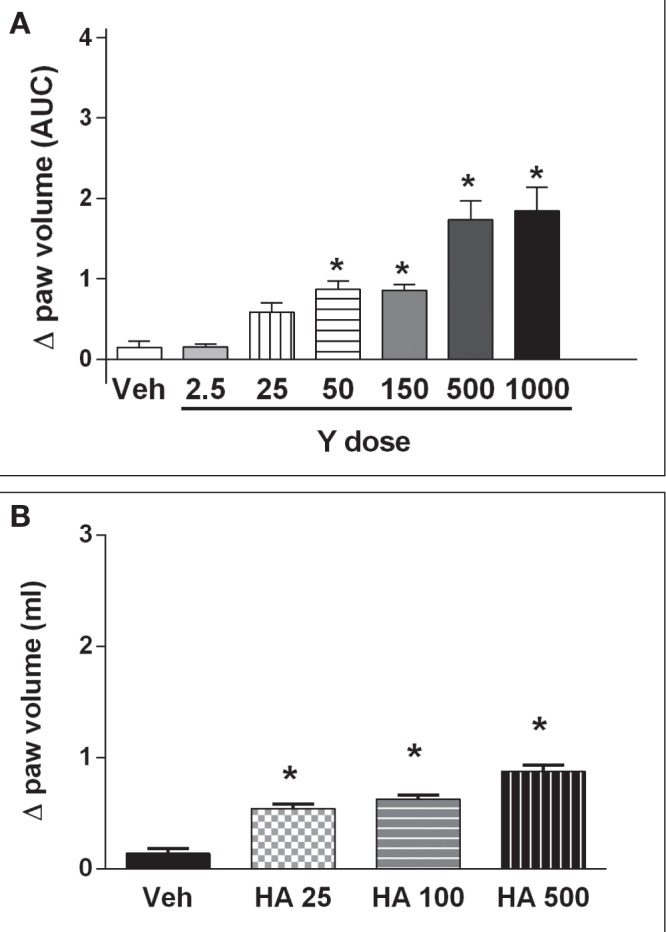
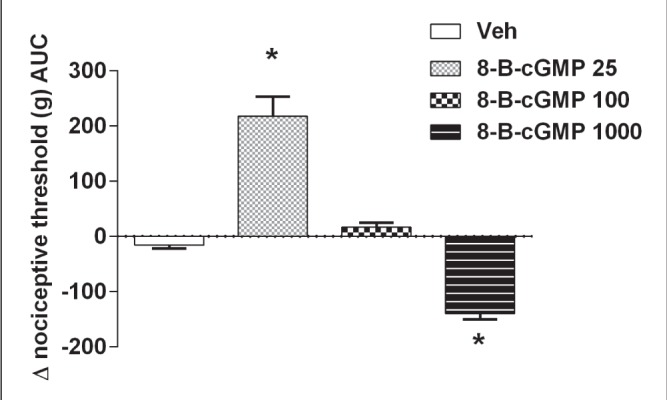
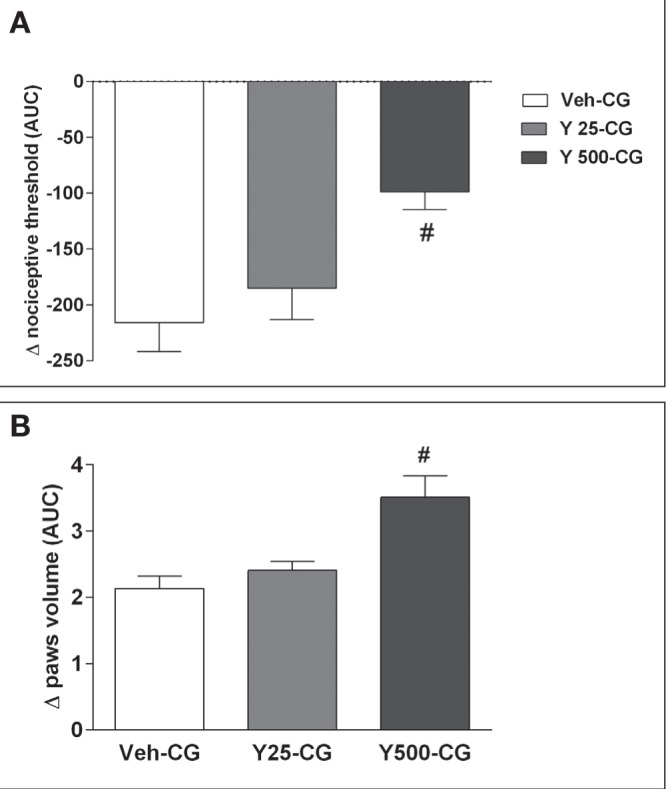
Animals treated with either ROCK inhibitor showed biphasic nociceptive effects, with lower doses being associated with pronociceptive, and higher doses with antinociceptive responses. In contrast, a monophasic dose-dependent increase in edema was observed in the same animals. Local injection of 8-bromo-cyclic (c)GMP, an activator of the nitric oxide⁄cGMP⁄protein kinase G pathway, also produced biphasic effects on nociceptive responses in rat paws; however, low doses were antinociceptive and high doses were pronociceptive. Local administration of cytochalasin B, an inhibitor of actin polymerization and a downstream mediator of ROCK activity, reversed the antinociceptive effect of Y27632.
The results of the present study suggest that ROCKs participate in the local mechanisms associated with nociception⁄antinociception and inflammation, with a possible involvement of the nitric oxide⁄cGMP⁄protein kinase G pathway. Also, drug effects following local administration may differ markedly from the effects following systemic administration. Finally, separate treatment of pain and edema may be needed to maximize clinical benefit in inflammatory pain.
Rho激酶(ROCKs)是一类依赖小GTP的酶家族,参与多种疼痛模型,抑制它们通常会产生抗伤害感受作用。
研究局部给予两种已知抑制剂Y27632和HA1077(法舒地尔)抑制ROCKs对大鼠伤害感受和足爪水肿的影响。
将一系列剂量的Y27632或HA1077(2.5μg至1000μg)单独或与已知促炎刺激物角叉菜胶联合局部注射到大鼠足爪中。分别在2小时和3小时使用兰德尔-塞利托装置和水容积描记器测量对机械刺激的伤害感受反应和反映水肿形成的足爪体积增加。
用任一种ROCK抑制剂治疗的动物均表现出双相伤害感受作用,较低剂量与促伤害感受相关,较高剂量与抗伤害感受反应相关。相反,在同一动物中观察到水肿呈单相剂量依赖性增加。局部注射一氧化氮/cGMP/蛋白激酶G途径的激活剂8-溴环鸟苷酸(8-bromo-cyclic (c)GMP)对大鼠足爪的伤害感受反应也产生双相作用;然而,低剂量是抗伤害感受的,高剂量是促伤害感受的。局部给予细胞松弛素B(一种肌动蛋白聚合抑制剂和ROCK活性的下游介质)可逆转Y27632的抗伤害感受作用。
本研究结果表明,ROCKs参与与伤害感受/抗伤害感受和炎症相关的局部机制,一氧化氮/cGMP/蛋白激酶G途径可能参与其中。此外,局部给药后的药物作用可能与全身给药后的作用明显不同。最后,可能需要分别治疗疼痛和水肿以在炎性疼痛中最大化临床益处。